

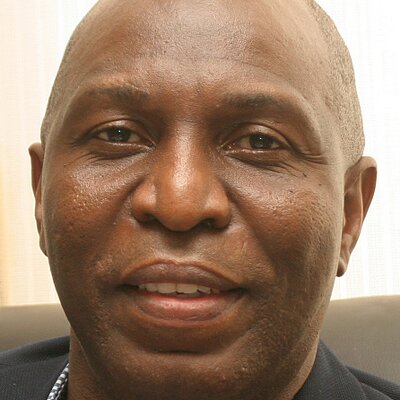
By Louis Odion
Whether we admit it or not, our democracy — and, by implication, Nigeria, our fatherland — has been haunted by assorted ghosts and myths in the last 27 years. Many are still in the dark when, for instance, phrases like “NADECO ROUTE” are mentioned. Opinions remain divided on the “Bola Ige Question”, the “Third Term Agenda” and the terms on which Buhari and Tinubu agreed to work together in APC. Even now, people still ask: “How did Osinbajo become Vice President?” Left unanswered, such questions do not die. They harden into rumour, and rumour into received history. Sam Omatseye’s new book walks into that darkness with a lamp, and lights up what was once hidden.
Let us begin with the myth of “NADECO ROUTE”. Whenever that terminology is invoked in national conversation, some millennials and Gen Zs might still be tempted to see it as a bogey invented by a bunch of old men to inflate or glorify the moves they made against military despotism under Abacha in the 90s.
But wait until you read the early pages of Omatseye’s book, where you will encounter chilling accounts by General Alani Akinrinade of several pathways — both on land and by the Atlantic Ocean — by which he and other pro-democracy activists had to improvise to either sneak out of Nigeria or slip back into the country through Lagos following Abacha’s crackdown in 1994. For those who don’t know, General Akinrinade is a former Chief of Army Staff who later joined the popular resistance against the June 12 annulment and eventually got declared wanted — dead or alive — by the Abacha regime.
As for those who still underestimate the risks and sacrifice by these brave NADECO activists, I invite you to read Akinrinade’s account in Chapter 3 and see how he and Professor Bolaji Akinyemi narrowly escaped being lured to Togo to see President Eyadéma in his village, where they would have been bundled into a chopper and flown straight to Abuja and delivered to General Abacha.
Ironically, both General Akinrinade and Professor Akinyemi, we are told, had been chased out of their hideout in Cotonou, Benin Republic’s commercial capital, that very day — only to be lured into a trap set by Eyadéma’s agents. Once they sniffed the set-up, Akinrinade recalls that Akinyemi frantically told their driver to scamper out of Togo and zoom off towards Ivory Coast. Imagine two older men driving through four countries — Benin, Togo, Ghana and Côte d’Ivoire — within 24 hours!
Then, there are more revelations about the mystery of a pirate radio called Radio Kudirat. It used to broadcast from London. But how was the hardware smuggled into Nigeria? How were they able to evade security agents throughout the Abacha years?
The answers are in the new book. Of course, there are many more such extraordinary real-life exploits and escapades locked up in the minds of some great individuals who stood up for Nigeria during that dark moment in our history. But having such stories remain untold over the years has undoubtedly left us today with a situation in which our national narrative is often disputed and wilfully distorted, depending on the interests at play.
The point should be made that the purpose of historiography is to establish truth as the minimum normative foundation of society. When facts — and facts only — define heroism and villainy, we help create a climate that not only dignifies the past, but also inspires the future.
That is why Sam Omatseye’s latest book, entitled “FROM AD TO APC — The evolution of Nigerian political parties and the exploits of one man (1998-2015)”, is an important document indeed.
It is a monumental work of research. The toil can be measured by the variety of voices assembled and the distance covered around Nigeria in legwork. In total, his offering consists of 28 chapters.
Theoretically, the book might sound like a triumphalist reference to the mutation of Alliance for Democracy from its cradle in the South-west as a regional party in 1998 to becoming a key pillar in the emergence of the All Progressives Congress in 2014, after which the opposition coalition went ahead to topple the then ruling Peoples Democratic Party in 2015.
Omatseye’s book is, by far, bigger than the AD-APC story. Maybe the author only set out to discover APC’s genealogy, hence his fascination with keeping the book’s working title. But what is unearthed in its 633 pages arguably qualifies for loftier classification. Though anchored in 1998–2015, the book reaches back into the Abacha years and forward to the Tinubu presidency. That makes it the first comprehensive account of Nigerian politics in the last three decades.
For the book also inadvertently excavates the grotesque skeletons of military despotism of the 1990s. Taken together, it is a riveting tale of heroism and villainy; of conspiracy, treachery and betrayal. As we will find, many are those who gained a pot of porridge on the national stage temporarily, only to forfeit their political souls forever.
True, we have seen several memoirs in recent years by key actors giving different accounts of Nigeria’s political evolution in the past 30 years. We have read the likes of Olawale Oshun, Dare Babarinsa, Ayo Opadokun and the sage of Akure, Seinde Arogbofa.
But few have so adroitly synthesised the babel of sometimes conflicting voices into a coherent account, with so little left out, as Omatseye has done in this book.
One of the book’s unique features is the use of full-length interview technique. This helps to broaden the narrative, as the nuances might be lost in a single story. It shines a light on aspects that might have been obscured by history. As demonstrated in many instances, some of what we might consider as exaggerations after the fact were, to borrow the words of Khalil Gibran, originally a shade of truth that had lost its temper.
However, where accounts seem to conflict, Omatseye intervenes with scholarly fiat, drawing heavily from his superior arsenal as a top-flight journalist with formidable access, bolstered by his additional resources as a gifted poet and a trained historian. All of which combine to give Omatseye’s craft a significant edge in Nigeria’s media-cum-literary community. To some media historians, the only other person who could be said to possess such reach is Olusegun Osoba, the putative “chief reporter of Nigeria”.
One other thing, Omatseye brings an uncommon plurality in this book. For instance, we hear the unfiltered voice of Bode George, a PDP bigwig. Just as we hear the voice of his age-old ideological opposite, Bisi Akande, with no less modulation. Omatseye surely threads the needle of journalism to knit the fabric of a broader narrative, bringing us closer to the truth.
In the book, Anthony Adefuye also sheds light on the butcher economy under Abacha. The Third Republic senator, according to the book, reveals how much the bloodthirsty General paid for each murder executed. Adefuye names some of those who collected Judas’ blood money to reveal to the assassins the home address of their supposed relatives.
But, overall, if the mosaic of plots and subplots contained in the book suggests the heroism of President Bola Ahmed Tinubu, GCFR — that is, from the way he morphed from a pro-democracy agitator in the 90s to becoming the pre-eminent opposition generalissimo for 16 difficult years — it is only a powerful reminder of the nobility in playing politics defined by high principles. The story of a Tinubu triumph could also pass as a cautionary tale about the risks and rewards of patience, courage under fire, and endurance in uncertainty.
Since the return of democracy in 1999, events have definitely shown that there is truly only one undisputed master strategist in Nigerian politics. It is no other than President Tinubu, the only civilian who disarmed and humbled 5-Star military generals on the political field. You will find a good case study on page 275 where the author documents how, as Lagos governor, Asiwaju Tinubu outsmarted President Obasanjo in the countdown to the 2007 general elections. Having hijacked Alliance for Democracy by planting his stooge as its National Chairman, Obasanjo’s cold calculation would seem that the Tinubu faction headed by Bisi Akande would have no platform to contest. To deceive Obasanjo, Asiwaju made a decoy. He prodded his known supporters to wear AD colours and mount serious campaign as AD candidates ahead of the 2007 polls.
But unknown to Obasanjo, Tinubu had secretly registered five new parties. Perhaps the far more ingenious part of that strategy was that those Tinubu recruited to manage the new parties did not know each other. For instance, Osoba put the number of such decoy parties at two in the interview he granted the author in the book. But in reality, there were five of such parties whose registration certificates were kept by Asiwaju’s chief of staff, Babatunde Fashola. Meaning, in Tinubu’s strategic contingency arrangement, the right hand did not know what the left hand was doing.
So, with the full confidence of an accomplished hunter, Obasanjo had all his bazookas arrayed against AD. But eventually, Asiwaju emerged with the vehicle of Action Congress for the 2007 general elections.
Let’s not miss the significance of that singular move. Without the tactical invention of Action Congress, there wouldn’t have been Governor Fashola. Without AC, no Governor Amosun. No Governor Ajimobi. No Governor Fayemi. No Governor Aregbesola. No Governor Oshiomhole. That is the Jagaban of Nigerian politics for you!
Today, we can see that some folks are still battling in court over the ownership of party structure, unsure of the validity of their nominations as candidates, barely two months to the 2027 general elections. If only they had gone to President Tinubu for tutorials on how to effectively acquire or legally found a political party.
Now, let us move to several myths Omatseye has shattered with this book. For instance, the popular belief is that Obasanjo was the only one favoured by northern conservative elements to succeed General Abdulsalami Abubakar in 1998. But quoting General Ajiborisha, the then Chief of Staff to the military head of state, Omatseye writes that Bola Ige was, by that account, General Abubakar’s preferred choice following Abiola’s death in military custody. The reasons are detailed in Chapter 6.
Another puzzle is the Third Term Agenda, clarified by an unlikely actor in the saga, Bode George, who was PDP’s National Vice Chairman at the time. To date, Obasanjo continues to deny ever having any tenure extension in 2006. But quoting Bode George in Chapter 18, Omatseye presents his testimony of Obasanjo’s secret desire to hang on to power against the spirit and the letter of the 1999 Constitution. Here is Bode George, on page 375: “Baba Obasanjo wanted a third term. He was lying.”
Again, contrary to the popular theory that Obasanjo savoured steamy pounded yam with Audu Ogbeh before getting his host to sign a resignation letter as PDP chairman, Bode George’s insider account on page 225 clarifies that though Ogbeh’s wife had started pounding the yam that fateful day, Obasanjo had browbeaten Ogbeh to sign away his chairmanship and left before the food was ready.
Following APC’s historic victory in 2015, an American scholar, John Paden, wrote an authorized biography, Muhammadu Buhari: The Challenges of Leadership in Nigeria, in which he tries to downplay Tinubu’s contributions to Buhari’s emergence as President. But a key actor in the process leading to APC’s birth in 2014 was Tanko Al Makura, who was then the sitting governor of Nasarawa State, the only state controlled by Buhari’s CPC.
In Chapter 22, Al Makura attests to the pivotal role Tinubu played in Buhari’s emergence as president in 2015. Hear him on page 421: “CPC’s attitude to Bola Tinubu was that of appreciation and encouragement. All along, … we saw him as part of the CPC because of his sincerity of purpose and objective realisation of the goals.”
Another sore question Omatseye addresses is the controversy surrounding the emergence of Professor Yemi Osinbajo as Buhari’s vice-presidential candidate in December 2014. On the road to the 2022 APC presidential primaries, some elements denied Tinubu credit. But multiple credible sources and insiders Omatseye assembles in Chapter 26 give the credit overwhelmingly to Tinubu. The author quotes Ikuforiji, then Speaker of the Lagos House of Assembly, on page 465, who adds that Osinbajo told him he would be fulfilled even if given only two years as vice president.
Ikuforiji’s claims tally with the widely told account that the news of becoming vice president to Buhari was formally broken to Osinbajo a few days before the INEC deadline in December 2014, at a meeting attended by Tinubu, Osinbajo, Bisi Akande, Dele Alake and Tunji Bello.
That said, the book will do better if it is accorded some additional proofreading before a reprint. Also needed is the correction of a few factual inaccuracies. For instance, MKO’s victory at SDP in Jos was in 1993, not 1982 as erroneously stated on page 6. Tinubu’s demand of Wole Soyinka for a guarantor’s note during the NADECO struggle was to import rice from Thailand, not South Korea, as the author writes on page 44.
On page 19 of Chapter 2, the author suggests that Ibrahim Babangida stopped eyeing the presidency around 2002/3, when some PDP governors started pushing Atiku Abubakar to upstage his boss. There is circumstantial evidence that the Minna General kept oiling his machine well into 2010. I can attest that, as Editor-in-Chief of National Life newspaper that year, I was invited to an exclusive media briefing hosted by Babangida’s legmen, as part of the effort to prepare the ground for his formal declaration for the PDP primaries, soon after President Umar Yar’Adua died in office.
Then, northern politicians who argued that another northerner should use up Yar’Adua’s second term, staged a consensus contest of their own. In November 2010, the Northern Political Leaders Forum declared that Atiku had defeated Babangida, Aliyu Gusau and Bukola Saraki to become the north’s consensus aspirant against incumbent Jonathan. It was a victory Atiku could not carry into the primary. It also fitted the pattern his critics, Adams Oshiomhole most pointedly, summarise as lose, relocate to Dubai, and return every election cycle.
All said, Omatseye’s new book is not only a must-read, but also a must-have. Every Nigerian and all those interested in Nigeria’s true story should read and own a copy.