

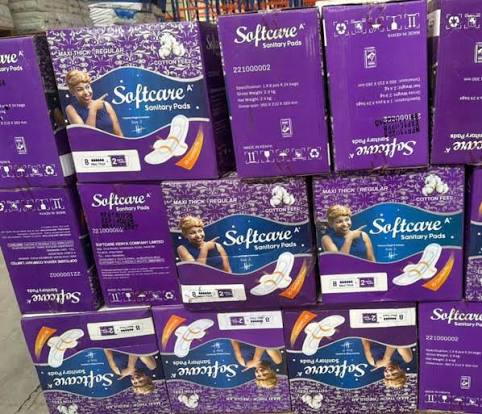
News Investigators/ Women and girls in the Federal Capital Territory (FCT) say rising sanitary pad costs are forcing them to adopt cheaper alternatives to manage menstrual hygiene.
They said this in separate interviews with the News Agency of Nigeria (NAN) on Tuesday in Abuja.
Christian Ibe, a businessman at Wuse Market, attributed the surge in the cost of sanitary products to inflation, depreciation of the naira and high distribution expenses.
Mr Ibe said this was in spite of government efforts, including the exemption of sanitary products from Value Added Tax.
He said the soaring price of sanitary pads had worsened period poverty in the country.
Mr Ibe said the development was forcing many women and girls, particularly those from low-income households, to consider cheaper and, in some cases, unsafe alternatives.
According to him, the increasing cost of living had changed the way families prioritised their spending, with basic menstrual hygiene products competing with food, education and other household needs.
He said demand for sanitary pads had reduced compared with previous years, as many consumers could no longer afford to buy them regularly.
“People do not buy sanitary pads the way they used to years ago. You can imagine that schools will soon resume, but some mothers are buying more tissue paper than sanitary pads,” he said.
Mr Ibe said the situation was particularly worrisome for adolescent girls, who might be unable to maintain proper menstrual hygiene when their families could not afford sanitary products.
He said the rising cost of sanitary pads was not only a household economic issue but also a public health and education concern.
“Girls who lacked adequate menstrual products could be forced to miss school during their periods,’’ he said.
Mr Ibe urged relevant authorities and stakeholders to strengthen measures aimed at making sanitary products more affordable and accessible, particularly for women and girls from low-income households.
He also called for greater awareness of menstrual hygiene and the health risks associated with using inappropriate materials as substitutes for sanitary pads.
He said making sanitary products more affordable would help reduce period poverty and enable women and girls to manage their menstrual health with dignity.
Favour Edwin, an 18-year-old apprentice and resident of Auta Balefi community, said she spent about ₦700 on a pack of sanitary pads.
Ms Edwin said although the cost of sanitary products had increased, the price had not significantly affected her ability to manage her menstrual hygiene.
She, however, acknowledged that the rising cost of living could make it difficult for women and girls with limited incomes to consistently afford sanitary products.
She said access to affordable menstrual products was important, particularly for schoolgirls who might not have a source of income of their own.
Ms Edwin said women and girls should not have to choose between buying menstrual products and meeting other basic needs.
According to her, the availability of products at different price points had made it possible for some consumers to choose options within their means.
She, however, expressed concern that further increases in the prices of sanitary products could make them less affordable for families already struggling with the rising cost of food and other essential household items.
Susan Kalat, an unemployed graduate and resident of Auta Balefi, said the rising cost of sanitary pads had affected her ability to manage her menstrual hygiene.
Ms Kalat said she spent about ₦1,800 on a pack of sanitary pads that she considered suitable for her menstrual flow.
She said although cheaper alternatives were available in the market, switching to some of them was not always an option because they did not provide adequate protection for her flow and could result in leakage.
“I cannot just buy any pad because of the price. Some of the cheaper ones do not support my flow, and when I use them, I experience leakage,” she said.
At the current price, she estimated that she spent about ₦21,600 annually on sanitary pads, excluding other expenses associated with menstrual hygiene.
She said the financial burden was particularly difficult because she was unemployed and had to manage her menstrual needs alongside other personal and household expenses.
Ms Kalat said the rising cost of sanitary products could make menstruation more difficult for women and girls from low-income households, particularly those who had no regular source of income.
She urged the government and relevant stakeholders to consider measures that would make sanitary products more affordable and accessible, especially for women who could not afford to compromise on quality.
Gabriel Adakole, a public health expert based in the FCT, said the rising cost of menstrual products had raised concerns about the alternatives being adopted by women and girls who could not afford sanitary pads.
Mr Adakole said reports indicated that millions of Nigerian women and girls were unable to afford adequate menstrual products, leaving some to resort to alternatives such as old rags, tissue paper and newspapers.
He raised health concerns over the use and reuse of unwashed or improperly sanitised materials, which may increase the risk of infections and cause significant discomfort.
He said financial constraints may also affect the education of adolescent girls, as some families were forced to prioritise food and other basic needs over menstrual hygiene products.
“This can result in girls missing school during their menstrual periods, potentially affecting their learning and academic performance,” he said.
Mrs Patient Felix, a resident of Durumi and mother of five, said menstrual hygiene education should begin before a girl experienced her first period.
According to her, although sanitary pads could be expensive, cheaper options were available.
She said some products containing three pieces could be purchased for about ₦350, providing a more affordable option for women and girls who could not afford more expensive brands.
NAN reports that the experiences of the women interviewed show that while the cost of sanitary pads does not affect everyone equally, price remains an important consideration for women and girls.
For those with limited incomes, the rising prices, they said, could force them to switch brands or seek cheaper alternatives, with possible implications for their health.
As the cost of living continues to rise, access to affordable menstrual hygiene products remains an important public health and social concern, particularly for low-income women and adolescent girls in the FCT.
NAN