

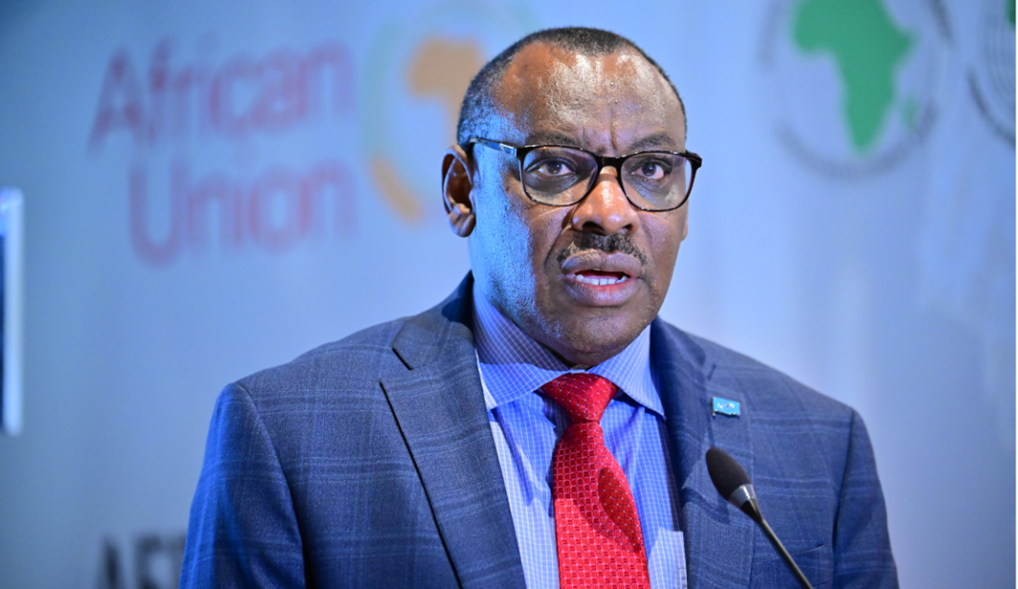
News Investigators/ Claver Gatete, UN Under-Secretary-General and Economic Commission for Africa’s (ECA) Executive Secretary, says persistent African risk premiums cost the continent about 75 billion dollars annually.
Mr Gatete said this while declaring open the official inauguration of the Africa Credit Rating Agency (AfCRA) in Port Louis, Mauritius.
The remarks were delivered on his behalf by Hanan Morsy, ECA Deputy Executive Secretary and Chief Economist.
He said the additional borrowing costs diverted scarce public resources from development priorities, including infrastructure, health and education.
Mr Gatete said concerns about African sovereign risk assessments not adequately reflecting country fundamentals affected borrowing costs and investment flows.
“When perceptions of risk do not fully reflect the realities of a country’s economy, the consequences are obvious.
“Governments consequently pay more to borrow, while attracting investment becomes increasingly difficult,” he said.
Mr Gatete said AfCRA offered an opportunity to address the imbalance by bringing deeper knowledge, data and African reform trajectories into the ratings landscape.
He said the agency’s proximity to African markets and understanding of local institutions and reform programmes should constitute its comparative advantage.
Mr Gatete stressed that AfCRA should pursue greater accuracy, transparency and contextual relevance in assessing credit risks, rather than preferential treatment for African sovereigns.
He described AfCRA as a private sector-driven and independent agency whose credibility would depend on rigorous assessments and transparent methodologies.
Mr Gatete said a rating agency that can not downgrade would not be believed when it upgrades, stressing the importance of impartiality and credibility.
He said AfCRA should complement, rather than replace, major international credit rating agencies by providing additional data, knowledge and perspectives.
Mr Gatete said extending AfCRA’s coverage to sub-national entities, companies and local-currency instruments could also help deepen domestic capital markets.
He said more accurate assessments could help investors better understand African economies and unlock financing for governments, businesses and infrastructure.
Mr Gatete, however, said better ratings alone were insufficient, urging countries to strengthen macroeconomic management, domestic resource mobilisation and public financial management.
He also called for responsible fiscal policies, careful management of external balances, timely data and stronger national statistical systems.
The ECA chief said debt transparency and reliable data were essential to strengthening countries’ creditworthiness and improving the accuracy of ratings.
He urged African countries to engage proactively with rating agencies and investors through credible communication and dedicated investor relations functions.
Mr Gatete said ECA, in collaboration with the African Development Bank, African Union and other partners, would continue supporting member states to strengthen economies and improve creditworthiness.
He urged stakeholders to ensure AfCRA’s ambition was matched by quality, independence and credibility in its work.
“If we get that right, AfCRA can help us move towards a financial system in which African economies are judged not by perception, but by a fuller and fairer reading of the facts,” he said.
NAN