
News Investigators/ Nigeria has announced plans to host a major African counter-terrorism forum in Abuja between Oct. 26 and 27, seeking stronger regional cooperation against terrorism and violent extremism.
The Nigerian government also demanded adequate, predictable and sustainable financing for African Union-led peace support operations to strengthen the continent’s response to growing security threats.
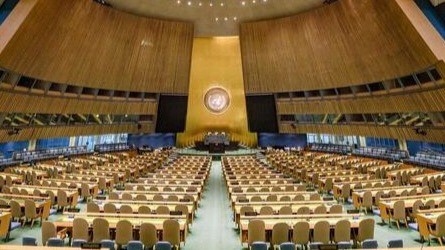
Nigeria announced the initiative during the United Nations General Assembly’s Sixth Committee debate on measures to eliminate international terrorism in New York.
Delivering Nigeria’s national statement, the Deputy Permanent Representatives, Martin Adamu, said the proposed forum would review progress under the Abuja Process and identify practical measures to strengthen African-led counter-terrorism cooperation.
Amb. Adamu explained that the Abuja process emerged from the high-level African counter-terrorism meeting jointly organised by Nigeria and the UN Office of Counter-Terrorism in April 2024.
He said the African Union (AU) subsequently endorsed the initiative as a framework for counter-terrorism efforts that were African-led and African-owned.
“Nigeria will co-organise a lessons learned forum in Abuja between the 26th and 27th of this month,” the representative announced.
He invited UN Member States and international partners with interests in African security to participate actively in the consultations and subsequent initiatives.
He identified the Multinational Joint Task Force involving Nigeria, Cameroon, Chad, Niger and Benin as a major example of sustained regional security cooperation.
Musa described the force as the operational backbone of regional efforts against Boko Haram and the Islamic State West Africa Province in the Lake Chad Basin.
According to him, the force demonstrates the importance of collective action against terrorist organisations operating across national borders.
He renewed Nigeria’s, demand for full implementation of UN Security Council Resolution 2719, which provided a framework for financing eligible AU-led peace support operations through UN assessed contributions.
“Adequate financing under this resolution is not a separate request from the counter-terrorism agenda,” the representative said, describing it as essential to effective regional security operations.
He also welcomed General Assembly Resolution 80/286 on the ninth review of the United Nations Global Counter-Terrorism Strategy.
He emphasised that the strategy remained the central framework for international counter-terrorism cooperation and demanded balanced implementation of its four pillars.
He further called for urgent progress towards concluding the proposed Comprehensive Convention on International Terrorism, urging countries to resolve outstanding differences during renewed consultations.
At the national level, the representative said Nigeria continued combining military operations with non-military measures addressing conditions that encouraged terrorism and violent extremism.
He identified the Safe Schools Initiative in the North-East and conditional cash transfers to vulnerable households as important components of the nation’s preventive approach.
He said that the country’s leadership was also strengthening the mobility, effectiveness and accountability of its security forces, while supporting the recovery of communities devastated by terrorist violence.
He highlighted Nigeria’s removal from the Financial Action Task Force’s grey list in October 2025, saying the achievement strengthened its capacity to combat money laundering and terrorist financing.
He Nigeria’s readiness to share lessons from the FATF process with other countries developing legal and institutional frameworks against terrorist financing.
Musa warned that terrorism continued to fragment communities, undermine economies and encourage intolerance, and reaffirmed the Nigerian government commitment to denying terrorists and supporting criminal networks safe havens.
NAN