

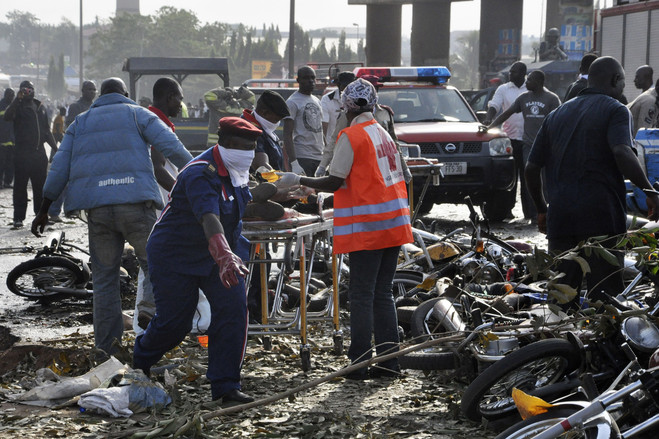
News Investigators/ Nigeria, France and Australia are championing renewed United Nations action against improvised explosive devices (IEDs), amid growing concerns over terrorist attacks and emerging weapons technologies.
The initiative was highlighted during the UN General Assembly First Committee’s debate on conventional weapons in New York.
Representatives of France and Australia identified Nigeria as a partner in advancing the resolution addressing the dangers posed by improvised explosive devices.
The French delegation said it was presenting the resolution with Australia and Nigeria and called on other countries to support and co-sponsor it.
Australia similarly urged UN Member States to support the initiative, citing increasing technological sophistication in the production and deployment of explosive devices.
In a separate national intervention, Nigeria warned that illicit small arms and light weapons continued to fuel terrorism, violent extremism, organised crime and communal conflicts.
The Nigerian delegation, expressed particular concern about the proliferation and diversion of weapons across Africa and the Sahel.
It said the uncontrolled circulation of conventional weapons was undermining regional stability, human security and sustainable development.
Nigeria reaffirmed its commitment to implementing the UN Programme of Action on Small Arms and Light Weapons and the International Tracing Instrument.
The country welcomed international discussions examining emerging technologies capable of undermining existing weapons-control mechanisms.
It also supported stronger international cooperation to improve ammunition safety, secure weapons stockpiles and prevent diversion to unauthorised recipients.
Nigeria advocated practical assistance to developing countries through technical support, capacity building, financing and technology transfer.
The delegation further supported establishing a dedicated UN fellowship programme on small arms and light weapons.
On autonomous weapons, Nigeria expressed concern about the humanitarian, legal and security consequences of systems capable of employing lethal force with reduced human involvement.
It insisted that human judgment, control and accountability must remain central to decisions involving the use of force.
Nigeria consequently supported international efforts towards a legally binding instrument addressing the risks associated with lethal autonomous weapons systems.
The delegation said such arrangements must remain consistent with international humanitarian law and respect countries’ legitimate security interests.
Nigeria also welcomed preparations for the first meeting of states under the Global Framework for “Through-life Conventional Ammunition Management”, scheduled for 2027.
The country’s intervention came as governments prepare for further negotiations on autonomous weapons and conventional arms regulation.
The renewed initiative against improvised explosive devices build on previous general assembly resolutions addressing the prevention, detection and mitigation of attacks involving such weapons.
NAN