
News Investigators/ The Minister of Information and National Orientation, Mohammed Idris, has urged Nigerian broadcasters to prioritize accuracy, fairness, and professional ethics as the country prepares for the 2027 general elections.
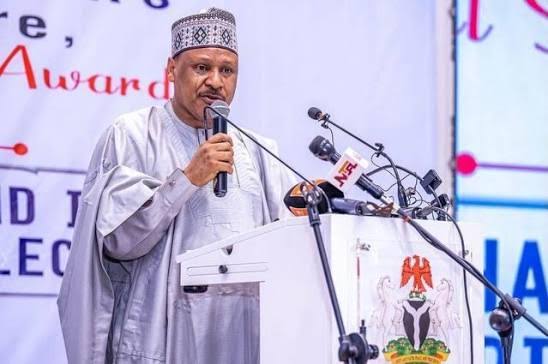
Speaking on Monday in Bauchi at the 3rd Annual National Conference of the Society of Nigerian Broadcasters (SNB), Mr Idris emphasised that responsible broadcasting is vital to safeguarding democracy and building public trust in the electoral process.
His speech was delivered by the Director-General of Voice of Nigeria (VON), Jibrin Baba Ndace.
In a statement issued Tuesday by his Media Aide, Rabiu Ibrahim, the minister noted that broadcasting’s wide reach places a heavy responsibility on practitioners to ensure all reportage is verified, accurate, and properly contextualised.
“Responsible broadcasting, however, should never be interpreted as favorable broadcasting,” Idris said.
He stressed that journalists must continue to question the government, political parties, candidates, and public institutions.
He urged media practitioners to hold public officials accountable while maintaining independence and clearly distinguishing between established facts, allegations, opinions, and unverified claims—especially given the rise of AI-driven deepfakes and social media misinformation.
“Verification cannot be treated as an occasional newsroom procedure; it must remain at the heart of professional broadcasting,” Idris said.
He called on newsrooms to integrate fact-checking into their daily workflows.
While encouraging media houses to host robust, legitimate debates, the minister warned against ethnic and religious provocation, hate speech, and deliberate disinformation leading up to 2027.
“Political competition is an essential part of democracy, but it must not be allowed to become a source of incitement, hate speech, ethnic or religious provocation, or the deliberate circulation of false information,” he said.
Idris also highlighted ongoing Federal Government investments in media infrastructure, including the Digital Switch Over (DSO) initiative and modernising state broadcasters such as the Nigerian Television Authority (NTA), Federal Radio Corporation of Nigeria (FRCN), and VON.
“The future of broadcasting will be shaped by technology, but its credibility will continue to depend on people,” he added.
He urged the SNB to bolster training around election reporting, verification, and safeguards against synthetic media.
NAN