

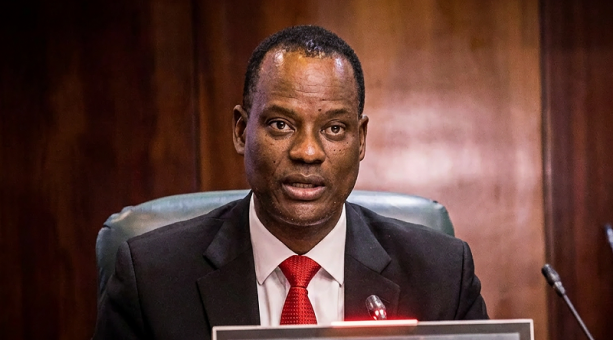
News Investigators/ The Minister of Finance and Coordinating Minister of the Economy, Taiwo Oyedele, has called for better and sustainable housing finance to improve access to affordable homeownership in the country.
Prof. Oyedele made the call on Tuesday in Abuja at the ninth Affordable Housing Finance and Investment Summit and Expo (AHFIS 9.0).
The theme of the summit was “Housing is Finance: From Financing to Homeownership.”
Prof. Oyedele, represented by his Special Assistant on Physical Risk Management and Sustainability, Dr Greg Ezeilo, said the challenge of affordable housing went beyond building houses.
He stressed the need for improved financing arrangements, institutional coordination and affordable mortgage products.
“Housing is finance, from financing to home ownership underscores a fundamental truth.
“The challenge of affordable housing in Nigeria is not merely that of design and construction.
“It is largely one of financing architecture, institutional coordination and the affordability of life for Nigerians,” he said.
The minister identified high construction costs, limited access to long-term finance, expensive mortgage products and difficulties in perfecting land titles as major barriers to homeownership.
He also pointed the gap between household incomes and housing prices as a challenge requiring urgent attention.
According to him, housing should be recognised as an instrument of economic development because of its capacity to generate employment, stimulate investment and create wealth.
He said the sector supported activities across construction, manufacturing, transportation, financial services and small and medium-scale enterprises.
“Beyond providing suitable and affordable shelter, housing stimulates demand across construction, manufacturing, transportation.
“It also stimulates financial services, and numerous small and medium-scale enterprises, making this industry a pillar of national development,”he said
The minister called for a shift from isolated housing projects to a demand-driven and financially sustainable housing development approach.
He said the approach should provide innovative mortgage structures, long-term funding, credible credit assessment systems and financing products suited to Nigeria’s diverse income patterns.
Prof. Oyedele also called for stronger collaboration among developers, mortgage institutions, commercial banks, pension funds, insurance companies, capital market operators and public institutions.
He said housing finance should accommodate Nigerians with irregular, seasonal and informal-sector incomes.
Also speaking, the Chairman of the AHFIS Board, Ibrahim Gambari, highlighted the importance of digital technology in improving access to housing finance.
Prof. Gambari said digital infrastructure could strengthen transparency, facilitate savings and contributions, improve credit assessment and connect prospective homeowners with verified housing opportunities.
According to him technology supported by appropriate institutional arrangements and financial partnerships can improve the housing challenges.
“Technology alone cannot solve the housing challenge.
“However, when supported by appropriate institutional arrangements, sound governance, financial partnerships and enabling policies, digital infrastructure can significantly improve the efficiency, accessibility and sustainability of housing finance,” he said.
Prof. Gambari urged stakeholders to focus on expanding mortgage penetration, mobilising domestic and international capital, strengthening cooperative housing and promoting affordable building materials.
In his keynote address, Dangote Cement’s North-Central Regional Director, Bankole George, said the country’s housing deficit estimated to 28 million units, requires about N21 trillion to address.
According to him, lack of adequate housing has pushed desperate families into unfinished buildings and makeshift shelters, even under bridges.
“Reports from the State House put our housing deficit at 28 million houses, and the funding needed to close it at about N21 trillion, beyond those numbers are real families.
“Lack of adequate housing has pushed desperate families into unfinished buildings and makeshift shelters, even under bridges, like we see in Lagos and other parts of Nigeria”,he said.
Mr George called for simplified mortgage processes, improved land administration, stronger public-private partnerships and policies that would encourage investment in affordable housing.
He also advocated alternative financing arrangements, including cooperative savings, rent-to-own schemes, employer-assisted housing and flexible repayment plans for informal-sector workers.
He urged stakeholders to align housing supply with effective demand, stressing that building houses without ensuring affordability would leave completed homes inaccessible to prospective homeowners.
Earlier, the Founder and Convener of AHFIS, Saheed Adelakun, said Nigeria faced an estimated housing deficit of more than 28 million units, while Africa’s deficit exceeded 53 million units.
Mr Adelakun said the housing challenge in Africa was enormous, but the opportunities for investment and development were even greater.
He called for a shift from housing financing to homeownership, fragmented initiatives to structured partnerships, and housing demand to effective demand aggregation.
“The housing challenge before us is enormous, but the opportunities are even greater.
“Let us move from financing to homeownership, from fragmented initiatives to structured partnerships, from housing demand to effective demand aggregation, and from investment conversations to bankable projects and completed homes”, he said
Mr Adelakun announced a proposed 500-unit model affordable housing development in Abuja, with prices capped at N20 million per unit.
He said the project would serve as a model for cooperative-driven, developer-financed and digitally enabled homeownership.
“We are presently procuring bankable offtakers’ guarantees as comfort for prospective developers and originating pre-approved mortgages for profiled and eligible offtakers who are also saving towards their equity contributions,” he said.
NAN