

News Investigators/ The Federal Government says the removal of fuel and foreign exchange subsidies has enhanced its capacity to fund critical aviation infrastructure across major airports in the country.
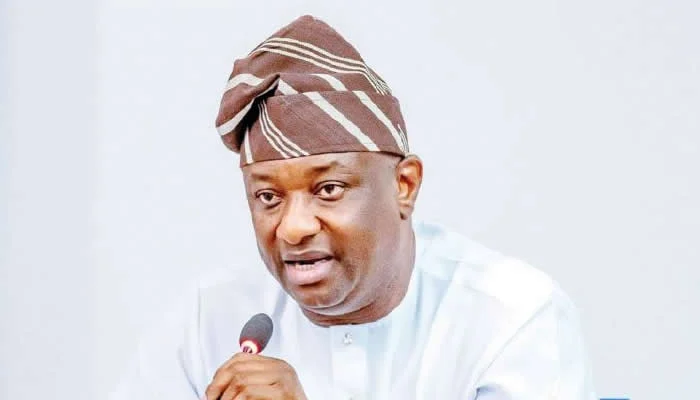
The Minister of Aviation and Aerospace Development, Festus Keyamo, stated this on Monday in Lagos at Aero’s Contractor’s 67th anniversary celebration.
Mr Keyamo said the policy changes freed resources previously committed to subsidies and improved government liquidity.
He said this created greater capacity to invest in aviation infrastructure after decades of underfunding.
He disclosed that the Federal Government was targeting N1 trillion under the Renewed Hope Agenda for critical aviation infrastructure.
According to him, 500 million dollars (N920 billion) had been raised for reconstruction of the Murtala Mohammed International Airport (MMIA), Lagos, without borrowing.
Mr Keyamo said Nigeria’s inability to adequately finance its major airports over the years was largely linked to revenues committed to fuel subsidise and foreign exchange subsidies.
He said the situation left critical aviation infrastructure to deteriorate, while major airport projects increasingly depended on borrowing.
“Because the country had no money for infrastructure, the thing we managed to do was to borrow money,” he said.
The minister said terminals constructed in Lagos, Abuja, Kano and Port Harcourt were funded with Chinese loans, which Nigeria was still repaying.
He contrasted the earlier borrowing with the current administration’s approach to financing airport infrastructure.
“In less than two years after we removed subsidies from both naira and fuel, President Bola Tinubu raised 500 million dollars to rebuild Lagos Airport. Not money borrowed,” he said.
Mr Keyamo said the increased liquidity following the policy changes had strengthened the government’s ability to fund major infrastructure projects.
He also linked the reforms to an increase in the country’s foreign reserves, which he said had risen from 3 billion dollars to 56 billion dollars.
The minister said improved liquidity and stronger reserves could support investment, infrastructure development and employment.
Keyamo said construction of a second runway at the Nnamdi Azikiwe International Airport, Abuja, would cost about N400 billion.
He said the project illustrated the financial consequences of delaying critical infrastructure, noting that its estimated cost had risen sharply.
“We could not raise N45 billion at that time to do the second runway. About 15 years to 20 years later, it is now costing us nearly N500 billion naira,” he said.
He described the development as a lesson on the cost of postponing infrastructure projects, stressing that government must invest in critical facilities when needed rather than allow costs to escalate.
Mr Keyamo said aviation infrastructure development was a key component of the government’s strategy for expanding the sector.
He added that policies were also being implemented to strengthen local airlines and support their expansion.
According to him, the Lagos airport reconstruction has generated employment, with more than 2,000 Nigerians working daily on the project.
“People that were previously unemployed are there at the Lagos airport welding and plumbing among other artisans. They are all local,” he said.
He said infrastructure spending had a multiplier effect beyond physical development, creating jobs and supporting economic activity.
Mr Keyamo said government was also working to improve connectivity between Lagos city and the airport through the Red Line rail project.
He expressed confidence that the rail link would further enhance accessibility to the airport.
The minister said aviation policies were also aimed at creating an environment where Nigerian airlines could expand and regain international routes.
He urged Aero Contractors to continue expanding its fleet and operations, describing its survival as evidence of the resilience of Nigeria’s aviation industry.
Mr Keyamo said sustainable aviation growth would require continued infrastructure investment and policies supporting local operators.
He maintained that subsidy removal should be viewed in the context of its impact on government’s capacity to fund critical infrastructure.
The Chief Executive Officer of Aero Contractors, Capt. Ado Sanusi, urged the Federal Government to make aviation a strategic priority.
Sanusi said aviation could serve as a catalyst for economic growth through tourism, trade, job creation and foreign investment.
He warned that other countries were developing airports and maintenance hubs that could attract Nigerian passengers and business.
“If we do not respond strategically and soon, we risk our airports becoming ghost airports, our hangars falling silent, and our jobs and investment flying quietly across the border,” he said.
The chief executive called for a deliberate national focus on aviation alongside roads, rail and power.
“We are respectfully asking for a Renewed Hope for Aviation, a deliberate, strategic national focus on this sector,” he said.
Sanusi thanked the Asset Management Corporation of Nigeria, aviation regulators and the Federal Government for their support.
NAN