

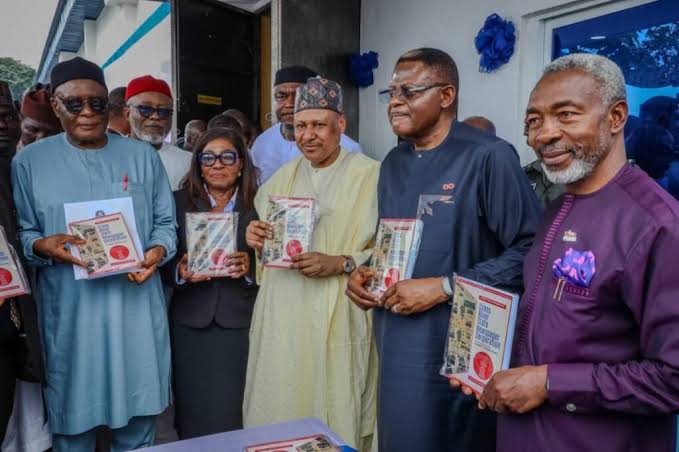
News Investigators/ The Federal Government has reaffirmed its commitment to transparent communication, citizens’ engagement and national values to promote unity and strengthen social cohesion among Nigerians.
The Minister of Information and National Orientation, Mohammed Idris, stated this on Wednesday in Abuja at the 2026 World Public Relations Forum (WPRF), with the theme, “Responsible Communication: The Voice of the World”.
He said responsible communication remained a critical instrument for promoting good governance, strengthening public confidence and building stronger relationships between governments and citizens.
The minister explained that government communication should extend beyond announcing policies and explaining official decisions to encouraging dialogue and creating opportunities for public participation.
According to him, effective communication requires governments to listen to citizens, understand their concerns and provide appropriate feedback.
“Government communication must go beyond announcing policies or explaining decisions. It also has to do with encouraging dialogue and building public confidence,” he said.
Mr Idris observed that the traditional approach, where governments simply disseminated information for citizens to receive without feedback, was no longer suitable for contemporary governance.
“Gone are the days when leaders are expected to just dish out information to citizens and citizens are expected to swallow and consume this information without any feedback,” he said.
He noted that communication had become increasingly sophisticated, particularly with the growing influence of technology and digital platforms.
The minister said the Federal Government, under the leadership of President Bola Tinubu, recognised the importance of openness, citizens’ participation and national values in strengthening the country’s unity.
“For us, therefore, in Nigeria, under the authority of President Bola Tinubu, we prioritise transparent communication, citizens engagement, national values, all these are ingredients that promote national unity and foster social cohesion among our people,” he said.
Mr Idris said the government continued to collaborate with the media, civil society organisations and other stakeholders while embracing technology to improve information dissemination.
He, however, stressed the need to strengthen information capabilities to ensure that technological advancement translated into more effective and responsible public communication.
The minister emphasised the importance of cooperation among African countries in addressing emerging challenges in the information and communication environment.
“As Minister of Information and National Orientation, just as my colleagues on the African continent have also been, it is our responsibility to deepen cooperation on information, on digital literacy, and in crisis communication,” he said.
He explained that such cooperation would enable African countries to develop common responses to shared challenges, particularly misinformation and disinformation.
Mr Idris disclosed that Nigeria had taken a significant step towards addressing the challenges through its successful bid to host the first-ever Media and Information Literacy Centre, a UNESCO Category 2 Institute, in Abuja.
He said the initiative was expected to strengthen media and information literacy while equipping citizens with the necessary skills to identify and respond appropriately to misleading information.
The minister described misinformation and disinformation as major threats to public trust, democratic governance and the credibility of information systems.
He said Nigeria’s hosting of the 2026 World Public Relations Forum was a significant opportunity to demonstrate the country’s leadership and growing international recognition in communication and public relations.
Mr Idris expressed delight at hosting the international gathering, noting that it was only the second time the forum had been organised on the African continent.
“I am personally deeply honoured to be the host minister for this conference. This is only the second time it has happened on the African continent,” he said.
He welcomed participants and delegates from different countries, describing the gathering as an important platform for exchanging experiences and strengthening professional relationships.
The minister described Nigeria as a leading country on the African continent, adding that the opportunity to host the forum reflected the country’s standing and respect among African nations.
He thanked the organisers and international partners for supporting Nigeria’s hosting of the event.
Mr Idris said the forum would provide opportunities to strengthen friendship, mutual understanding and trust among African governments, citizens and other stakeholders.
He noted that technological changes, increasing public expectations and the spread of misinformation were reshaping the information environment across Africa and the world.
According to him, the challenges require responsible communication strategies that promote transparency, accountability and constructive engagement.
He urged communication professionals to contribute meaningfully to addressing the challenges by strengthening public trust and promoting credible information.
In his remarks, Imo State Governor, Hope Uzodinma, urged public relations practitioners to translate the knowledge acquired at the forum into practical actions capable of improving relationships between governments, institutions and citizens.
“Please, practise what you have learned. If you tell a government to listen to its people, help make sure that the people also listen to governments,” he said.
He maintained that the voice of the people remained central to responsible governance, stressing that his administration attached importance to citizens’ feedback.
“The theme of this forum is responsible communication. The voice of the world. For us in Imo, the voice that matters most is the voice of our people,” he said.
Mr Uzodinma explained that his administration regularly engaged citizens, listened to their concerns and used their feedback to improve governance and service delivery.
“We engage with them. We communicate. We listen to the feedback they share with us. We work with that feedback and they see through our deliverables that we have to be listening. That is the secret behind our success in Imo,” he said.
Also speaking, Nasarawa State Governor, Abdullahi Sule, highlighted the importance of quality education, institutional development and leadership training in building a sustainable public relations profession.
Mr Sule explained that Nasarawa State’s emergence as the proposed home of the University of Public Relations and Leadership was inspired by the global reputation of institutions such as Harvard University.
He said the vision was to establish an institution that would promote excellence in teaching, research and leadership development.
The governor recalled that Harvard University was established in 1636, long before the United States attained independence, as an institution dedicated to learning and the development of future leaders.
He said the institution’s international reputation was built on its academic excellence, prestige and contributions to leadership development.
Mr Sule noted that Harvard’s history also demonstrated the importance of private contributions and institutional commitment to the development of higher education.
He explained that John Harvard, whose name the university bears, contributed half of his estate and donated his personal library of 400 books to support the institution.
The governor said such contributions demonstrated how individuals and organisations could support the establishment of institutions capable of making lasting contributions to society.
He disclosed that the University of Public Relations and Leadership initiative originated from the Global Alliance for Public Relations and was brought to Nigeria through the Nigerian Institute of Public Relations (NIPR).
Mr Sule commended the stakeholders involved in the initiative, saying the proposed institution would strengthen professional training and leadership development in Nigeria and beyond.
He also attributed Nasarawa State’s ability to support the project partly to increased financial resources arising from the Federal Government’s economic reforms.
The governor said the removal of fuel subsidy and the unification and floating of the naira had increased resources available to states, enabling his administration to support development initiatives.
He explained that part of the additional resources available to the state had been committed to establishing the institution.
Mr Sule urged international participants to visit Nasarawa State and support the development of the University of Public Relations and Leadership, expressing optimism that it would become a recognised centre of excellence.
He said the institution would serve as a lasting contribution to professional development, knowledge creation and leadership advancement in Nigeria and Africa.
NAN