

News Investigators/ Residents seeking healthcare in public hospitals across satellite towns of the Federal Capital Territory (FCT) have alleged persistent cash-only payment practices.
The allegations persist in spite of the Federal Government’s push for a cashless economy and increased adoption of electronic transaction platforms nationwide.
A News Agency of Nigeria (NAN) survey found that some patients and caregivers at government-owned hospitals alleged they were required to pay cash for services, while some claimed receipts were not issued afterward.
Some respondents further alleged that when cash was unavailable, they were directed to nearby Point-of-Sale (PoS) operators or given private account details for transfers, raising concerns about accountability and transparency.
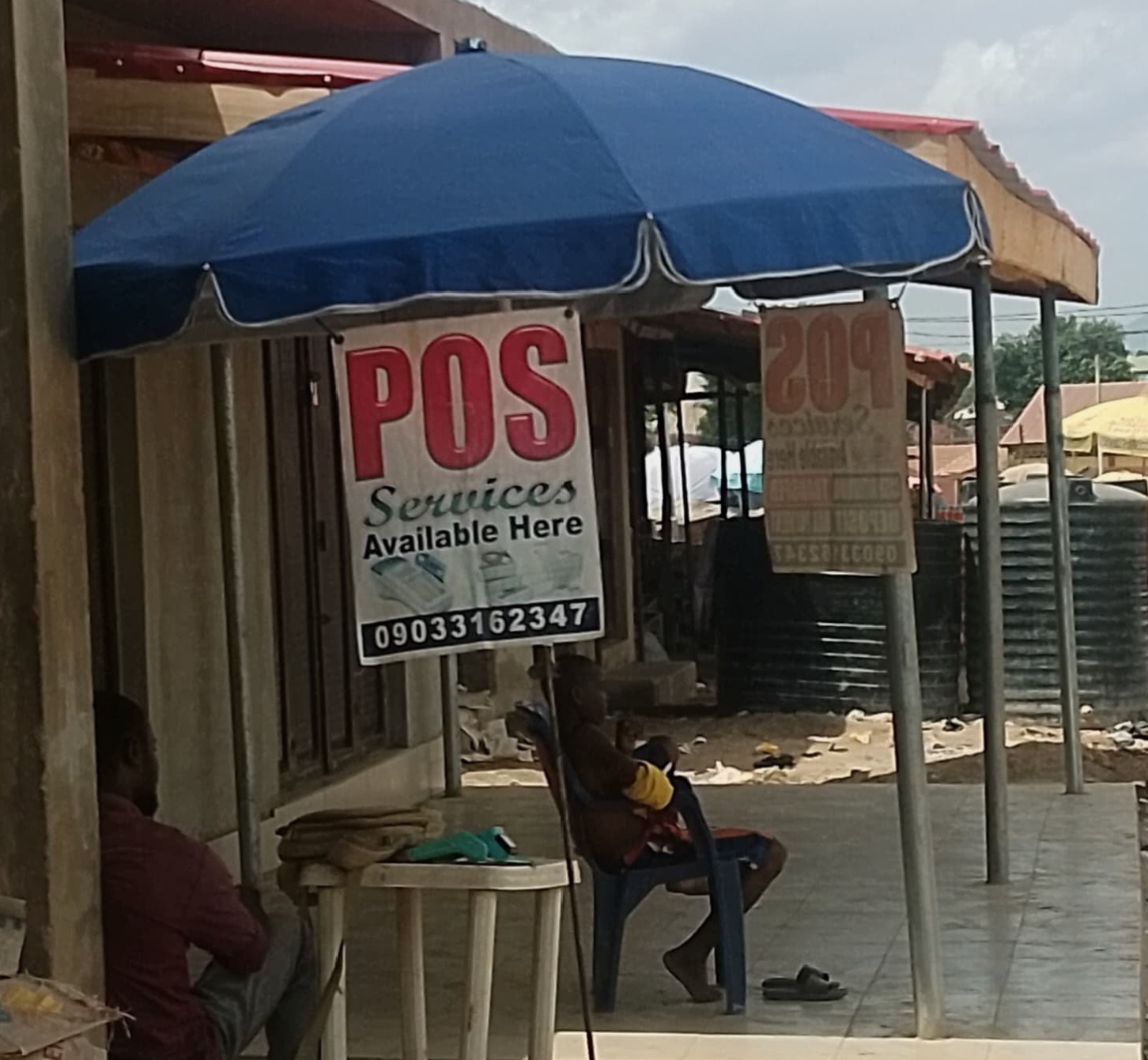
The development, according to affected patients, has inadvertently boosted patronage for PoS operators stationed around hospital premises, as relatives scramble to obtain cash needed for treatment and hospital-related expenses.
Mrs Halima Bature alleged that her relative’s emergency admission at Kubwa General Hospital exposed the challenge, as the family was reportedly required to make cash payments throughout the treatment process.
She said cash was allegedly demanded for obtaining a hospital card, conducting laboratory investigations and securing ward admission, leaving the family with limited alternatives during the medical emergency.
“All the staff we encountered that night insisted on cash payments. Even to obtain the hospital card, we paid cash.
“When we got to the lab to conduct tests, we paid cash; at the ward, before we were allocated a bed, we paid cash,” she alleged.
Bature further claimed that after exhausting available cash, the family was provided a PoS machine for payment but discovered the account details were not linked to the hospital.
“When we complained, we were told that it was the only way to make payment if we wanted to be treated,” she said.
She also alleged that receipts were not issued for any of the payments made during the admission process, making it difficult to track the transactions afterwards.
At the Nigeria Customs Service (NCS) Hospital, Karu, Mrs Odunayo Adebanji alleged that she spent about N66,000 during her son’s two-day admission and made all payments in cash.
She alleged that in spite of the volume of payments made during treatment, no official receipts were issued to document the transactions or provide evidence of expenditure.
Mr Tayo Akinyemi, another caregiver at the facility, alleged that he paid cash for an ear swab procedure and later paid N10,000 directly to the doctor for ear flushing.
“I was shocked that a hospital this big and which belongs to a reputable organisation like Customs would be operating like this.
“I was asked to go downstairs and use PoS to make withdrawals. On getting back downstairs, I discovered that there were so many PoS operators around, ready to give you whatever amount you required at a charge,” he said.
Akinyemi said the experience left him questioning whether such payment practices were standard procedures within the facility or isolated incidents involving individual healthcare workers there.
“I was told everything has to be in cash. It is totally unfair because it negates what the government is preaching about a cashless economy,” he said.
However, not all patients interviewed by NAN reported similar experiences, with some insisting that payments at the hospitals were conducted through official channels and properly documented.
Mrs Glory Yamput, whose relative received treatment at the NCS Hospital, said she made payments through approved procedures and received receipts for all transactions conducted there.
At Bwari General Hospital, Mrs Vera Yunana alleged that she repeatedly resisted demands for cash payments when her sister-in-law was admitted for childbirth and related medical care.
She alleged that hospital personnel initially requested N14,000 in cash and recorded the amount and purpose on a piece of carton instead.
Yunana said when she requested the hospital’s account details to facilitate a transfer, her request was allegedly resisted by the staff handling the admission process.
She further alleged that after doctors recommended a Caesarean section, the family was informed that an additional N78,000 would be required in cash.
According to her, she refused to make the payment in cash and insisted on obtaining an account number before proceeding with the required transaction.
Yunana alleged that a nurse and doctor eventually provided a private account number, which she believed was not officially linked to the hospital.
She further alleged that nurses on different shifts repeatedly requested between N1,000 and N3,000 in cash for drugs following the surgical procedure.
According to her, the requests were neither accompanied by written prescriptions nor official receipts but stopped only after the family indicated financial exhaustion.
She said attempts to report the matter to hospital management were unsuccessful, although she later heard that digital payment options had since been introduced.
Nevertheless, several other users of Bwari General Hospital told NAN they had never encountered demands to pay into private accounts or unofficial payment channels.
Mr Nurudeen Balogun, who was receiving treatment for tooth pain, said he had used the hospital several times without experiencing such requests.
Imam Mufutau Adewale, who brought an emergency patient to the facility on Aug. 30, said treatment commenced immediately without any payment being demanded beforehand.
“Few days ago, I brought an emergency case here and the patient was attended to thoroughly without even paying any dime. So I have never witnessed such a thing here,” he said.
Imam Olesin Abdulazeez also said he transferred funds directly into the hospital’s account and had never been asked to use a private account.
“I have never been asked to transfer money into a private account.
“However, there is no smoke without fire. I cannot say if such a thing had happened to some people, maybe in the night or whatever. I am only talking for myself,” he said.
Mrs Mercy John and Mrs Ihuoma Pearl, both patients at Kubwa General Hospital, similarly dismissed the allegations, saying they had never encountered such payment demands.
NAN observed that PoS operators around hospitals in Nyanya, Kubwa, Karu, Kuje and Bwari were recording significant patronage from patients and caregivers seeking cash.
Mr Tony Abu, a PoS operator near Nyanya General Hospital, attributed the growth of his business partly to hospital users who regularly required cash.
“I will not lie, but I want to appreciate God for the increase in my business.
“Since I came here, my business has been booming because many people from the hospital patronise me, especially when they want to buy or pay for their drugs, food, recharge cards and others.
“This is one of the things that encourages me to always stay put here,” he said.
Miss Kelly Inang, another PoS operator near a hospital in Karu, said the business generated enough income to support her educational pursuits.
She said daily profits ranged between N5,000 and N7,000, depending on customer volume and the number of transactions processed each day.
Mr Abdullahi Idachaba, operating near Nyanya General Hospital, said hospital locations generally attracted higher customer traffic than conventional commercial areas and markets.
A staff member of Nyanya General Hospital, who spoke anonymously, alleged that cash payments remained the prevailing practice for many services within the facility.
“This is the trend here. Even if somebody is dying, the relative must present cash to purchase or pay for any services rendered here.
“Even down to antenatal and needle purchase, we collect cash,” the staff member said.
Miss Anne Mitchell, who received treatment after being hit by a one-way driver, alleged that her uncle obtained cash from a PoS operator.
“He went outside the gate to use PoS to pay for every treatment they gave me, but they didn’t give any receipt,” she said.
Meanwhile, PoS operators outside hospital environments reported declining patronage, attributing the trend to growing competition from traders offering similar services within markets.
Mrs Agnes Egwuda, who operates at Nyanya Market, said many traders now provided cash withdrawal services, significantly reducing the number of customers patronising dedicated PoS operators.
Mr Moses Ikenna also described business as slow and expressed interest in relocating to a hospital environment where customer traffic appeared stronger and more consistent.
Responding to the allegations, authorities of Bwari and Kubwa General Hospitals denied knowledge of any payment diversion scheme and requested affected patients to provide evidence.
Dr Ibrahim Mijinyawa, Medical Director of Bwari General Hospital, represented by Dr Kayode Oshodi, said management had not received any formal complaint on the matter.
“This may be speculation or people saying things that are not really founded, but as far as the management is concerned, we are not aware of this allegation.
“If there are people that have experienced such, they can come forward and we will investigate the allegation,” he said.
Mijinyawa said the hospital remained willing to investigate any credible complaint and encouraged patients to utilise available reporting channels, including anonymous submissions.
“We are more than eager to investigate such a thing. But to our notice, up to this moment, there hasn’t been any complaint of such.
“There is a suggestion box in our facility here, they should bring the complaint forward. The complainant might want to be anonymous. Just remove your name and state the date and time such things happen,” he said.
At Kubwa General Hospital, Medical Director, Dr Emmanuel Musa also challenged individuals making the allegations to present verifiable evidence for investigation.
“We have not seen any evidence to this. We will be happy to make some people scapegoat if evidence can be brought up,” Musa said.
He urged affected individuals to approach management directly, emphasising that mechanisms already existed within the hospital to receive complaints and grievances.
“We are pleading with affected individuals to come up with proof. Everyone has the right to enter MDs office to lay their complaint,” he said.
Musa added that notices warning patients against making payments to individuals were prominently displayed in strategic locations within the facility.
“It is boldly written at the entrance of some offices in this hospital, ‘Do not pay money to anyone.’
“We have public complaint box where people can channel their grievances, so they should come up with evidence,” he said.
The NCS acknowledged concerns surrounding payment processes at its Karu hospital and said efforts were underway to strengthen electronic payment infrastructure.
Deputy Comptroller, Abdullahi Maiwada, the service spokesperson, said the hospital was established primarily for Customs personnel but later opened to the public.
He said the expansion formed part of the service’s Corporate Social Responsibility initiative aimed at improving access to healthcare within surrounding communities.
Maiwada said the NCS remained committed to transparency and accountability and was working to align hospital payment processes with national cashless policy objectives.
“In full alignment with the Federal Government’s Cashless Policy, the NCS Management previously initiated steps to deploy electronic payment infrastructure integrated with the SystemSpecs (Remita) platform to interface directly with the Treasury Single Account (TSA).”
He explained that implementation required administrative adjustments because of the operational framework governing the hospital’s revolving fund arrangements and financial procedures.
According to him, the NCS Accounts Unit and Remita were finalising the deployment of PoS terminals across major service points.
“The NCS Accounts Unit, in active collaboration with Remita, is finalising the deployment of PoS terminals across key service points to ensure smooth, cashless transactions for all patients,” Maiwada said.
On allegations of non-issuance of receipts, he said established procedures required that every payment made at the hospital be properly receipted.
“Standard administrative protocol mandates the immediate issuance of official receipts for every paid service,” he said.
Maiwada explained that emergency and night-shift payments could be documented temporarily pending reconciliation when accounting personnel were unavailable.
“To prevent service disruptions during off-peak hours, emergency and night-shift admissions are documented via an interim ledger system when regular accounting personnel are off-duty.
“All night-shift transactions are reconciled and formally receipted at the start of the next business morning,” Maiwada said.
He reassured patients and caregivers that the service remained committed to delivering transparent, accountable and technology-driven healthcare services at the facility.
For many patients, however, the issue extends beyond convenience, raising questions about accountability, traceability of payments, emergency access to treatment and adherence to cashless payment reforms.
For PoS operators clustered around public hospitals, each cash-based transaction translates into additional patronage, transforming healthcare-related cash demands into a significant commercial opportunity.
NAN