

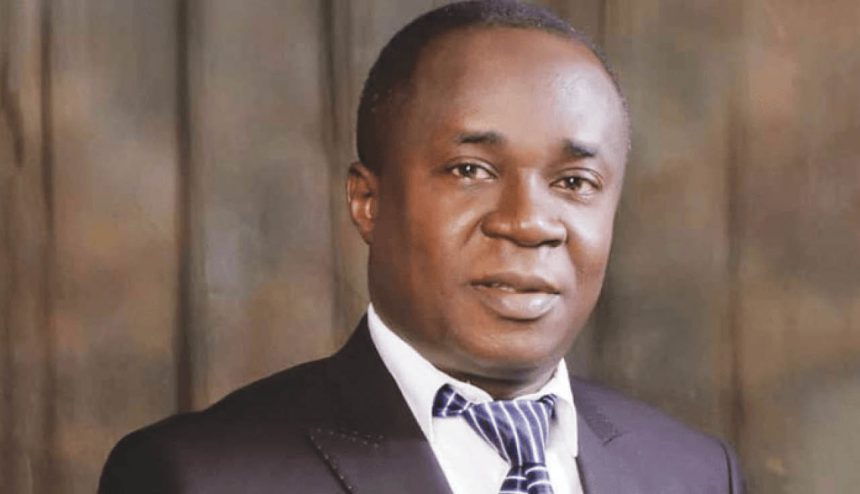
News Investigators/ The President, Capital Market Academics of Nigeria (CMAN), Uche Uwaleke, has described the 2026 budget as a reform-oriented and investment-driven fiscal stance.
Prof. Uwaleke, also a financial expert, disclosed this in an interview with the News Agency of Nigeria (NAN) on Saturday in Abuja.
He said the budget represented a significant fiscal milestone and in many respects, a more deliberate attempt to align public spending with the country’s long-term development priorities.
Prof. Uwaleke said while the macro-fiscal risks, particularly around debt and deficits, remained significant, the emphasis on capital expenditure and critical sectors provided a solid foundation.
He said it was important to commend the clear prioritisation of critical sectors such as security, infrastructure, education, and health.
Prof. Uwaleke said allocating N5.41 trillion to defence and security, N3.56 trillion to infrastructure, N3.52 trillion to education, and N2.48 trillion to health, signalled a recognition of the foundational role the sectors played in stabilising the economy and improving citizens’ welfare.
“In a country where insecurity, infrastructure deficits, and human capital challenges have long constrained growth, this focus is both necessary and timely.
”Perhaps the most notable structural shift in the 2026 budget is the allocation of N32.2 trillion, nearly 50 per cent of total expenditure, to capital projects.
”This marks a welcome departure from previous fiscal cycles where recurrent expenditure dominated, often at the expense of investments that drive productivity and growth.
”A capital heavy budget, if effectively implemented, has the potential to stimulate economic activity, crowd in private investment, and lay the groundwork for sustainable development,” he said.
Prof. Uwaleke said the decision to extend the implementation of the capital component of the 2025 budget to June 2026 was both pragmatic and justified.
He said it was justified given that many projects were already at advanced stages of completion.
Prof. Uwaleke added that the extension would provide Ministries, Departments, and Agencies, the opportunity to consolidate ongoing works, avoid waste, and maximise value for public expenditure.
”Abruptly terminating funding in March 2026 would have risked leaving critical infrastructure projects stranded, thereby undermining both fiscal efficiency and public confidence,” he said.
On revenue, Prof. Uwaleke expressed optimism that the targets set out in the budget may be realised.
He said that global oil prices had remained above the budget’s reference benchmark, largely influenced by geopolitical tensions, including developments in the Middle East.
”For an oil-dependent economy like Nigeria, this presents a potential upside in terms of revenue inflows.
”However, it also underscores the need for prudence, as such external factors remain inherently volatile.
”That said, the fiscal outlook is not without its concerns,” he said.
The CMAN president said the allocation of about N15.8 trillion to debt servicing was substantial and continued to crowd out resources that could otherwise be deployed to development priorities.
”Coupled with a budget deficit in excess of N31 trillion, this raises legitimate questions about fiscal sustainability and the growing burden of public debt,” he said.
Prof. Uwaleke stressed the need for deliberate steps to be taken to reduce both the size of the deficit and the overall debt stock over the medium term.
He recommended that any windfall gains from higher than expected oil revenues be applied toward deficit reduction and lowering borrowing requirements, rather than expanding expenditure.
Prof. Uwaleke said this would not only ease pressure on public finances but would also send a strong signal of fiscal discipline to investors and credit rating agencies.
”Equally important is the need to ensure that the ambitious capital allocations translate into tangible outcomes.
”Prioritisation will be key, the Federal Government should focus on high impact, economically viable projects and ensure that funds are released in a timely manner to avoid implementation delays.
”The real test will lie in execution. If implemented with discipline and focus, this budget could mark a turning point in Nigeria’s journey toward economic stability and shared prosperity,” he said.
The News Agency of Nigeria (NAN) reports that President Bola Tinubu on April 17, signed the N68.32 trillion 2026 Appropriation Bill into law.
NAN