

A socio-political group, the Atunto Foundation, has called for a radical reorganization of Nigeria’s political and administrative structure, warning that the country is currently in a state of prolonged crisis that threatens development, equity, and regional autonomy.
The Foundation, which operates as a younger professional arm of Afenifere, the Yoruba socio-cultural body, seeks to implement a blueprint that decentralizes power, strengthens local governance, and recognizes the unique identity of the Yoruba people both within Nigeria and across the West African diaspora.
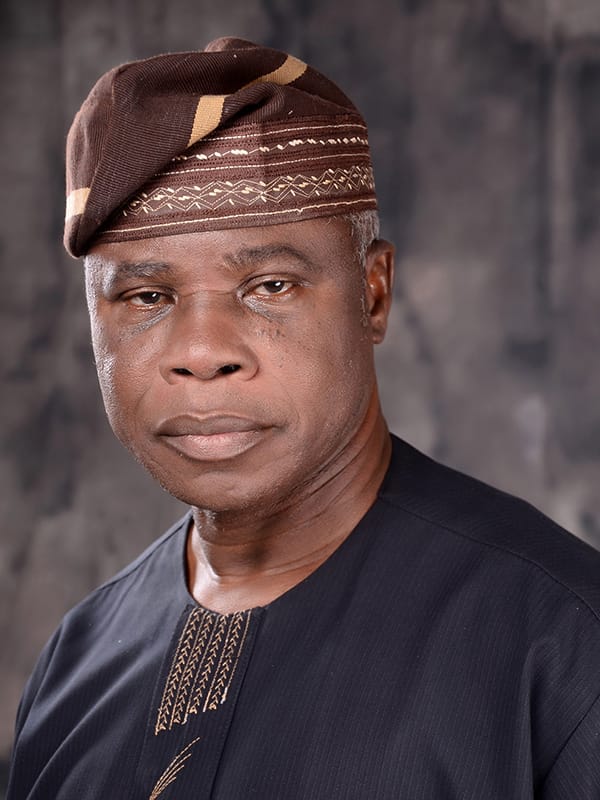
In a wide-ranging interview on Frontline, Eagle 102.5 FM, Ilese-Ijebu, Ogun State, On Wednesday, Dr. Akin Fapohunda, Director of Research at Afenifere and Secretary General of the Atunto Foundation, described Nigeria’s current system as “dysfunctional” and overly centralized, arguing that it has stifled regional development and left the Yoruba people politically marginalized.
He warned that leaders have effectively captured the populace, operating “as emperors” with little accountability to the citizens.
“We are not just to say things are not okay. We have a blueprint for change that will be better than where we are now. Where we are now is totally suffocating and it’s not encouraging and it’s not optimal at all. We need a change very, very urgently,” he stressed, emphasizing that Atunto’s mission is urgent and necessary.
Blueprint for a Restructured Yoruba Region
According to Fapohunda, Atunto Foundation seeks not merely to critique the system but to create an actionable framework for governance that revives the Yoruba region’s historical autonomy. “Since 1999, the Afenifere Mantra…has been that Nigeria is not properly structured,” he explained, recalling the period 1954–1960 as “the golden years of Yoruba nation in Nigeria” under visionary leaders like Chief Obafemi Awolowo, Lateef Jakande, Bola Ige, and Adekunle Ajasin.
“Those were selfless leaders. You didn’t need to buy your way to become a governor. You have to buy form 50 million, you campaign another 100 billion. And then once you are a governor, you are an emperor. You can do what you like. That’s not good for the system,” he said.
Fapohunda argued that contemporary governance has deviated sharply from this model. “Senator Odebyi, Senator Adesanya—who is talking Yoruba man in National Assembly now? None. They are all quiet. Because they are collecting millions. We don’t know them. And they don’t know us too,” he lamented, describing the lack of regional representation in Abuja as evidence of systemic failure.
Towards Regional Autonomy
Atunto Foundation, he noted, is structured to empower the Yoruba region and potentially integrate Yoruba-speaking populations in neighboring states through referenda and participatory democracy, rather than unilateral decrees.
“For now, Yoruba land comprises six states; Ekiti, Lagos, Ogun, Ondo, Oyo, and Osun recognized. Then the Yorubas in Kogi…have to be asked, ‘Are you happy there or not?’ There’ll be a vote. The Igbomina in Kwara, same. The Itsekiri too. Everything is by decision, not by military order,” he explained.
He outlined a parliamentary-style governance model for the region in which executive power is collective: “The parliament is supreme. If you have 100-member parliaments in Western region, that body is supreme. They are the ones that will govern the region collectively. Among them, they will select a premier…All appointments will be from the parliament. Each appointed is also elected, is equal to the premier.”
Fapohunda criticized the current concentration of power in governors, noting: “Abiodun is on his own. Sanwo Olu is on his own. Adeleke is on his own…The assemblies have just appended it. They don’t collect salaries. They don’t have organic control over the governor. That has to change.”
Decentralization, Not Secession
The Atunto Foundation stresses that its proposals do not advocate for secession, but rather for the rebalancing of federal authority. Fapohunda drew comparisons with international examples to argue for the feasibility of regional autonomy:
“United Kingdom has the Scottish, the Welsh, and the Irish apart from the English. Many times, Ireland wanted to leave UK. Scotland voted two times to secede. But people said no. The government granted them autonomy…We are asking for concessions so that we will stay. You cannot just say we must stay by force.”
He further proposed that Yoruba land should be allowed to designate Yoruba as an official language, control education locally, and manage resources according to regional priorities, echoing historical governance models where development was spread equitably across the region.
Critique of Federal Agencies and Development Commissions
Fapohunda condemned the performance of federal commissions, including the Southwest Development Commission, which he described as “federal bureaucracy controlled by Abuja” with limited impact on local development.
“They have not released money throughout this year for anybody…They will be coming from Abuja, staying in hotels, buying vehicles. What’s the business? Commissions were just means of siphoning money. It is not going to work. It will never work.”
He compared the situation to the Niger Delta, where decades of federal intervention failed to improve local conditions. “We are in labor pains. Labor pains are taking too long. Unless there is surgical operation to bring the baby out and save the life of the mother, we cannot progress,” he warned.
A Plea to the Presidency
Dr. Fapohunda addressed the urgency of reform to President Bola Tinubu, urging immediate action rather than waiting for political timelines: “Why wait for eight years? Why not do it today? States have to share assets. We have to have a referenda. We have to have new elections. Governors have to serve their term. Nobody says they should leave before their term…It would be nice for him to act now and be a leader of modern, federal Nigeria.”
He stressed that decentralization would allow leaders to respond swiftly to crises, contrasting this with the perceived detachment of central authority: “If you were in Maiduguri now, in Potiskum…would you like a leader dining in London while you are dying on a daily basis?”
Cultural Identity and Autonomy
Fapohunda highlighted the importance of cultural self-determination, asserting that Yoruba people are a distinct nation with their own language, customs, and societal norms. He explained that within Yoruba land itself, there are 26 sub-nations, each with unique traditions and languages, which would form autonomous municipalities under the proposed regional constitution.
“The Ekitis, the Ijeshas, the Ijebus, the Ijebu-Remo, the Egbas, the Yewas, the Ilajes, the Okuns, the Ibadan…Each will govern themselves according to their small culture…Once we decentralize, go and now start thinking about your locality. Don’t think of Abuja.”
Fapohunda emphasized that this model would consolidate resources locally, ensure accountability, and prevent the kind of corruption and mismanagement prevalent under the current centralized system.
A Call to Action
The Atunto Foundation presents a controversial yet detailed plan that merges historical precedent, regional identity, and parliamentary governance as a blueprint for Nigeria’s future. It challenges both the federal government and Yoruba political elites to rethink governance, decentralize power, and empower citizens through participatory democracy.
“We are not calling for secession. We are calling for discussion. We are calling for understanding…We need to be energized. We need to be sensitized that things are not okay for us at all in Nigeria,” Fapohunda concluded.
The Foundation’s proposals, if implemented, could redefine Nigeria’s federal structure, bringing decision-making closer to the people, restoring cultural autonomy, and reviving the ideals of selfless leadership that marked the region’s historic “golden years.”
Nigeria In Prolonged Labour, Unless Radical Restructuring Takes Place, Says, Fapounda


- Advertisment -