

News Investigators/ Nigeria’s external reserves have climbed to 49 billion dollars, reinforcing confidence in the economy and strengthening the Naira amid ongoing reforms in the foreign exchange market.
The steady rise is being viewed by analysts as a sign that policy adjustments by the President Bola Tinubu’s administration are beginning to yield tangible results.
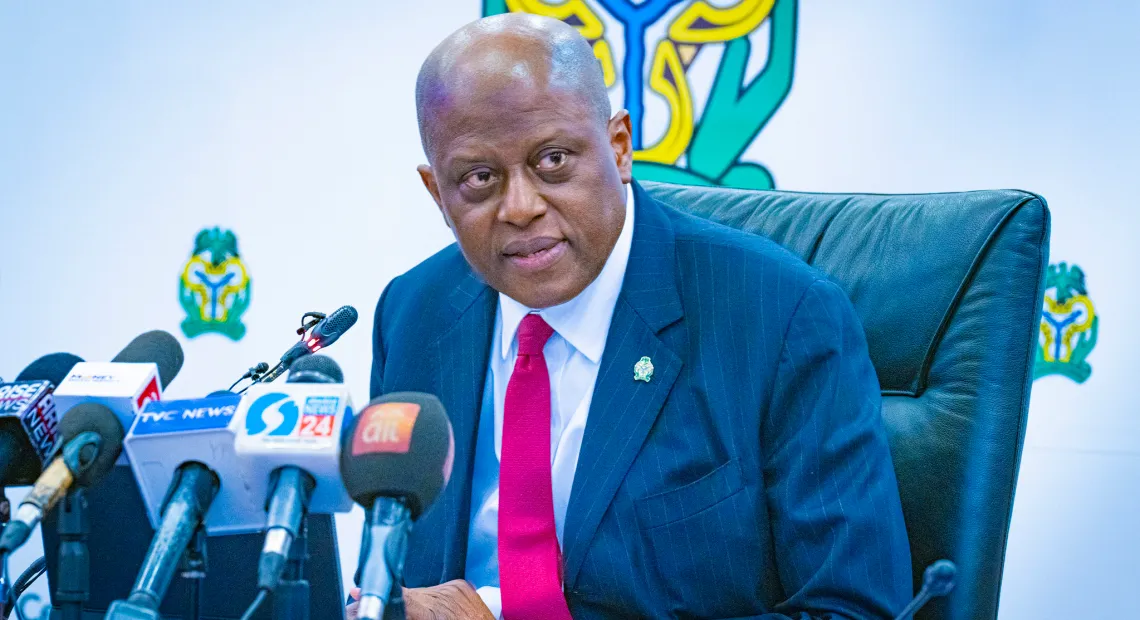
The News Agency of Nigeria (NAN) reports that the Governor of the Central Bank of Nigeria (CBN), Yemi Cardoso, recently disclosed that Nigeria’s foreign reserves rose from 46.7 billion dollar to 49 billion dollars in February, representing a 4.93 per cent growth.
He described the development as a significant turnaround from the position he inherited at the apex bank.
Economic experts say the stronger reserve position is already calming volatility in the foreign exchange market, reducing speculative pressures and improving investor sentiment.
They noted that improved inflows and tighter reforms have contributed to the upward movement.
A renowned economist, Ken Ife, told NAN on Sunday in Abuja that Nigeria’s growing external reserves are boosting the economy by strengthening the Naira, calming the foreign exchange market and creating new opportunities for economic growth.
Prof. Ife, the Lead Consultant on Private Sector Development to the ECOWAS Commission, said the stronger reserve position is boosting confidence in the foreign exchange
He said that the outlook remained positive as reforms and investments gain momentum across key sectors.
Ife added that rising output from the Dangote Petroleum Refinery was a major source of future foreign exchange inflows, particularly from fertiliser, polypropylene, aviation fuel and gas.
“Dangote Petroleum Refinery alone is increasing output from fertiliser, polypropylene, as well as aviation fuel and gas.
“This could enable the company to earn about 20 billion dollars from exports to the global market,” he said.
He urged the Federal Government to sustain the reserve build-up while channeling investments into critical sectors to raise productivity and living standards.
The expert said that the improving reserve position should create room for lower lending rates to stimulate growth in the productive sectors of the economy.
Muda Yusuf, Chief Executive Officer of the Centre for the Promotion of Private Enterprise (CPPE), commended the government for strengthening the country’s external reserves.
Mr Yusuf said that the development was already supporting exchange rate stability and easing inflationary pressures.
“This is one of the reasons the exchange rate is getting stronger, and it is also helping to slow inflation,” he said.
He urged the government to sustain the momentum by boosting oil production and strengthening non-oil foreign exchange inflows, particularly diaspora remittances.
A Professor of Capital Market at the Nasarawa State University, Keffi, Uche Uwaleke, said that what is calledl reserves, particularly when they have come from the oil earnings, is already spent.
“it is already spent money in the sense that when you sell crude oil in foreign currency, that foreign currency is converted to Naira and then shared among the three tiers of government.
“It is important to also understand that the source of the increase is not just from the oil earnings.
“We have also seen increase by way of inflows, particularly portfolio investment. And we have also seen increase by way of loans.
“In the last one year, we have seen some increase in terms of foreign loans. When you get foreign loans, you put those in your reserves. So that is on the supply side,” he said.
Prof. Uwaleke said that the country had also witnessed reduction in the demand for dollars, particularly with respect to the import of oil.
According to him, when we have reduced the import of oil, which used to constitute a huge demand on the forex, we now see the accretion happening.
“The accretion is happening not only on account of supply, but also on account of demand.
“That is why the CBN governor was talking about forex reforms that have gone to nip in the bud, speculation.
“We now have the real demand for dollar, which is now on the downward trend,” he said.
The expert, however, said that for every country, there was need to determine what constituted the optimal level of reserves, so as not to continue building reserves endlessly.
“Let us determine what is the optimal.
‘When we get to that optimal point, whatever we have in excess, we can now use that to impact in the forex market to ensure that exchange rate comes down,” he said.
Some stakeholders posited that foreign reserves, though important, are not a development strategy.
They argued that the true measure of economic performance was the living conditions of citizens.
A financial expert, Kunle Akinola, said that there was a positive effect of foreign reserve, export earnings and foreign direct investment on economic growth.
According to him, this implies that increase in foreign reserve; export earnings and foreign direct investment will raise aggregate demand thereby increasing investment and growth.
NAN