

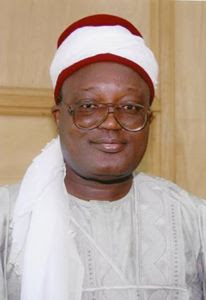
By Shu’aibu Usman Leman
I have long maintained the firm conviction that the perennial crisis of public finance across the vast landscape of Northern Nigeria has never truly been a result of an inherent lack of wealth or resources. Rather, it is the chronic absence of robust institutional systems, fiscal discipline, and the unwavering political will to do what is necessary.
This is precisely why Gombe State’s extraordinary trajectory in Internally Generated Revenue (IGR) resonates so deeply with me on a personal level. It serves as a definitive validation of an argument many of us have championed for decades, that the era of absolute, hand-to-mouth dependence on the Federation Account Allocation Committee (FAAC) need not be our permanent destiny. When a state successfully navigates a path from a modest ₦6.8 billion in IGR in 2019 to an astounding over ₦40 billion by 2025—representing a staggering increase of nearly 500 percent—we are no longer discussing a mere statistical anomaly or a stroke of luck. This is a profound statement of intent.
What makes this achievement even more remarkable is that this figure nearly doubles the 2024 performance and surpasses the 2025 budgetary targets by a significant margin. For a Northern state with a relatively small industrial base compared to the southern hubs, this is nothing short of a fiscal renaissance.
More importantly, the Gombe experience effectively dismantles a tired, long-standing excuse, that the myth that Northern states are “too impoverished” to generate any meaningful internal revenue.
It is now clear that poverty was never the primary obstacle; rather, the culprits were anaemic administration, systemic leakages, and a lack of transparency. In many instances, the “elephant in the room” was the quiet, systematic diversion of public funds into private coffers—a conversation that can no longer be sidestepped or hushed.
What shifted the needle in Gombe was not an increase in the tax burden placed upon the shoulders of the vulnerable or the average citizen, but rather the sheer seriousness of structural reform.
The comprehensive digitisation of revenue collection acted as a surgical strike against corruption, closing the gaping loopholes that manual, paper-based systems had left wide open for exploitation.
As the process became automated, taxpayers gained the confidence of seeing exactly where and how their payments were processed, while revenue officers were finally held to a standard of strict accountability.
In a region where administrative opacity has historically thrived, this level of transparency is truly revolutionary.
The expansion of the tax base was equally methodical and strategic. Instead of the traditional, lazy approach of over-taxing civil servants and petty traders, Gombe’s administration made a deliberate and sophisticated effort to bring previously untapped sectors into the fold. This included transport operators, private educational institutions, clinics, agro-processors, and high-net-worth individuals who had long operated outside the fiscal net.
By ensuring that taxation was perceived as equitable and by communicating the “why” behind the “what,” the state witnessed a natural improvement in voluntary compliance. Gombe has effectively demonstrated that when the social contract is respected, citizens are more willing to contribute to the common purse.
I am also particularly struck by the symbolic and practical importance of professional leadership. The momentum gathered since 2023 illustrates what can be achieved when revenue-generating agencies are permitted to function as meritocratic, professional entities rather than as tools for political patronage.
When competence is prioritised over political loyalty, the balance sheet responds with remarkable speed.
However, we must remember that raw revenue figures, no matter how impressive, do not inherently inspire public trust—only tangible impact can do that.
What reassures me most about the Gombe model is that this influx of capital is being visibly redirected into essential public goods that improve the daily lives of the populace. We are seeing the fruits of this revenue in the construction of modern road networks, the refurbishment of schools, the upgrading of healthcare facilities, and the expansion of water and power infrastructure.
Furthermore, the state has utilised these funds to provide much-needed support for agriculture and small-scale enterprises, which are the lifeblood of the local economy. This is the crucial “feedback loop” of governance. When citizens see their tax Naira transformed into a new clinic or a paved road, the psychological barrier to tax compliance vanishes. This is how the broken bond of trust between the governor and the governed is painstakingly rebuilt.
Ultimately, Gombe’s IGR surge is far more than a local success story; it serves as a formidable challenge and a “wake-up call” to every other state across Northern Nigeria. The old narrative of regional helplessness and “waiting for Abuja” is wearing incredibly thin. If a single state, through a combination of digital reform, transparency, and resolute political backing, can rewrite its economic future in such a short period, then the excuse of “it can’t be done” is officially dead.
To me, Gombe represents something far deeper than mere budgetary growth. It signals the end of an era of excuses, an end to the culture of revenue diversion masquerading as governance, and the dawn of a new age of fiscal self-respect and subnational sovereignty.
The future of development in Nigeria will not be built on the volatility of monthly oil allocations; it will be built by states that have the courage to look inward, repair their broken systems, and earn their own progress.
Shu’aibu Usman Leman Former National Secretary, Nigeria Union of Journalists (NUJ)