

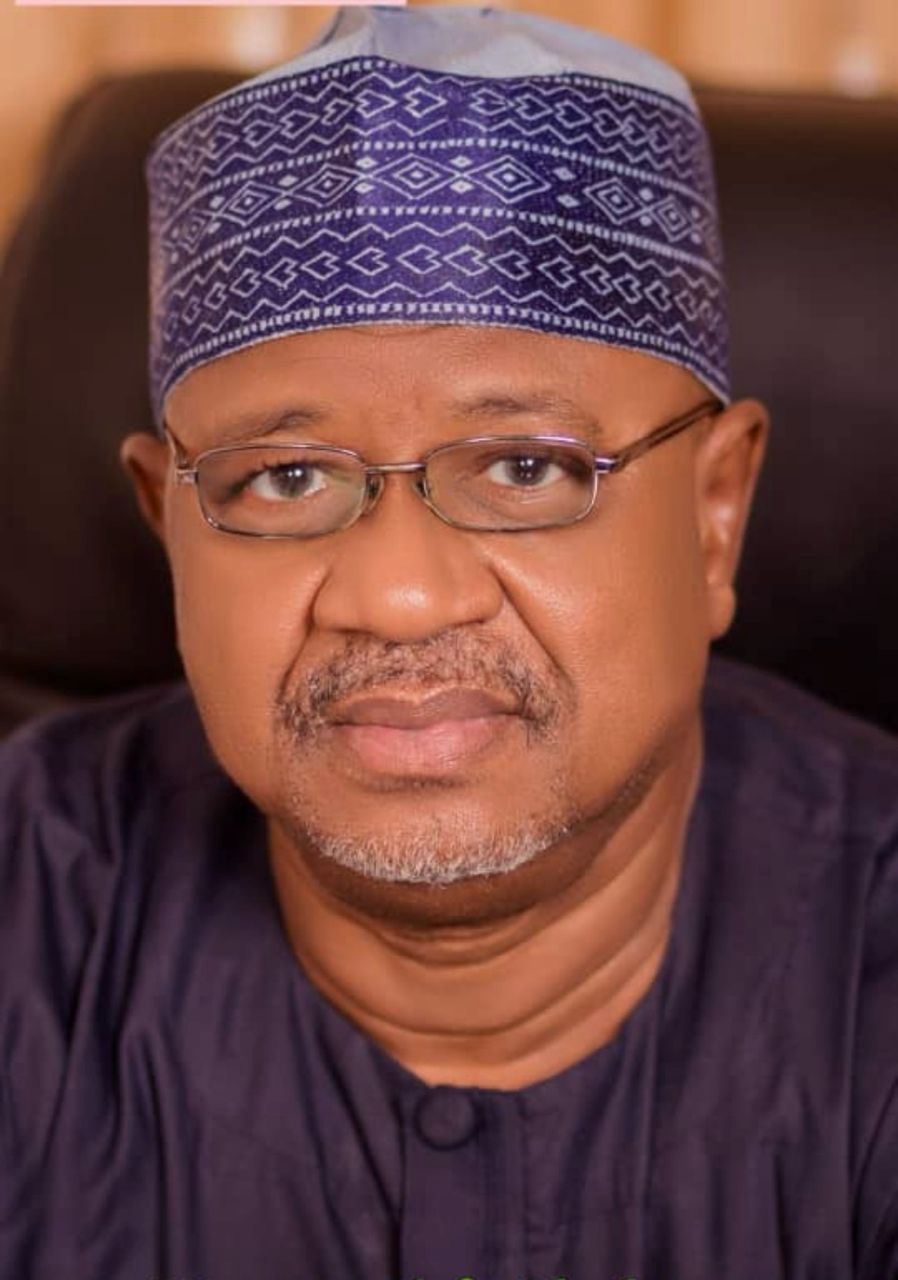
News Investigators/ The All Democratic Alliance (ADA) chieftain, Umar Ardo, has said that the emergence of the Nigerian Democratic Congress (NDC) and the wider opposition realignment around the African Democratic Congress (ADC) is structurally advantageous to the ruling All Progressive Congress (APC).
Mr. Ardo stressed that the recent developments in which opposition individuals in Nigeria are in disarray amount to a fragmentation pattern that ultimately strengthens the incumbent.
The controversial politician warned that the development could reshape electoral competition ahead of 2027.
He made the assertion on Tuesday, during an interview on Frontline, a current affairs programme on Eagle 102.5 FM, Ilese-Ijebu, Ogun State, where he argued that electoral outcomes in Nigeria are largely determined by how opposition forces are distributed rather than by individual party strength.
His comments come on the heels of recent seismic shift for Nigeria’s political landscape as Peter Obi and Rabiu Kwankwaso officially defected to the Nigeria Democratic Congress (NDC) on May 3, 2026, marking a strategic exit from the crisis-ridden African Democratic Congress (ADC). Formally received at the NDC’s national secretariat in Abuja by party chairman Cleopas Moses Zuwoghe and national leader Senator Seriake Dickson, the duo described the move as a necessary step to secure a “litigation-free” platform for their 2027 ambitions.
This realignment according to them, aims to consolidate their respective southern and northern support bases under a single banner, though it has already sparked immediate legal pushback from rivals questioning the NDC’s registration status.
However, Ardo argued that the unfolding political structure, particularly the rise of the NDC alongside other opposition platforms, ultimately weakens the opposition bloc rather than strengthening it. In his words, “who is the major beneficiary? It is the ruling party.” He maintained that political fragmentation among opposition forces inevitably consolidates power at the centre, regardless of the intentions of the actors involved.
He linked this argument to historical electoral patterns, suggesting that Nigeria is gradually returning to a familiar three-bloc configuration.
According to him, “we are just going back exactly what happened in 2023,” stressing that opposition dispersion had previously worked in favour of the governing party. He further warned that the country may again witness a split in opposition votes if current trends continue unchecked.
Ardo drew a comparison between past and present political alignments, arguing that the opposition’s inability to maintain unity remains its greatest weakness. He said, “in 2023 it was PDP, Labour and APC. In 2027 it will be APC, ADC and NDC,” insisting that such fragmentation makes electoral victory easier for the ruling establishment. His submission framed the situation as structural rather than incidental.
In line with Ardo’s suggestion, some other political analysts and citizens are indeed drawing strong parallels between the current defection of Peter Obi and Rabiu Kwankwaso to the NDC and the opposition’s failure in 2023. The primary argument is that this move risks repeating the “vote-splitting” mistake that allowed the APC to secure victory with only 37% of the total vote in the last cycle.
The political analyst also questioned the motivations behind the formation and recognition of new political groups, suggesting that the timing and beneficiaries of such developments should not be ignored. He stressed repeatedly that political outcomes must be examined through the lens of advantage, asking rhetorically, “Whether intentional or not, the question remains: who benefits? Because in politics, impact matters more than intention. And if the ruling party is the beneficiary of opposition fragmentation, then that is a fact people must confront.”
Ardo insisted that his intervention is not rooted in personal political ambition but in systemic concern about democratic balance. He maintained that Nigeria’s democracy risks becoming weakened if opposition fragmentation continues to be institutionalised through legal or administrative processes that appear contested. He stressed that the ultimate consequence is not just electoral but institutional erosion.
He further argued that perceptions of institutional neutrality are already under strain, especially when legal and electoral processes appear to consistently produce outcomes that favour one political direction. In his framing, the credibility of democratic institutions depends not only on legality but also on public perception of fairness and consistency.
Addressing accusations that he may be working in favour of the ruling party, Ardo dismissed such claims and flipped the argument back on his critics. He questioned the logic behind such assumptions, stating that if opposition fragmentation benefits the ruling party, then observers must critically assess who is truly advantaged by ongoing political developments.
He also reflected on his earlier interventions, noting that he had publicly challenged INEC’s recognition of the NDC immediately after its announcement. According to him, his opposition was consistent and not influenced by recent political alignments or elite participation in the emerging party structure.
Ardo said he had engaged multiple media platforms and legal channels to press his concerns, insisting that his actions were consistent with a long-standing position on due process. He maintained that he had also reached out privately to key political actors, warning them to exercise caution before aligning with what he described as a legally questionable process.
“Am I, I am challenging that action. So between me and NDC, who looks like they are working for the federal government? That is one. Then the second issue that you are saying about Peter Obi and Rabi Musa Kwakwanso, this INEC came with the registration and announced it on the 5th of February this year. On the 6th, the next day, on the 6th, I was on Arise TV. I objected to that. I challenged INEC on that. Then, you know, I went to Channels. I have all the links. I went to AIT. I went to television. I spoke, you know, to the media. This is not the first time I’m doing it. Then what I did was to write an application to the court in Lokoja. And my application was delayed for some time before it was approved for the Certified True Copy. And I cannot rush the court. So they, I went, the court approved it. We sent lawyers to Lokoja. They went, and then it took time to certify everything, the documents and this, and then they brought them back to me. By the time they brought them back to Abuja, I was out of the country.”
He revealed that he had personally contacted political figures involved in the new alignment to advise restraint, saying he urged them to conduct “strong due diligence” before proceeding. He added that his warnings were initially taken seriously but not ultimately acted upon.
“I went out of the country to one of these countries, you know, and I was there for nearly two weeks. Then I came back. I came back to the country today exactly one week when I came back. So I now studied it. And then after studying it, I now called Rabi Musa Kwakwanso. And then I told Kwakwanso, look, and this is what I am hearing. But this is the problem. This is it. This is it. This is it. Please don’t rush into this. Do very strong due diligence for you to go into this. Don’t do it just like that, because there is a problem. Then he said, okay, he will call me back. He was in Kano when he comes back and so on. And he came back and he did not call me. The next thing I just saw on the media, you know, and I said, okay, that is it. So I now make this thing public. So I did not start this thing today. I started it a day after IINEC made the announcement, by which time I did not even know that Seriake Dickson was behind this thing. It was long after that Seriake Dickson called me. I don’t know. You are my friend. Don’t you know that I am behind this thing? You know, I said, I said, I said, I don’t know. I didn’t know. But it didn’t even matter that you didn’t, you people did not know what is right. You cannot sacrifice, you know, due process for friendship.”
The political figure also claimed that internal political conversations were ongoing before public announcements were made, but said his concerns were not sufficient to alter the course of events. He maintained that once political momentum builds, institutional caution is often ignored.
Ardo reiterated that his objections are not based on sentiment but on what he considers procedural irregularities and legal inconsistencies. He argued that when institutions bypass established frameworks, the consequences extend beyond individual parties to the entire political system.
He further warned that if such precedents are allowed to stand, Nigeria could enter a phase where legal compliance becomes optional in political party formation. In his words, “if we allow this, then anybody can just write a letter and go to court,” stressing that such a situation would undermine regulatory authority.
Ardo maintained that the judiciary and electoral bodies must be careful not to create precedents that weaken institutional credibility. He argued that when courts are perceived to validate incomplete processes, public trust in democratic governance begins to erode.
He also questioned the speed and consistency of judicial decisions in political matters, suggesting that uneven timelines create perceptions of bias. While avoiding direct accusations, he insisted that comparative timelines in similar cases raise legitimate concerns.
The ADA promoter said his broader concern is not about individual political actors but about the long-term sustainability of democratic institutions. He maintained that “truth matters in institutional survival,” warning that compromised processes inevitably weaken governance structures.
He concluded by reiterating that political developments must be examined beyond surface-level narratives, urging Nigerians to critically assess who benefits from fragmentation and legal interventions in party formation processes. According to him, ignoring these patterns risks repeating historical electoral imbalances.
Ardo maintained that his position remains consistent: that due process must not be sacrificed for political expediency, and that every actor in the democratic space must be held to the same standard of compliance, regardless of political influence or timing.
NDC/ADC Split Benefits Ruling APC —Umar Ardo


- Advertisment -