

News Investigators/ The Federal Government has raised the alarm over the growing burden of respiratory illnesses, cardiovascular conditions, and other environmental-related diseases linked to greenhouse gas (GHG) emissions across the country.
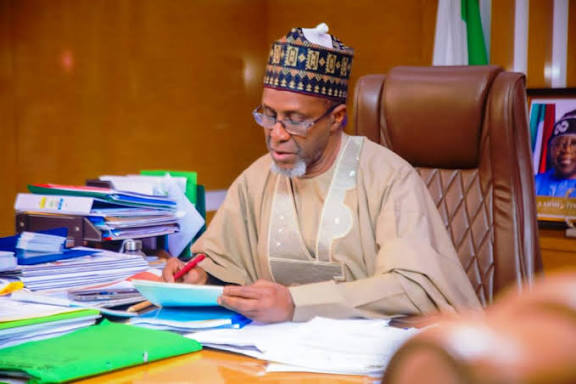
The Minister of Environment, Balarabe Lawal, disclosed this on Monday in Abuja at a stakeholders’ engagement on the National Emergency Response to Environment-Related Diseases Arising from Greenhouse Gas Emissions.
The News Agency of Nigeria (NAN) reports that the meeting was organised by the Environmental Health Council of Nigeria (EHCON).
Mr Lawal, who was represented by the Permanent Secretary of the ministry, Mr Mahmud Kambari, said evidence from environmental surveillance, health statistics, and peer assessments presents a clear and disturbing picture of the health burden posed by greenhouse gas emissions.
“Respiratory illnesses, cardiovascular conditions, and other environmentally linked diseases are rising. What we are facing today is no longer solely an environmental issue but a public health emergency.
“The burden of disease associated with poor environmental quality is increasing faster than our health system can accommodate.
“Families are spending more on treatment, workforce productivity is declining, and environmental degradation continues to undermine our development goals,” he said.
Mr Lawal noted that the absence of a coordinated national framework to systematically address environmental health risks linked to greenhouse gas emissions has further deepened the challenge.
Based on these concerns, he said the ministry, in partnership with EHCON and key stakeholders, considered the declaration of a public health emergency on environmental-related diseases as urgent and necessary.
According to him, the Federal Government has therefore activated the National Emergency Response Initiative on Environmental Public Health Impacts of Greenhouse Gas Emissions (NERI-EPHIGGE).
He explained that the initiative represents a strategic and coordinated national framework designed to deliver both immediate and long-term interventions through strengthened environmental health regulations and enforcement.
“It also entails the nationwide establishment of environmental health surveillance and response units, promotion of cleaner energy, sustainable industrial practices, low-emission transport systems, as well as robust public awareness and behaviour change campaigns,” Lawal said.
He assured that the ministry would continue to work closely with state governments, relevant departments, development partners, and civil society organisations to ensure that environmental protection efforts translate into measurable public health outcomes.
“I emphasise that this responsibility does not rest on government alone. It demands collective action from regulatory bodies, industries, and the transport and energy sectors.
“The cost of inaction is greater than the cost of intervention. The science is clear, the health evidence is undeniable, the risks are immediate, and the time to act is now,” he said.
Mr Lawal therefore called on all stakeholders to lend their full support to the implementation of the national emergency response initiative and work collectively towards a cleaner environment, a healthier population, and a more sustainable Nigeria.
He commended EHCON for its foresight, professionalism, and commitment to safeguarding environmental public health, describing the engagement as timely as stakeholders unite to confront the growing public health consequences of greenhouse gas emissions and environmental pollution.
“Nigeria, like many rapidly developing nations, is experiencing accelerated urbanisation, industrial expansion, rising energy demand, and intensified transportation activities.
“These are indicators of economic growth and modernisation. However, they have also resulted in a troubling increase in environmental pollutants, particularly greenhouse gases, which have both direct and indirect impacts on human health,” he said.
NAN