

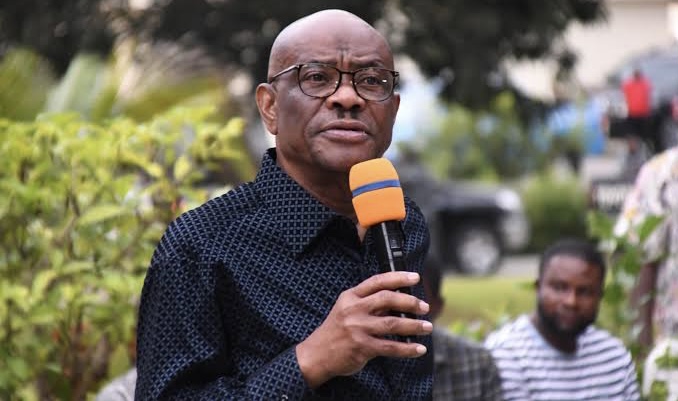
News Investigators/ Inter-Party Advisory Council (IPAC) has dismissed claims by FCT Minister, Nyesom Wike, that political parties in Rivers will unite under a rainbow coalition for the 2027 general elections.
The IPAC National Publicity Secretary, Mr Egbeola Martins, stated this in a statement issued in Abuja on Tuesday.
The News Agency of Nigeria (NAN) reports that Wike had, on Friday, said that politicians in Rivers were united under the Renewed Hope Family, tagged: “Rainbow Coalition” to ensure the re-election of President Bola Tinubu for a second term in 2027.
Wike made the declaration during a ‘thank you’ visit to Andoni Local Government Area of the state.
The minister stated that there was no party allegiance in the state, stressing that what Rivers had was a ‘rainbow coalition’ under the Renewed Hope Family, in pursuit of a common cause and interest.
In his reaction, however, Martins dismissed the claim, describing it as misleading and unfounded.
He said that the minister lacked any mandate from the council or registered parties to speak for them or determine alliances, preferences or candidates for elections nationally.
Martins described Nigerian political parties as independent institutions governed by constitutions, structures, organs and internal democratic processes.
“They are beyond individual control or personal influence,” he said.
According to him, decisions on coalitions, alliances or endorsements can only arise from duly constituted party organs, not from any individual, regardless of his/her position.
Martins, however, said that IPAC was aware of some parties independently considering unconditional solidarity support for Rivers Governor, Siminalayi Fubara, to promote peace and stability within the state.
“This may include voluntarily not fielding governorship candidates as a sacrifice aimed at restoring effective governance, peace and stability for Rivers people across the state,” he said.
Martins emphasised that such considerations remained exclusive decisions of the affected parties, driven by collective solidarity and commitment to lasting peace, not external pressure or personal interests.
He reaffirmed IPAC’s commitment to multi-party democracy, political pluralism and independence of parties, insisting that no individual would hijack collective decisions for personal or partisan advantage.
NAN