
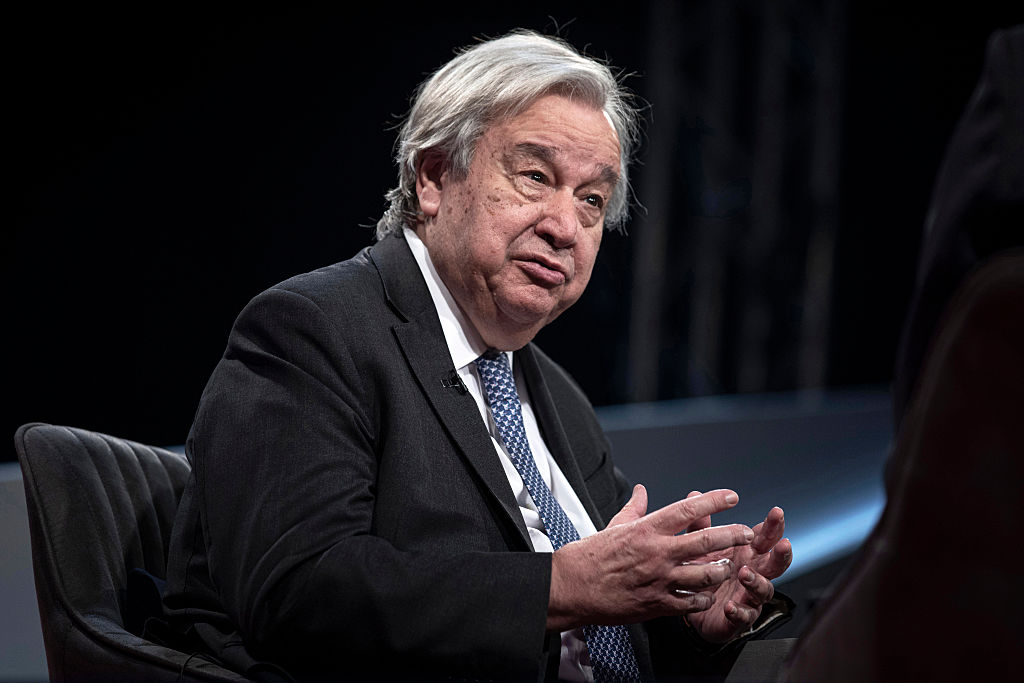
News Investigators/ UN Secretary-General, António Guterres, has expressed regrets over the decision of the White House to withdraw the United States from 35 international organisations and 31 UN entities.
Mr Guterres, in a statement by the UN Spokesperson, Stéphane Dujarric on Thursday in New York, said the UN has a responsibility to deliver for those who depend on the organisation.
President Donald Trump had directed the immediate withdrawal of the U.S. from some international organisations, Conventions, and Treaties that his administration considers as being contrary to the interests of the country.
In a White House Memorandum, dated January 7, 2026, Trump said that the action was the outcome of a report by the U.S. Secretary of State Marco Rubio following his Executive Order 14199 of February 4, 2025.
The Order was entitled ‘Withdrawing the United States from and Ending Funding to Certain United Nations Organisations and Reviewing United States Support to All International Organisations’.
Trump said that after reviewing the report of the Secretary of State, he had directed the immediate withdrawal of the U.S. from 35 non-UN and 31 UN organisations.
“I have considered the Secretary of State’s report and, after deliberating with my Cabinet, have determined that it is contrary to the interests of the United States to remain a member of, participate in, or otherwise provide support to the organisations listed in section 2 of this memorandum.
“Consistent with Executive Order 14199 and pursuant to the authority vested in me as President by the Constitution and the laws of the U.S. , I hereby direct all executive departments and agencies (agencies) to take immediate steps to effectuate the withdrawal of the United States from the organisations listed in section II of this memorandum as soon as possible.”
Trump added that “for United Nations entities, withdrawal means ceasing participation in or funding to those entities to the extent permitted by law”.
“My review of further findings of the Secretary of State remains ongoing,” the U.S. leader stressed.
Trump’s decision affects 31 UN agencies and entities.
These include the UN Population Fund (UNFPA), which supports maternal and child health, and combatting sexual and gender-based violence.
Also affected are the UN Framework Convention on Climate Change (UNFCCC), which fosters global cooperation against climate change, and the UN Democracy Fund, which funds and mentors civil society projects for democracy.
Other offices of the UN Secretariat based in New York and elsewhere, such as those dealing with children in armed conflict and ending sexual violence as a weapon of war, are also affected.
The list also includes four of the five UN regional commissions (Asia-Pacific, Western Asia, Africa, and Latin America and the Caribbean), which are key platforms for multilateral cooperation.
The United States is the largest assessed contributor to the UN, responsible for 22 per cent of the regular budget and approximately 26 per cent of the peacekeeping budget as of 2025.
While assessments for peacekeeping can exceed 26 per cent, U.S. law caps payments at 25 per cent, creating arrears.
As of January 2026, the U.S. has not paid its 2025 assessed contributions, leading to significant arrears that have reached approximately 1.5 billion dollars, the largest of any member state.
However, UN Secretary-General said in spite of the U.S. withdrawal, the work of the UN would continue.
“As we have consistently underscored, assessed contributions to the United Nations regular budget and peacekeeping budget, as approved by the General Assembly, are a legal obligation under the UN Charter for all Member States, including the United States.
“All United Nations entities will go on with the implementation of their mandates as given by Member States,” Guterres said.
He underscored that “the United Nations has a responsibility to deliver for those who depend on us”.
“We will continue to carry out our mandates with determination,” he stressed.
Under the UN Charter, assessed contributions to the Organisation’s regular and peacekeeping budgets are approved by the General Assembly and are considered binding obligations for all Member States.
NAN