
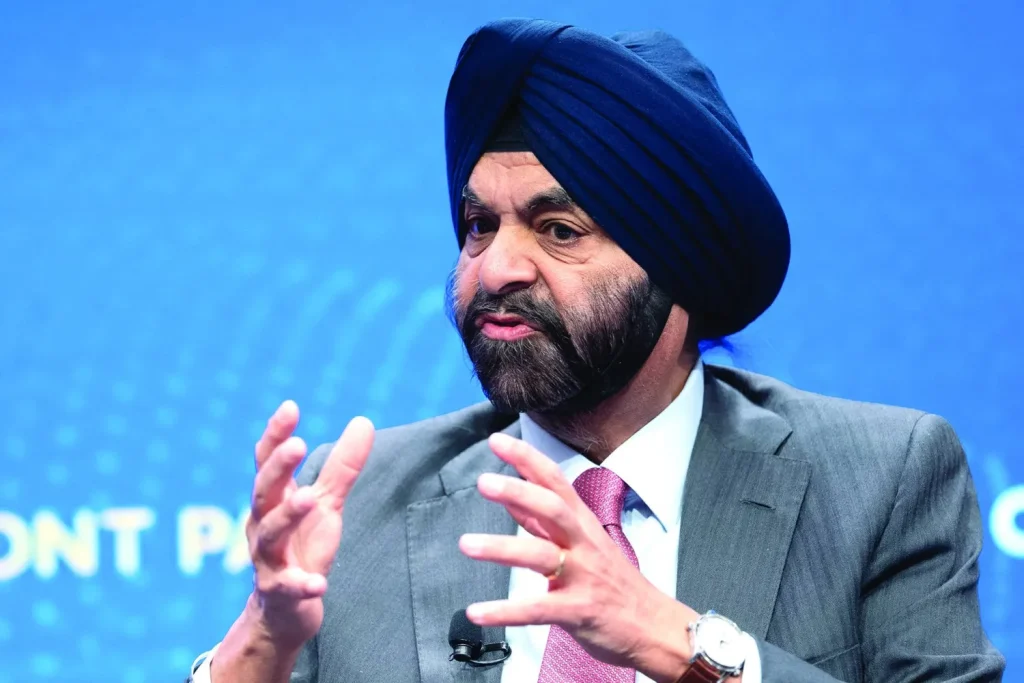
News Investigators/ The World Bank Group is prioritising job creation and productivity, with Artificial Intelligence (AI) to expand economic opportunities in developing countries.
The World Bank President, Ajay Banga, stated this during a discussion on Small AI: More and Better Jobs at the 2026 International Monetary Fund (IMF)/World Bank annaul meetings in Bangkok, Thailand on Monday.
Mr Banga stressed the need to make technology accessible and relevant to local economies.
He said that about 1.2 billion young people would turn 18 within the next 15 years, presenting countries with an opportunity to harness their demographic potential through productive employment.
According to him, realising this potential requires investments in healthcare, education, clean water, electricity and skills development, alongside opportunities for young people to contribute meaningfully to society.
Mr Banga explained that employment should not be limited to jobs in large or small companies, but should include entrepreneurship and other productive activities that promote dignity and economic inclusion.
He said that the World Bank’s development approach now prioritised job creation, with infrastructure, governance reforms and policies designed to attract private investment.
“The private sector generates between 75 and 85 per cent of jobs in any country,” the president said.
Mr Banga also said that governments must create conditions that encourage businesses to invest and expand.
He identified infrastructure, agriculture, primary healthcare, tourism and value-added manufacturing as five critical sectors capable of generating sustainable employment in emerging economies.
Mr Banga said that these sectors could create locally relevant jobs without depending solely on outsourcing employment from advanced economies.
The president said that on AI small-scale applications could improve productivity in agriculture, education and healthcare, particularly in communities with limited access to specialised services.
He cited an example of primary healthcare centres in Indonesia, where nurses could use simple AI tools on mobile phones to assess patients’ symptoms and connect with remote doctors.
Mr Banga said that such technology could help healthcare workers identify conditions, obtain medical guidance and arrange specialist appointments more efficiently.
The president also highlighted agricultural technology initiatives connecting smallholder farmers and cooperatives with improved seeds, fertilisers, crop insurance, credit and better market prices.
He explained that farmers could use basic mobile phones to identify crop diseases and obtain recommendations, helping them make informed decisions and improve productivity.
According to him, these applications demonstrate how relatively simple AI tools can address practical challenges in developing countries.
Mr Banga noted that while advanced AI models could disrupt some jobs in developed economies, small-scale AI presented significant opportunities to increase productivity and create employment in middle- and lower-middle-income countries.
He said that his priority was to see practical small-AI applications deployed across as many emerging markets as possible.
NAN