
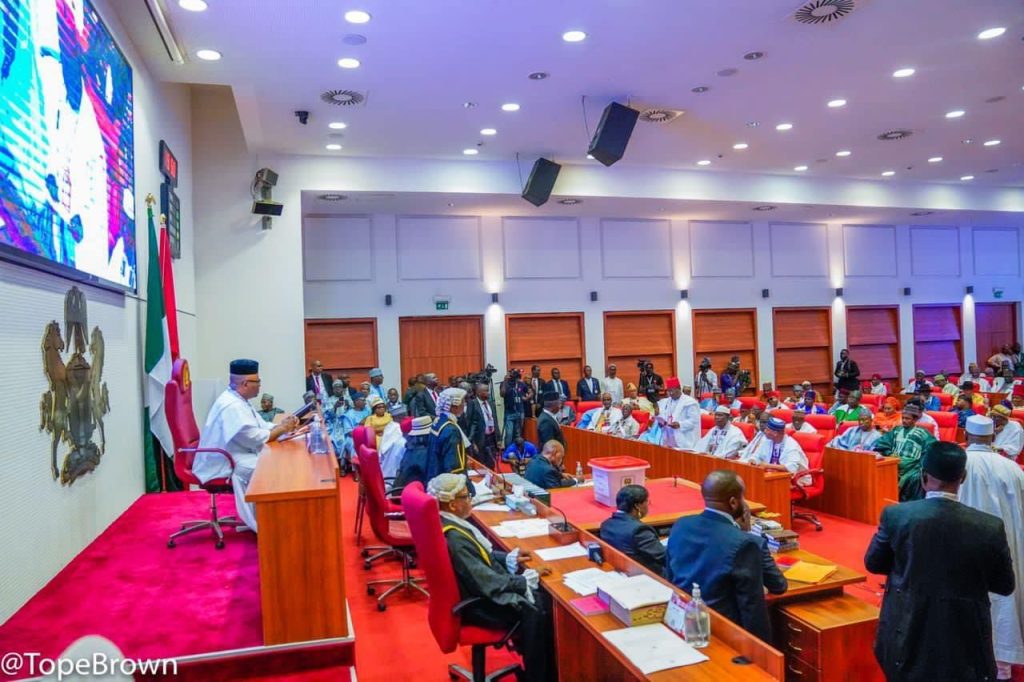
News Investigators/ The Senate on Tuesday passed for second reading a bill seeking to decriminalise attempted suicide and strengthen support for survivors during plenary.
The bill, sponsored by Sen. Asuquo Ekpenyong (Cross River South) seeks to establish a legal and institutional framework for suicide prevention, treatment and support for people experiencing psychological distress.
Leading the debate for the bill, Ekpenyong said Nigeria’s existing laws presented conflicting approaches to attempted suicide, with mental health legislation recognising it as a psychiatric emergency while criminal laws prescribed punishment.
“At the heart of this bill is a simple question: when a Nigerian survives a suicide attempt, should the first response of the state be prosecution or protection?” he asked.
According to him, the National Mental Health Act recognises attempted suicide as a psychiatric emergency requiring immediate intervention, while Sections 327 of the Criminal Code and 231 of the Penal Code exposes survivors to criminal punishment.
Ekpenyong said the bill would resolve the contradiction by prioritising prevention, treatment and the preservation of life.
He argued that criminalisation could discourage people experiencing suicidal thoughts from seeking help and cause families to conceal suicide attempts for fear of stigma or prosecution.
According to him, such practices can delay intervention and undermine reliable data collection, weakening national suicide-prevention efforts.
The senator said decriminalising attempted suicide would neither legalise nor encourage suicide, adding that the bill focused on protecting survivors and ensuring access to timely medical care.
He said the proposed legislation would establish coordinated prevention services, including crisis helplines, referral pathways and follow-up support for people who survived suicide attempts.
Ekpenyong added that the bill would strengthen public education and train healthcare workers, law-enforcement personnel, teachers and emergency responders to recognise warning signs and connect at-risk individuals with appropriate services.
He said families affected by suicide or attempted suicide would also require access to psychosocial support, while improved data collection and research would help the government develop effective prevention policies.
The senator said the bill would provide an institutional and funding framework for implementing suicide-prevention services, stressing that decriminalisation without accessible care would be incomplete.
He added that the committee stage would allow lawmakers to harmonise the proposed legislation with the Criminal Code, Penal Code, National Mental Health Act and relevant state laws.
Other lawmakers who took turns to support the bill argued that attempted suicide should be treated primarily as a mental health concern requiring professional care rather than criminal punishment.
They said that people experiencing severe emotional distress needed medical attention and support, adding that detention or imprisonment would not address the underlying causes of their conditions.
They stressed that suicide prevention required coordinated action involving healthcare professionals, educational institutions, families, law enforcement agencies and relevant government institutions.
The proposed legislation, according to them, will provide an opportunity for public consultation and professional contributions before the Senate takes further legislative action.
Senate President Godswill Akpabio subsequently put the bill to a voice vote, and it was passed for second reading, and thereafter referred the bill to the committee on health and Judiciary, human rights and legal matters.
NAN