
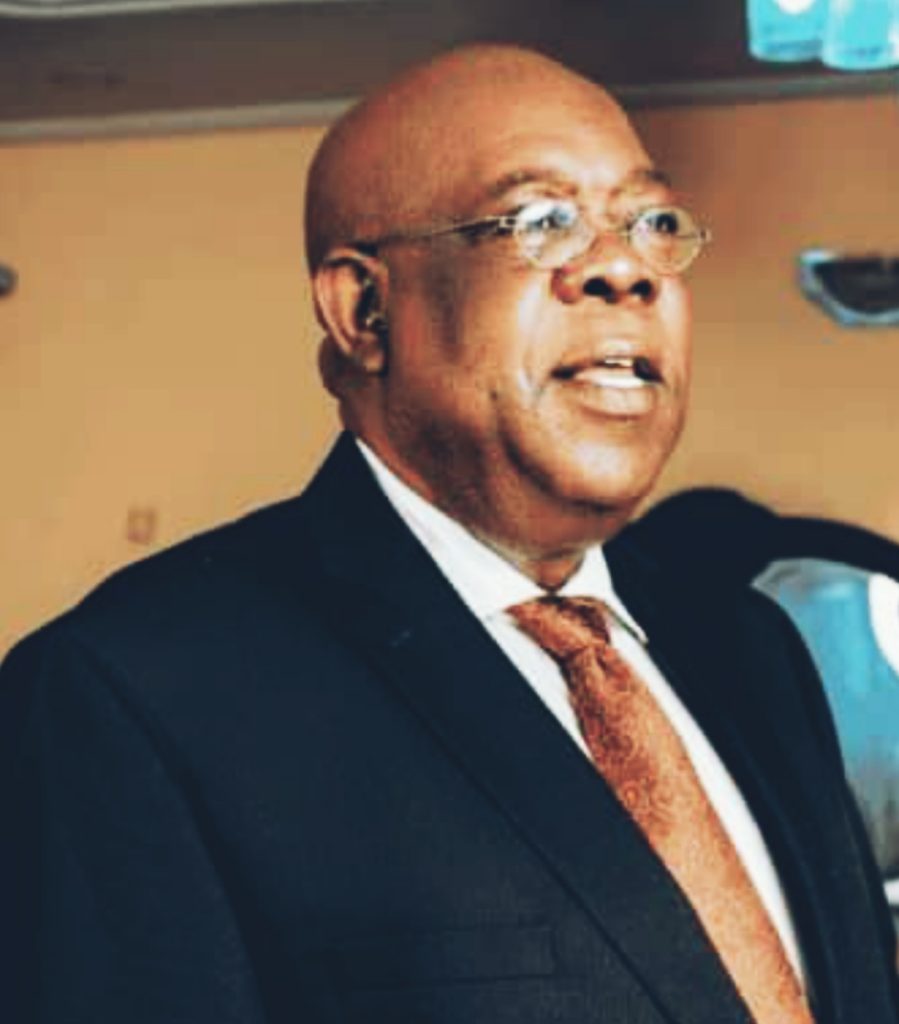
By Asiwaju Kunle Kalejaiye
The Cocoa Research Institute of Nigeria (CRIN) was set up in 1964 to use science to boost cocoa production and help our economy thrive. However, a walk through the institute today reveals a different reality. Instead of focusing entirely on laboratory science, CRIN has turned into a makeshift federal, State and local governments, all rolled into one, building roads, town halls, installing street lights and digging water boreholes for communities far away from its mandate. This shift shows a deep crisis in our public system, where a top-tier scientific body is forced to handle basic infrastructure because the appropriate government failed to do its job.
When governance breaks down, corporate philanthropy stops being optional. Rather,it becomes a tax for survival. Because the villages surrounding CRIN lack basic roads and clean water, they look to the well-funded federal facility next door. This tension boiled over during a massive crisis between 2013 and 2016, when local community leaders and angry youth joined forces with rusticated members of staff to shut down the institute’s Idi Ayunre, Ibadan headquarters. The main gates were blocked for weeks over issues that ranged from mass sacking to neglect of local communities. Consequently,the scientific programs of a world-class agricultural research institute came to a screeching halt for weeks. To keep the peace, the institute’s leadership had no choice but to build public infrastructure instead of buying laboratory chemicals.
The real tragedy is that this peace comes at a massive financial cost to our agricultural future. Reports from budget trackers like BudgIT and BusinessDay show that over 50 percent of CRIN’s capital budget is systematically stripped away for non-research projects. Billions of Naira meant for biotechnology are hijacked by the National Assembly to fund political “constituency projects” like solar streetlights in Lamurde local governmentof Adamawa state, town halls in Ilasha Ekiti,Ekiti State, supply of rice to people in Kabo,Kano State and supply of grains to people in Mafara,Zamfara State.
Instead of studying crop diseases, our country’s top agronomists find themselves supervising civil construction sites , distribution of palliatives and distribution of motorcycles!
This problem is not unique to CRIN. Across Nigeria, specialized forestry, veterinary, and agricultural research institutes are being starved of funds because politicians insert local public works into their budgets.
This scientific slowdown could not happen at a worse time. Climate change has made agricultural research more urgent than ever. Across the South-West cocoa belt,especially in Ondo, Osun, and Oyo states weather patterns are changing. Cocoa trees need strict temperature and rainfall balances to survive. However, Nigerian Meteorological Agency data shows that extreme heat waves and irregular rains are pushing the crop past its limits. These climate disruptions accelerate the spread of the destructive Black Pod disease and kill off young seedlings.
While other countries engineer heat-resistant crops to survive these changes, Nigeria’s scientific elite is stuck managing neighborhood plumbing logistics and supervising the erection of town halls with street lights or distributing motorcycles to folks in Talata Mafara in Zamfara state.
The economic consequences are already devastating. Nigeria has fallen to the world’s fourth-largest cocoa producer, lagging far behind Côte d’Ivoire and Ghana. Losing our historical spot as the world’s second-largest producer costs our economy over $2 billion every single year in lost export opportunities.
Cocoa House stands as a towering reminder of when Nigeria’s economy relied on real productivity like Cocoa. Opened in July 1965, this 26-story landmark was funded entirely by local cocoa farming proceeds. At the time, agriculture drove over 60% of Nigeria’s GDP, allowing the region to build West Africa’s first skyscraper without foreign debt.
Ironically, funding has shifted away from the Cocoa Research Institute of Nigeria (CRIN) toward bloated government structures,contracts and empowerment materials. Consequently, Nigeria dropped to the fourth-largest global producer, starving the very sector that built our skyline.
A research institute simply cannot function as an alternative government.
If Nigeria wants to reclaim its agricultural crown, the federal government must separate scientific funding from community development. Governments must build the roads, and lawmakers must stop cornering research budgets under the guise of amorphous constituency projects. Our scientists must get back to the laboratories and rescue our economy.
Asiwaju Kunle Kalejaye SAN is the founder of
Eagle102.5 FM Ilese-Ijebu.
Opinion expressed here is solely that of the author. It does not reflect our editorial position.