
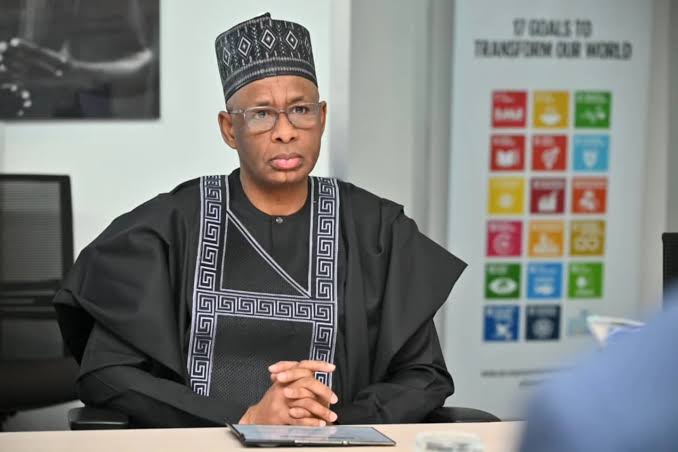
News Investigators/ Nigeria’s Permanent Representative to the African Union, Nasir Aminu, has warned that sustainable peace in Africa cannot be imposed externally.
Amb. Aminu made the declaration on Wednesday during a high-level dialogue on strengthening cooperation between the AU Peace and Security Council and the UN Peacebuilding Commission.
He said lasting peace required national ownership, regional understanding and international support aligned with the priorities of affected countries.
“If there is one lesson Africa has learned from decades of prevention, peacemaking, and peacebuilding, it’s that peace cannot be imported,” he declared.
The envoy explained that sustainable peace depended on connecting national, subregional, continental and international institutions rather than allowing them to operate independently.
He warned that fragmented interventions could produce duplication, conflicting advice and initiatives disconnected from realities confronting affected communities.
Amb. Aminu identified West Africa’s political transitions, terrorism, violent extremism, organised crime and humanitarian challenges as evidence of the need for coordinated responses.
He cited the Multinational Joint Task Force in the Lake Chad Basin as an example of regional cooperation supporting security and stabilisation.
However, the envoy maintained that military and security achievements could not endure without effective governance, livelihoods, reconciliation and restored public services.
He also drew attention to the Great Lakes region, where armed groups, illegal exploitation of natural resources and weak regional confidence continued to threaten stability.
According to Amb. Aminu, peacebuilding must begin before conflicts escalate and continue throughout political transitions and post-conflict recovery.
He urged the AU, UN and regional economic communities to provide coordinated political, technical and financial support for nationally determined priorities.
The ambassador identified mediation, transitional justice, institutional development and sustainable financing as essential elements of such support.
He said cooperation between the AU Peace and Security Council and UN Peacebuilding Commission could combine African political leadership with broader international peacebuilding resources.
Amb. Aminu called for more frequent engagement between both institutions instead of relying principally on annual meetings.
He also advocated shared assessments, clearer regional priorities and stronger follow-up mechanisms to ensure that decisions translated into action.
The Nigerian diplomat said the UN80 reform initiative offered an opportunity to improve coordination without creating unnecessary additional bureaucratic structures.
“Africa does not need more layers of coordination. It needs smarter coordination,” he said.
Amb. Aminu maintained that the ultimate objective should be practical cooperation capable of anticipating crises, sustaining political transitions and strengthening national institutions.
He reaffirmed the importance of African leadership in designing peacebuilding strategies responsive to the continent’s diverse security and development challenges.
NAN