
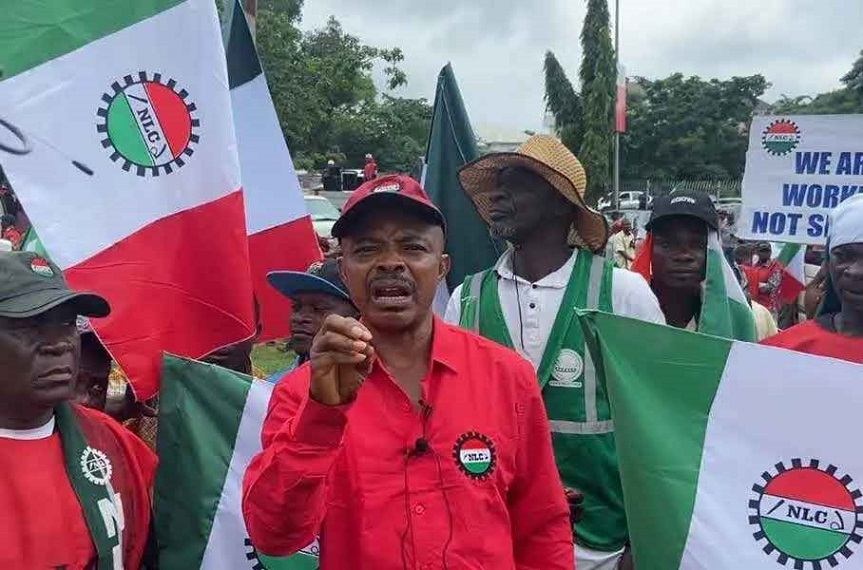
News Investigators/ Joe Ajaero, President of the Nigeria Labour Congress (NLC), has demanded immediate wage awards for Nigerian workers to cushion the effects of rising petrol prices in the country.
Mr Ajaero made the demand in a statement issued in Abuja on Wednesday, expressing concern over the steady increase in the price of petrol and its impact on workers and other citizens.
He said petrol was selling for about N1,430 per litre in major urban centres, while prices were even higher in less accessible areas, thereby increasing economic hardship.
According to him, the development had significantly affected workers’ purchasing power and quality of life, particularly as transportation costs continued to rise.
Mr Ajaero warned that higher transport fares would trigger further increases in the prices of essential commodities and services, including food, school fees, rents and tariffs.
“These new costs continue to inflict or deepen poverty among the populace, stressing the quality of life to the limits,” he said.
The NLC president attributed part of the latest petrol price surge to the resurgence of conflict in the Gulf, but argued that Nigeria should have greater protection from international market shocks.
He said Nigeria, as an oil-producing country with enormous fossil resources, should have mechanisms to shield its citizens from the effects of sudden increases in global energy prices.
“As a nation, and as a people endowed with enormous fossil resources, we are deserving of a certain level of protection or buffer against the gales from the Gulf,” he said.
Mr Ajaero therefore urged the Federal Government to immediately introduce reasonable wage awards, make sufficient crude oil available in naira to local refineries and expand the country’s storage capacity.
He said the measures would cushion the impact of international market shocks, strengthen energy security, create employment opportunities and generate additional economic value for the country.
“These measures will create jobs, economic value as well as deal with mutating security challenges,” he said.
Mr Ajaero also argued that government intervention through subsidies or palliatives remained justified during emergencies that placed severe economic pressure on citizens.
“There is nothing wrong with government subsidising the needs of citizens, especially in emergency situations like this,” he said.
He said the intervention was necessary because the government was earning between 35 dollars and 40 dollars above the budgeted crude oil price in the international spot market, which he said translated into trillions of naira monthly.
Mr Ajaero also criticised the importation of crude oil by local refineries, describing the practice as unreasonable and contrary to the objective of developing domestic refining capacity.
He warned that labour would continue to speak out or act to protect citizens from worsening economic hardship.
NAN