
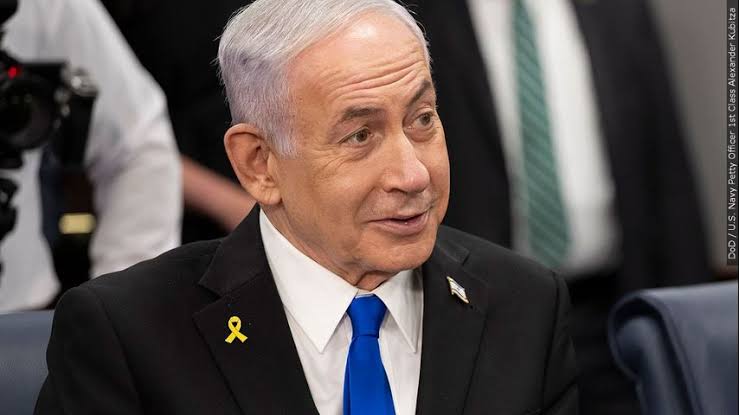
News Investigators/ Israeli Prime Minister, Benjamin Netanyahu, is expected to hold a telephone conversation with Lebanese President, Joseph Aoun, on Thursday, according to an Israeli cabinet minister.
The telephone conversation between the two countries’ leaders would mark a rare direct exchange between the duo as hostilities intensify along the southern Lebanon border.
Gila Gamliel had announced the planned call during an interview on Israeli army radio, just hours after U.S. President, Donald Trump, said that the leaders from Israel and Lebanon were set to engage in talks.
If confirmed the conversation would represent the first known direct contact between Netanyahu and Aoun, and potentially the first high-level dialogue between Israeli and Lebanese leaders in more than three decades.
However, officials in the Lebanese president’s office said they had no information about any scheduled call, casting uncertainty over whether the conversation will take place.
Trump said the goal of the talks is to create “a little breathing room” between the neighboring countries, which have recently resumed rare direct political discussions in Washington after decades without formal engagement.
In a statement released late Wednesday, Netanyahu outlined Israel’s objectives in the talks, emphasising the disarmament of Hezbollah and the pursuit of a “sustainable peace, peace through strength.”
The Lebanese government, which is not directly involved in the ongoing conflict between Israel and Hezbollah, has called for an immediate ceasefire and the withdrawal of Israeli forces from southern Lebanon.
Meanwhile, Israel’s Security Cabinet convened Thursday evening to discuss a potential ceasefire, but concluded its meeting without reaching a decision, according to Israeli media reports.
Netanyahu’s office also confirmed that the prime minister has instructed the military to expand its “security zone” in southern Lebanon, including eastward toward Mount Hermon.
The move is intended in part to bolster protection for Druze communities in the region, which Israel considers aligned with its interests.
The escalation follows renewed fighting between Israeli forces and Hezbollah beginning in early March, coinciding with the start of U.S.-Israeli strikes on Iran.
Meanwhile, a temporary ceasefire is currently in place in Iran, Israeli officials maintained that it did not extend to Lebanon, where cross-border attacks have continued.
dpa/NAN