
News Investigators/ The National Board for Technical Education (NBTE) has partnered with the International Organisation for Migration (IOM) to equip Nigerian polytechnic graduates with skills for global employment opportunities.
The NBTE Executive Secretary, Idris Bugaje, disclosed this at the opening of a three-day capacity-building workshop for polytechnics lecturers on Tuesday in Abuja.
The News Agency of Nigeria (NAN) reports that the workshop is centred on Industry-Aligned Skills Development for the implementation of Reviewed National Diploma (ND) curriculum in Electrical and Electronics Engineering.
Prof. Bugaje said the aim of the training was to upgrade technical education and equip Nigerian graduates with industry-relevant skills for employment opportunities locally and internationally.
He said the initiative would also improve the quality of technical education, enhancing the employability of Nigerian graduates and creating safe pathways for skilled youths to access international labour markets.
He explained that the initiative was an extension of the Nigerian Youth Skills Empowerment Programme (NYSEP), introduced by the board to facilitate employment opportunities for Nigerian polytechnic graduates in selected European countries.
According to him, the programme initially targeted Germany but was later redirected to Denmark and Poland following challenges associated with migration concerns.
Prof. Bugaje said the first screening exercise involving 580 Nigerian diploma holders produced only 25 successful candidates, prompting the board to review the existing electrical engineering curriculum.
He said the outcome raised concerns about the relevance of the curriculum to contemporary industrial requirements and the ability of graduates to compete in the global labour market.
“The Danish Ambassador asked me whether we were producing 21st-century electrical technicians or still using the curriculum of the last century.
“That was what prompted the review of the ND electrical engineering curriculum to make it digital and align it with the demands of global industries,” he said.
Prof. Bugaje said experts from Denmark were subsequently engaged to support the review, while the IOM offered to sponsor the training of lecturers and technologists responsible for implementing the revised curriculum.
He urged participants to take the three-day training seriously; stressing that effective curriculum implementation depended on the capacity of lecturers to translate its contents into practical skills.
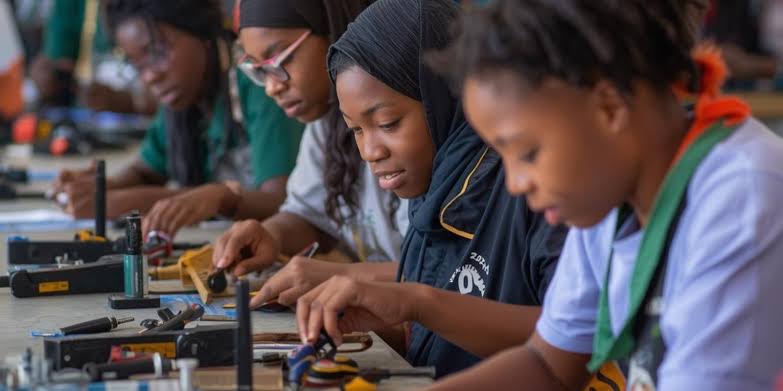
He added that the training would include hands-on sessions in laboratories and workshops, with support from relevant industry partners.
The NBTE executive secretary said the initiative could expand beyond the initial target of 1,000 beneficiaries, providing more Nigerian youths with opportunities to acquire internationally recognised skills and qualifications.
He expressed optimism that graduates who acquired relevant skills and work experience abroad would return to Nigeria with improved expertise, resources and knowledge to support local industrial development.
Prof. Bugaje urged polytechnics to reclaim their role in driving industrialisation, noting that practical and technical education remained critical to Nigeria’s economic transformation.
“Give these young people a sense of hope that even if the Nigerian system is not working as it should, there can be opportunities for them overseas.
“Let them acquire the skills and funds, and then come back home so that we can build a resilient economy,” he said.
In her remarks, the IOM Chief of Mission, Sharon Dimanche, said the partnership was aimed at strengthening the connection between skills development, employability and safe, orderly and regular labour migration.
Ms Dimanche, represented by the Head of Suboffice, North-East Nigeria, Ali Abdi, said the revised curriculum and capacity-building workshop were designed to prepare Nigerian youths for changing labour market demands and improve the competitiveness of the country’s workforce.
According to her, skills development is not merely an educational issue but an economic development imperative, particularly as employers increasingly seek workers with practical and technical competencies.
She said the revised curriculum would help address skills gaps in engineering, manufacturing, construction, information technology, renewable energy and other emerging industries.
She noted that lecturers and technologists played a critical role in ensuring that graduates acquired practical competencies, adaptability and problem-solving skills rather than mere academic qualifications.
She said the partnership would promote workforce preparedness for employment opportunities within Nigeria, across the ECOWAS region and internationally.
The event witnessed the signing of a Memorandum of Understanding (MoU) between the IOM and NBTE as a strategic commitment to strengthening technical and vocational education, employability and skills recognition.
NAN