
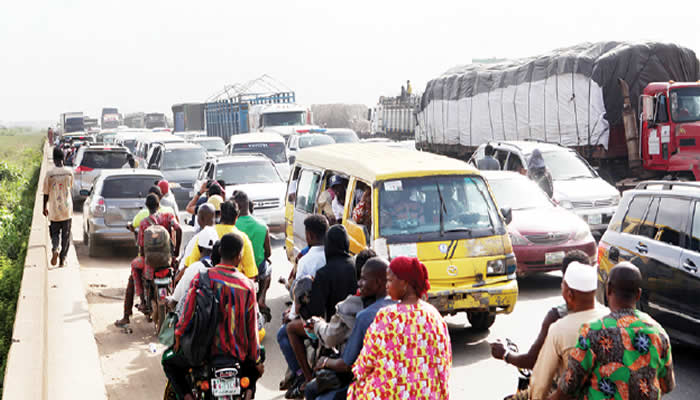
News Investigators/ Many motorists in the Federal Capital Territory (FCT), have continued to lament over the persistent rise in pump price of Premium Motor Spirit (PMS), popularly known as petrol.
This has triggered higher transportation costs and worsened the daily hardship residents were passing through.
The News Agency of Nigeria (NAN) reports on Sunday that many fuel stations used to sell fuel between N875 and N880.
The Nigerian National Petroleum Company Limited (NNPCL) is presently selling at N1,261, while other fuel outlets are selling between N1, 335, N1,383 and above.
Investigations by NAN showed that pump price of petrol had been increased for more than five times in one month.
Following the development, many commercial and private car owners had parked their cars as they could not afford the cost of fuelling them. Also, few commercial vehicles were currently operating.
Many commuters, including civil servants were seen stranded during the week at various bus stops, as the few commercial vehicles operating had increased transport fares.
Some motorists, who spoke to NAN, expressed sadness about the situation, while calling on the Federal Government to intervene on the unstable fuel price and its hardship on citizens.
They told NAN that the sudden increase had added pressure to their daily expenses and worsened the cost of transportation and goods.
Mr Nuhu Sani, a commercial driver, said the frequent increase in petrol prices had forced transport operators to adjust fares upward to remain in business.
“Each time the fuel price goes up, we have no choice but to increase transport fares, but passengers complain because their incomes have not increased.
“The situatiion is becoming increasingly unbearable, as many are struggling to cope with the ripple effects on their livelihoods.
“This high cost of fuel has also reduced my daily earnings, as fewer people can afford regular travels,” he said.
Similarly, Mrs Grace Okeke, a civil servant, said the rising transport fares had significantly affected her monthly budget.
“I now spend almost double what I used to pay for transportation. It is affecting my ability to meet other basic needs.
“Even with your money, there are no vehicles, because taxi drivers are complaining that they are not making any profit.
“Now I go to work twice a week, and this is affecting my productivity,” she said.
Another motorist, Mr Musa Abdullahi, said beyond transportation, the cost of goods and services had also surged due to increased logistics expenses.
“When transporters pay more for fuel, it reflects in the prices of food and other items. Everything is now getting expensive,” he said.
Mr Simon Audu urged the Federal Government to intervene by implementing measures that would stabilise fuel prices and cushion the impact on citizens.
He also called for improved public transportation systems to reduce reliance on private vehicles and commercial transport operators.
An economic analyst, Dr Tunde Adebayo, said that the rising cost of fuel had a direct impact on inflation and the general cost of living.
He said that without targeted interventions, many households would continue to face economic strain.
“The government needs to prioritise policies that will ease the burden on citizens, especially in the areas of energy and transportation,” Adebayo said.
NAN reports that the increase in fuel prices in recent months has continued to generate widespread concern among Nigerians, as its effects cut across all sectors of the economy.
An Uber driver, Mr Wale Johnson, said he no longer drove because he was running at a loss.
“If I buy N40,000 fuel, I do not make up to 30,000, so, how do I balance up?
“I have bills to pay, family to feed, it is best to stay at home and pray things get better,” he said.
A business owner at Wuse market, Mrs Marie Uzor, said that the increase in fuel would affect her business.
“The increase in transportation will make food stuff more expensive as everyone wants to sell and make profit,” Uzor said.
NAN