
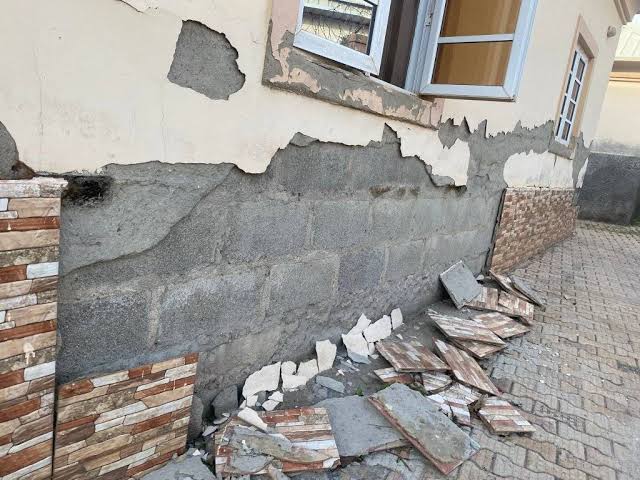
News Investigators/ Ikechukwu Godwin, a construction expert, has identified misdiagnosis of damp types, overwhelmed damp-proof courses and trapped salts as major reasons for moisture in buildings.
He warned that surface fixes only treat symptoms rather than the hidden source of water on the wall.
Mr Godwin, who spoke in an interview with the News Agency of Nigeria (NAN) in Sunday in Suleja, said homeowners should treat wall moistures not as mere cosmetic problem.
“Homeowners often treat peeling paint and mold as cosmetic problems — scraping, puttying and repainting — while moisture continues to travel invisibly through masonry, finding its way back through new paint when the root cause is ignored.”
He said that the most common reasons damp returns include misdiagnosing of the type.
“Treating condensation from poor ventilation or penetrating damp from cracked outer walls, bad render or leaking gutters as rising groundwater from the foundation will always fail.”
He added that poorly installed damp-proof courses (DPC), only stops moisture wicking up from the ground.
“An active pipe leak or unsealed external defect pouring water into the wall above or beside the treatment can overwhelm the barrier.”
Mr Godwin said that applying fresh plaster or paint before a wall has dried traps residual moisture inside, which inevitably forces its way out later.
To solve the problem, he advised homeowners to first inspect the DPC to confirm it was properly installed, and to correct drainage.
He said that this would allow rainwater flow away from the building instead of accumulating around the foundation.
He further recommended applying appropriate waterproofing by repairing cracks, defective render and other identified water entry points.
He recommended the removing of severely damaged, salt-contaminated plaster where necessary and allowing the wall to dry.
“Replastering and repainting should be done with suitable breathable, moisture-resistant materials only after addressing the moisture source and allowing adequate drying.
”The key is to find and fix the source of the water before repairing the surface; otherwise, the damp will always come back,” he said.
NAN