
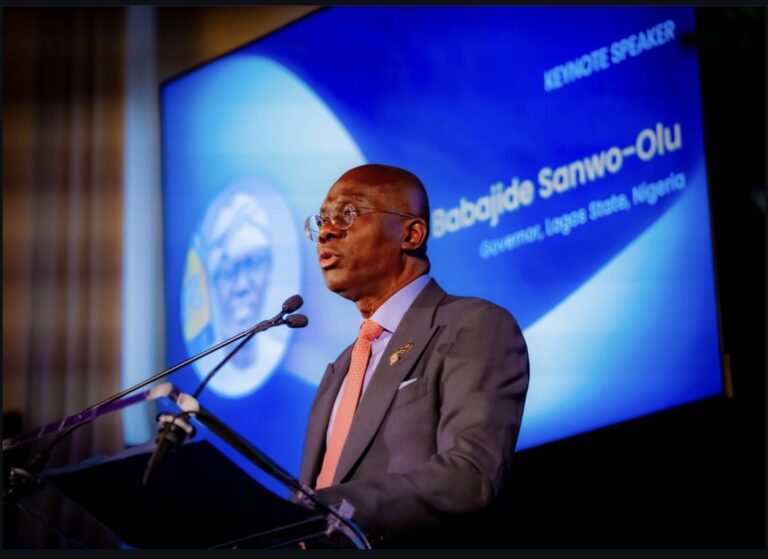
News Investigators/ Lagos State Governor, Babajide Sanwo-Olu, says the Lagos State Employment Trust Fund (LSETF) has disbursed over N15 billion in loans to over 20,000 businesses.
The governor says also that the fund has created over 320,000 direct and indirect jobs and preserved 173,000 jobs in 10 years.
Mr Sanwo-Olu made this known on Wednesday at the 4.0 Lagos Employment Summit, held at the Landmark Event Centre, Lagos, to mark the 10th anniversary of the Fund.
The summit had the theme, “Lagos Works: Building Africa’s Most Productive City”, and sub-theme, “A Decade of Impact: The Next Frontier of Talent”.
The governor said that the achievements demonstrated the impact of sustained investment in entrepreneurship, employment generation, skills development and economic empowerment.
He noted that the fund had also supported over 82,000 small businesses through capacity-building initiatives; trained more than 30,000 young people and supported over 1,200 technology start-ups.
He said that the loan repayment rate of about 94.5 percent further demonstrated the commitment and capacity of Lagos entrepreneurs to honour their financial obligations when given the necessary support.
‘’The achievements should not merely be celebrated as statistics but should serve as a foundation for expanding opportunities and improving the state’s economic productivity,’’ Mr Sanwo-Olu said.
The governor, however, urged the fund’s management to look beyond the number of beneficiaries and assess whether its interventions were translating into sustainable businesses, improved livelihoods and lasting employment.
He challenged the management to determine whether the financial assistance and training provided were enabling beneficiaries to expand their businesses, attract new customers and compete effectively in the marketplace.
“Beyond giving people money and training them, we must ask ourselves whether the support is taking them to where they want to be.
“We need small businesses that can produce more, attract new customers, access wider markets and become sustainable.
‘’It is not enough to help them produce goods; we must also help them find buyers,” he said.
Mr Sanwo-Olu stressed the need to align skills development with the changing demands of the labour market, particularly as technology, artificial intelligence and digital innovation continued to transform employment opportunities.
He observed that, although jobs were increasingly becoming available in emerging sectors, many young people lacked the requisite skills to take advantage of them.
“The jobs are there, but the skills are not. That is the challenge we must confront.
“We must prepare our young people for the opportunities that technology and the changing world of work are creating,” he said.
He called for stronger collaboration among the government, technical institutions, industries and private-sector organisations to ensure that training programmes reflected actual labour market requirements.
The governor also emphasised the need to strengthen technical and vocational education, improve training facilities and ensure that learning institutions equipped students with practical and relevant skills.
He urged the board of the fund to be innovative in designing its interventions, understand the specific challenges confronting beneficiaries and develop programmes that responded to their actual needs.
Mr Sanwo-Olu further called for deliberate efforts to expand opportunities for women and young people, particularly through skills acquisition, entrepreneurship and access to finance.
He commended the LSETF board, management, development partners and other stakeholders for sustaining the initiative over the past decade.
The governor urged them to build on the achievements recorded and develop more effective strategies that would strengthen businesses, expand employment opportunities and reduce poverty.
Earlier, the state Commissioner for Wealth Creation and Employment, Akinyemi Ajigbotafe, said the state government had continued to pursue inclusive economic growth through strategic interventions in entrepreneurship, skills development.
Mr Ajigbotafe said that the government’s interventions were designed to make economic opportunities more accessible, sustainable and inclusive for residents.
‘’The state has continued to strengthen employability programmes through training, career development and partnerships aimed at connecting job seekers with prospective employers, ‘’ he said.
The commissioner disclosed that the 2025 summit attracted over 3,000 organisations and more than 5,000 participants, while the current edition had recorded more than 4,000 participants.
He said that the government had also sustained its investment in digital skills development, entrepreneurship and capacity building to improve the competitiveness of residents and businesses.
‘’The state’s enterprise development initiatives have supported artisans and small business owners through training, modern tools and equipment.
‘’The government is strengthening partnerships with businesses and industry associations to improve production processes, product quality and access to local and international markets, ‘’ he said.
The commissioner also highlighted the importance of social protection programmes in supporting vulnerable households and improving the welfare of residents.
He said that the state was committed to expanding opportunities for young people, women and entrepreneurs through targeted interventions and stronger collaboration with development partners.
The News Agency of Nigeria (NAN) reports that the summit is part of activities marking the 10th anniversary of LSETF.
The fund was established in 2016 to tackle unemployment, support entrepreneurship and promote wealth creation in Lagos.
NAN