
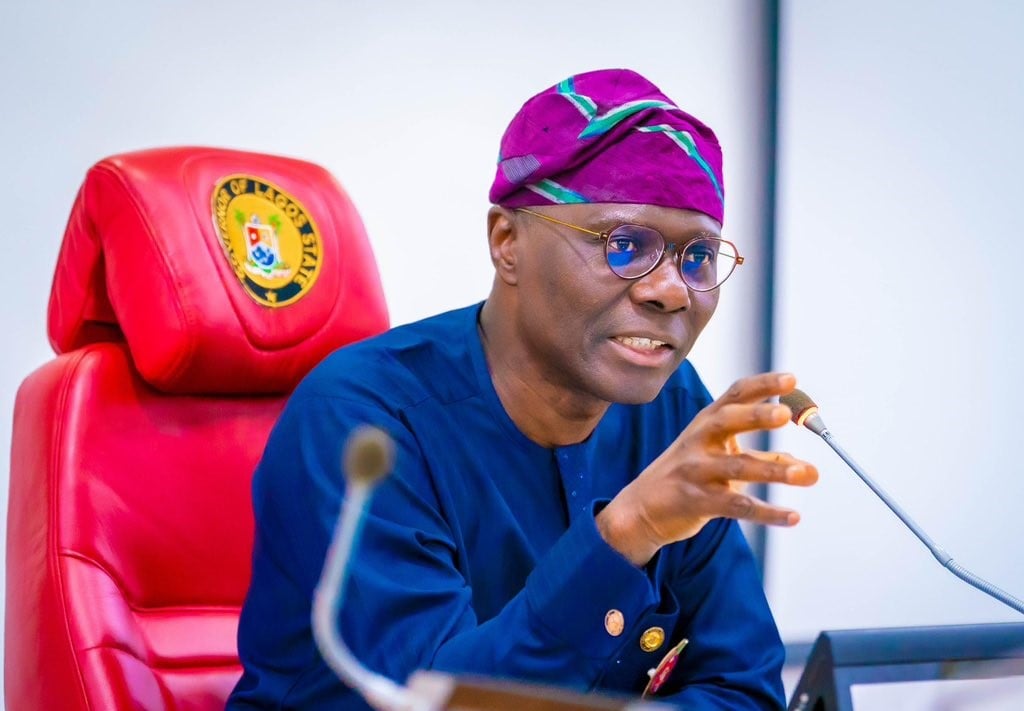
News Investigators/ The Lagos State Governor, Babajide Sanwo-Olu, says the state remains the driving force behind Nigeria’s economic growth with 22 per cent contribution to the Gross Domestic Product (GDP).
The News Agency of Nigeria (NAN) reports that Sanwo-Olu said this at the Business Council session of the Oniru Business and Cultural Day held on Saturday night in Lagos.
The governor said the state contributed roughly one-fifth of the country’s total GDP.
This, he said, makes the state a primary engine of national growth and productivity.
He attributed this to deliberate governance choices and sustained reforms, citing the THEMES+ development agenda, which had strengthened the foundations of economic prosperity.
The governor, however, reassured the business community that the state remained open for business.
He said the state would continue to prioritise infrastructure, job creation, youth empowerment, and security.
Represented by his Deputy, Dr Obafemi Hamzat, Sanwo-Olu emphasised that the administration is committed to protecting the gains made by prioritising security and infrastructure among others.
Mr Sanwo-Olu also highlighted the state’s efforts in revenue generation and fiscal responsibility.
He said the administration had continued to strengthen its internally generated revenue without placing undue burden on the people.
Mr Sanwo-Olu called on the Business Council to remain actively engaged in policy dialogue, community investment, and civic responsibility, stating that their role goes beyond profit, extending to building the nation.
He commended the Oniru of Iru Land, Abdulwasiu Lawal, for creating a platform that bridges enterprise and heritage.
The governor praised him for his hospitality and purposeful leadership, noting that the kingdom had distinguished itself as a model of structured growth, investment confidence, and responsible urban transformation.
“The transformation of the Oniru axis itself tells a powerful story. What was once largely a residential estate has become a prime destination for hospitality, real estate, commerce, and creative enterprise.
“This did not happen by chance. It is the product of strategic planning, strong collaboration with the traditional institution, and investor confidence in the stability of Lagos,” Sanwo-Olu said.
The governor expressed confidence that the partnerships would deepen adding that the state would continue to rise as a model of visionary leadership and collaborative governance.
He emphasised the importance of tradition and progress, stating that they are complementary pillars upon which enduring and sustainable development was built.
He noted that Lagos had reinforced its position as Africa’s leading startup ecosystem, building a digital economy that attracts global capital while empowering local talents.
“Lagos is not merely growing; Lagos is evolving into a more inclusive, opportunity-driven economy that leaves no one behind,” he said.
Earlier in his welcome address, Lawal called for structured dialogue and collaboration between businesses, government, and host communities to drive inclusive growth and prosperity.
He emphasised the need for coordinated growth, structured dialogue, and inclusive prosperity, highlighting the importance of partnership, engagement, and accountability.
He described Oniru Business and Culture Day as a platform for culture, commerce, and community development to reinforce one another.
Lawal disclosed plans to launch the Iru Business Network and establish the Oniru Business Council as permanent institutions of collaboration and accountability.
According to him, the Oniru Business Council will provide guidance and oversight, ensuring that commitments are tracked and progress is measured objectively.
“The Iru Business Network serves as a collaborative ecosystem connecting enterprises within the Kingdom.
“It creates structured interaction between local businesses, artisans, entrepreneurs, professional firms, investors and corporate institutions.
“Its purpose is to encourage responsible investment; expand employment opportunities, and strengthen small and medium enterprises.
“It will also deepen supply chain linkages; promote local participation in large-scale commercial activity and transform economic growth into shared prosperity,” he said.
Lawal called on stakeholders to work together to position Iru Kingdom as a model of palace-public-private collaboration, where peace, diversity and productivity would be encouraged.
NAN