
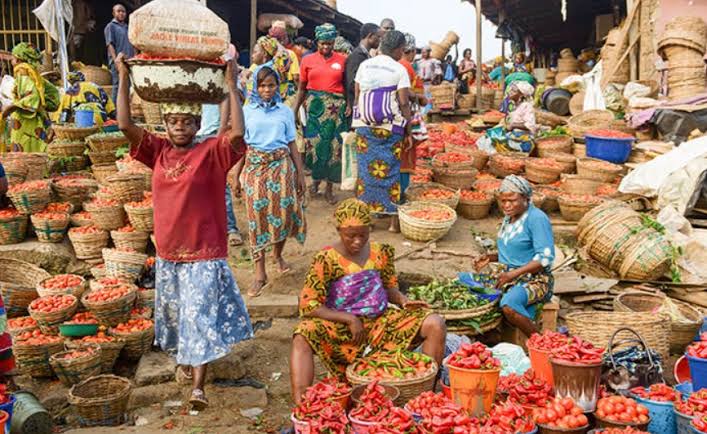
News Investigators/ Consumers in markets across Kaduna city have lamented over the rising cost of foodstuffs, saying the situation has forced them to cut consumption.
A survey by the News Agency of Nigeria (NAN) in Sabo, Narayi, Kakuri and Ungwan Boro markets showed that many households can no longer afford bulk purchases.
Some buyers who claimed they previously bought rice and beans in half bags and quarter bags said they now buy in small quantities.
At Sabo Market, Mrs Rebecca Joseph, said her monthly food budget has doubled but she could only afford to buy a few things due to inflation.
“I came with N30,000 to buy rice, beans and garri for two weeks, but what I bought cannot take my family for one week.”
She said she now mixes rice with more beans and buys broken rice which is cheaper to manage.
Another buyer, Malam Sani Bello, a civil servant, said his salary can no longer sustain his family.
“My salary is N80,000, and things are costly. We now eat once a day and my children take garri to school,” he said.
Bello, who expressed hope for cheap foodstuff as farmers commenced harvest, urged the government at all levels to do something about the hardship facing Nigerians.
Some traders who spoke have confirmed the drop in patronage of their products due to hardship and inflation.
Mrs Hadiza Lawal, who has sales grains, said customers are no longer trooping like before.
Lawan gets her supply of rice from major dealers from Kebbi and Kano, while her beans come from Funtua, Gusau and Sheme.
“Before I sold more than 10 bags in a week, but now I struggle to sell two bags.
“A bag of foreign rice which was N75,000 in January is now N125,000, and beans moved from N45,000 to N130,000 because of fuel and bad roads,” she said.
She said wholesalers who go to villages to buy from farmers now pay N40,000 to N60,000 for transportation that used to cost N15,000.
At the vegetable section, buyers also decried the high cost of perishables.
Mrs Grace Simon, a vegetable seller who gets her supplies from wholesalers in Jos, Zaria and Kujama, said consumers now contribute money to buy one portion.
“Three women will put N500 each to buy one heap of Ugu for N1,500, that’s what one woman used to buy alone.
“I bought a basket of Ugu for N12,000 from Jos. The transport alone is N8,000, so I must add it to the price,” she said.
She attributed scarcity to harmattan and high cost of fertiliser, which farmers now buy for N45,000 per bag.
Mrs Blessing Sunday, a mother of four, said she has stopped cooking egusi soup regularly.
“I used to cook egusi twice a week, now we manage groundnut soup.
“I came with N10,000 for egusi and crayfish, but I could only buy half mudu of egusi for N5,500,” she said.
Malam Kabiru Musa, who sells egusi, ogbono and crayfish sourced from dealers who buy from farmers in Lafia, Otukpo and Ikom, said the price has doubled.
“A mudu of egusi that was N2,800 last year is now N5,500, ogbono is N7,000 per mudu, crayfish is N6,500. Buyers now buy in N200 and N500 wraps,” he said.
At Kakuri abattoir, meat buyers complained of high prices.
Mrs Tina Okoro, a buyer who buys meat weekly for her food business, said she now uses more bones than flesh.
“Kilo of meat was N4,500 last year and now N7,000. I used to buy five kilos, but now I buy two kilos and add plenty of crayfish and seasoning to make soup taste,” she said.
A meat seller, Alhaji Danladi Suleiman, who buys cows from livestock markets in Anchau and Giwa, said the high cost of feeding and transporting cows from villages due to insecurity has affected meat prices.
Mrs Aisha Mohammed, a yam seller who sources from middlemen who travel to Saminaka, Kachia, Makarfi and Niger State, said insecurity has forced traders to abandon short routes.
“100 tubers of big yams which was N150,000 last season is now N280,000, while small ones cost N120,000.
“The boys who go to villages no longer go through shortcuts that pass through bushpath because of kidnappers.
“They go round through Kafanchan, so they have to add fuel money to yam price,” she said.
Mr Peter Ayuba, a buyer, said he used to buy 20 big tubers of yam for N50,000, but now 10 small tubers attract N45,000.
NAN