
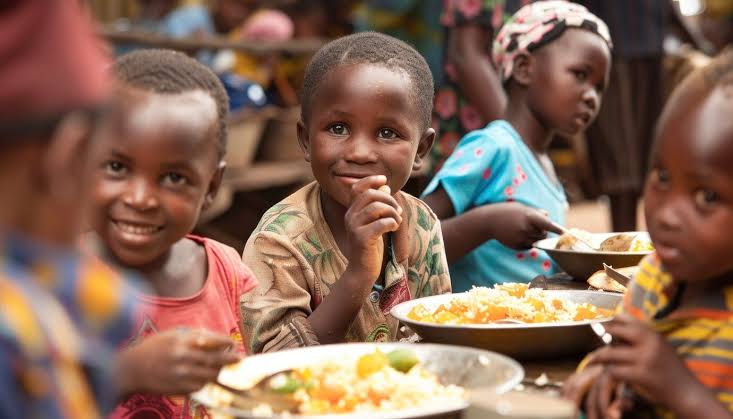
News Investigators/ A nutrition expert, Mary Amoako, says millions of Africans are experiencing “hidden hunger”, a form of malnutrition caused by poor-quality diets despite consuming enough food to meet their daily energy needs.
Mrs Amoako, a Senior Lecturer in the Department of Biochemistry at the Kwame Nkrumah University of Science and Technology (KNUST), Ghana, said this in an interview with the News Agency of Nigeria (NAN) on Saturday.
She explained that hidden hunger occurred when people consume sufficient calories but lack essential vitamins, minerals and other nutrients needed for healthy growth and development.
According to her, there is an important distinction between hunger and the inability to afford a healthy diet, with the latter posing a more complex public health challenge.
“Hunger occurs when an individual does not consume enough food to meet their basic caloric needs, or when energy intake is inadequate.
“However, the inability to afford a healthy diet is more complex, as an individual may have enough food to eat but still lack access to a nutritionally adequate diet.
“Such a diet should contain adequate proteins, including legumes and animal-source foods, fruits and vegetables, local staples, healthy fats and other essential nutrients,” she said.
She said that while a person might no longer experience hunger, poor-quality diets could still result in vitamin and mineral deficiencies and increase the risk of diet-related diseases.
“This distinction is important because someone can be free from hunger but may still experience what we call hidden hunger due to vitamin and mineral deficiencies.
“One can also suffer from diet-related diseases as a result of poor-quality diets,” she said.
The nutrition expert said that the increasing reliance on cheaper but less nutritious foods was exposing millions of Africans to multiple health risks.
She said diets lacking essential nutrients increased the risk of micronutrient deficiencies, impaired immunity, poor growth, anaemia, poor vision and reduced cognitive development, particularly among children.
She said that excessive consumption of highly processed foods, unhealthy fats and high-carbohydrate diets also contributed to obesity, hypertension, cardiovascular diseases and other non-communicable diseases.
“With undernutrition and overweight existing in the same population group, we can say Africa is facing a double burden of malnutrition.
“Some experts even describe it as a triple burden because micronutrient deficiencies also remain widespread,”1 she said.
Speaking on child nutrition, Mrs Amoako said poor diets during pregnancy and early childhood could have lifelong consequences for health and development.
She said that growing children required adequate proteins, essential fatty acids, vitamins and minerals to support rapid physical growth and brain development.
According to her, nutrient-deficient diets in childhood can lead to stunting, cognitive impairment, anaemia, weakened immunity and increased susceptibility to infections.
She cited findings from a recent intervention study she conducted in northern Ghana, where every child enrolled was found to be deficient in Vitamin A.
“The findings were alarming. Health personnel attributed part of the problem to challenges with Vitamin A supplementation, including some mothers not bringing their children for the supplements,” she said.
She said that early-life nutrition influenced health outcomes throughout the life course, warning that diets high in processed foods during childhood also increased the risk of obesity and metabolic diseases later in life.
She identified low-income households, children under five, adolescents, pregnant and breastfeeding women, older adults and populations affected by conflict and climate-related shocks as the groups most vulnerable to poor diet affordability.
On the role of nutrition education, she said knowledge alone was insufficient where healthy foods remained beyond the financial reach of many households.
“Nutrition education is important but can not solve the nutrition problem alone because knowledge does not always translate into healthy eating when families can not afford nutritious foods.
“However, education can help households make better dietary choices using the foods available to them and improve dietary diversity, infant and young child feeding practices, while reducing excessive consumption of unhealthy processed foods,” she said.
Mrs Amoako said that nutrition education should be complemented by policies that improve the affordability and availability of healthy foods.
To improve access to nutritious diets, she urged African governments to increase support for local production of nutrient-rich foods, including legumes, fruits, vegetables and animal-source foods.
She recommended agricultural subsidies, mechanisation, improved food processing and stronger rural road infrastructure to reduce post-harvest losses and lower food prices.
According to her, governments should also create healthier food environments by regulating the marketing of foods high in sugar, salt and unhealthy fats.
She further called for expanded school feeding programmes, stronger social protection initiatives and increased investment in maternal, infant and child nutrition.
“School feeding programmes are powerful interventions because they improve children’s access to nutritious meals while supporting school attendance.
“Research in Ghana has shown that school feeding programmes have improved school attendance in many communities,” she said.
She also called for increased budgetary allocation for maternal, infant and child health interventions, improved nutrition surveillance systems and stronger monitoring of social protection programmes to maximise their health benefits.
She said ensuring access to affordable, nutritious diets would require coordinated action across the agriculture, health, education and social protection sectors.
According to her, improving food affordability and nutrition outcomes is critical to achieving food and nutrition security and reducing the growing burden of malnutrition and diet-related diseases across Africa.
NAN