
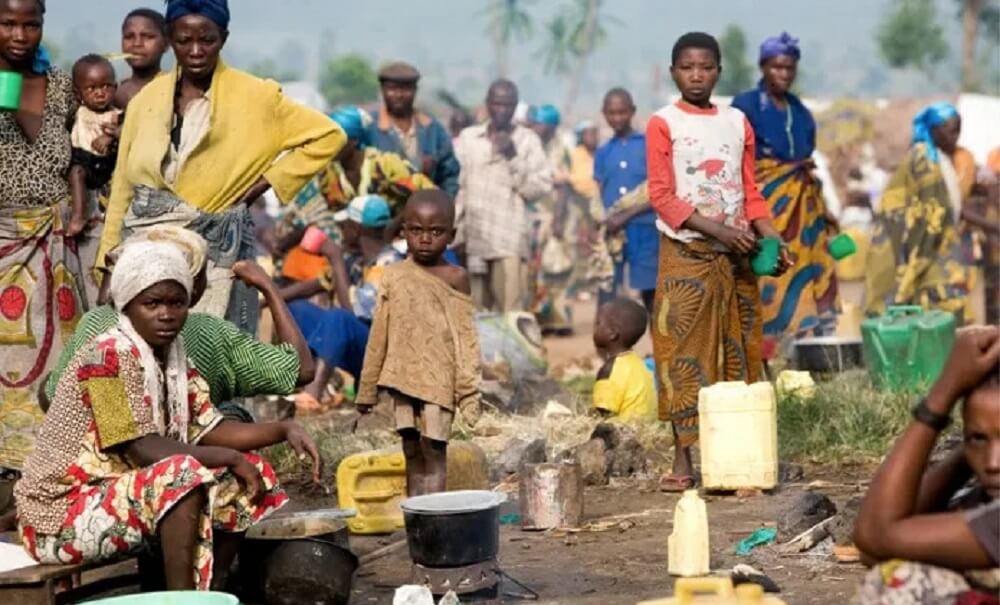
News Investigators/ The United Nations (UN) says global multidimensional poverty has risen for the first time in 15 years, reaching 1.2 billion people, as millions struggle to meet their basic needs.
The increase is contained in the 2026 update of the global Multidimensional Poverty Index (MPI), published by the United Nations Development Programme (UNDP) and the University of Oxford.
The index measures overlapping deprivations in health, education and living standards.
The report says the number of people living in multidimensional poverty has increased by 51.5 million compared with the 2025 update.
Children account for more than half of those affected, at 617 million, while 83 per cent live in rural areas.
“The rise in poverty should be a wake-up call for the world,” UNDP Administrator, Alexander De Croo, said in a statement on Monday.
“Behind these figures are 1.2 billion people facing hardships that reinforce one another: hunger, missed schooling and a lack of clean water or electricity. This is unacceptable.”
The MPI was introduced in 2010 to assess poverty beyond income, using 10 indicators covering health, education and living standards.
These include nutrition, child mortality, years of schooling, and access to electricity, drinking water and sanitation.
A person is classified as multi dimensionally poor if they experience deprivation in at least one-third of the indicators.
Sub-Saharan Africa and South Asia account for the overwhelming majority of deprivations across all indicators.
The 2026 update covers 108 countries, representing about 78 per cent of the global population, and attributes part of the increase to population growth outpacing efforts to improve living standards.
In 95 countries where no new survey data were available, updated population estimates increased the number of people counted as poor by nearly 16 million.
The remaining increase reflects findings from 13 countries where new data were collected, including changes in poverty levels, demographic shifts and differences in indicator coverage.
The updated surveys present a mixed picture of progress.
Egypt, Nepal, Tajikistan, Angola and Zambia recorded reductions in the proportion of their populations living in multidimensional poverty.
However, population growth outpaced poverty reduction in Angola and Zambia, leading to an increase in the total number of people living in poverty in both countries.
Nigeria illustrates how fragile progress in poverty reduction can be.
Although the country recorded significant reductions in multidimensional poverty during the 2010s, both the poverty rate and the number of people experiencing deprivation had increased.
The international communities have pledged to reduce the proportion of people living in poverty by at least half before the end of the decade, in line with the Sustainable Development Goals (SDGs).
The authors of the 2026 MPI update say the target remains achievable.
“We know progress is possible,” De Croo said.
“Countries that have tackled these challenges together, rather than in isolation, have shown what determined action can achieve.”
According to UNDP, 33 countries have halved their MPI values in fewer than 15 years, including six in sub-Saharan Africa.
In Eswatini, the proportion of people living in multidimensional poverty has fallen from nearly 39 per cent to eight per cent.
China recorded the fastest reduction among countries with available data, halving its MPI value from 9.5 per cent to 4.2 per cent in four years, between 2010 and 2014.
UNDP said the progress recorded by several countries demonstrated that poverty could be reduced rapidly and on a large scale, highlighting both the urgency of renewed action and the potential for further gains.
NAN