
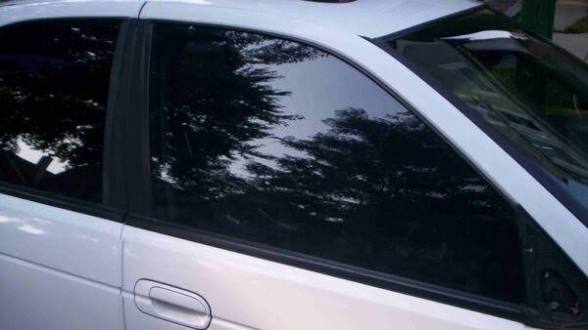
News Investigators/ The Inspector-General of Police, Olatunji Disu said the Nigeria Police Force would not accept fully tinted vehicles on Nigerian roads and would at a time start enforcement against it.
Mr Disu said this on Tuesday in Abuja during a courtesy visit by a delegation from the Nigerian Bar Association led by its President, Afam Osigwe, SAN.
“On the issue of tinted glass, I have a different view about it entirely because we have a security situation in the country now.
“If I have my way, tinted vehicles will not be allowed on Nigerian roads, and we are moving towards it.
“When I was the Commissioner of Police in charge of the FCT, and we started an operation against ‘one chance’ activities, we went all out against them.
“We recovered 27 vehicles used by ‘one chance’ operators and out of the number, 26 were tinted vehicles.
“So, we got the idea that kidnappers, one chance operators and other criminals were tinting their vehicles deliberately for criminal activities,” he said.
According to him, looking at the way vehicles are being tinted in this country, one will be amazed because people now tint the windscreen and the back screen of their vehicles.
He said the development would not be accepted in Nigeria, because it exposes police officers and other security agencies on the road to danger.
According to him, the lives of security officers on the roads are being put in danger because they cannot see occupants of such vehicles as it approaches them.
He said it was the responsibility of the public to protect security officers to ensure effective service delivery.
“So, it is not acceptable for you to fully tint your glasses because the only two reasons vehicles were permitted to be tinted according to the law are for security and medical reasons.
“Even at that, you do not have a right to tint your vehicle so dark as being seen around.
“For vehicles that are brought in tinted, you will notice that the front glasses were not always tinted, only the back.
“In Nigeria, people will tint their vehicles and put a hole by the side of the driver for him to see, implying that it is disadvantageous to tint those glasses.
“People have been kidnapped, even in their vehicles, and they will pass through check points,” he said.
The I-G said the habit of video recording officers on duty could demoralise them considering the current security situation in the country.
“I want to plead that this is not the time to demoralise police officers, the country is going through some security situations, and officers are going through that as well,” he said.
“Police officers are eating, you are going to video them. Police officers have rights as well, and we are ready to enforce our rights.
“When we say end to impunity, we have started working towards it.
“Whenever you report our officers, we take it up, and a lot of them have been dismissed, and some of them have been punished.
“When we say end to impunity, it does not only apply to our officers, it concerns every member of the public as well. We are going to act on that,” he said.
Mr Disu said the idea of bail was to get a responsible person that could present a suspect when needed.
He said the responsibility of the police was to visit the surety to ensure that the house address was correct and that he has means of livelihood.
The I-G said women could stand as sureties for suspects, adding that, it was not known to the Nigeria Police that a surety must be level 14 officer in public service.
Earlier, the NBA boss said the visit was to congratulate the I-G on his appointment, identify areas of collaboration and areas that could be improved upon by the Nigeria Police Force.
He said the NBA was in principle, not opposed to granting tinted glass permits by the police but against the idea of turning tinted glass approval into a money generating venture.
According to him, we had to go to court because of the requirement that one tinted glass approval should be renewable. We don’t think it should be renewable.
“We think that if you have processed it once, it should not be a money generating thing and that a private company should not collect money for it.
“There is a need for us to protect our society and to ensure that the type of tinted glass that is permissible on the vehicle is so that you can see the occupant, which is what the law states.
“So we have nothing against going against vehicles that have tints to the extent that you cannot see the drivers or the occupants of the vehicle,” he said.
Mr Osigwe said the police, lawyers, other law enforcement agencies and the courts must work together for a just and a well-secured society.
According to him, the NBA is joint stakeholders in the issue of maintaining, ensuring that there is security of lives and property, and also enforcing the laws.
He said it was not only the police that are having negative perception challenges.
The NBA boss said lawyers and the courts were also involved, adding that there was need to improve so that the society could have greater confidence in the organisations.
NAN