
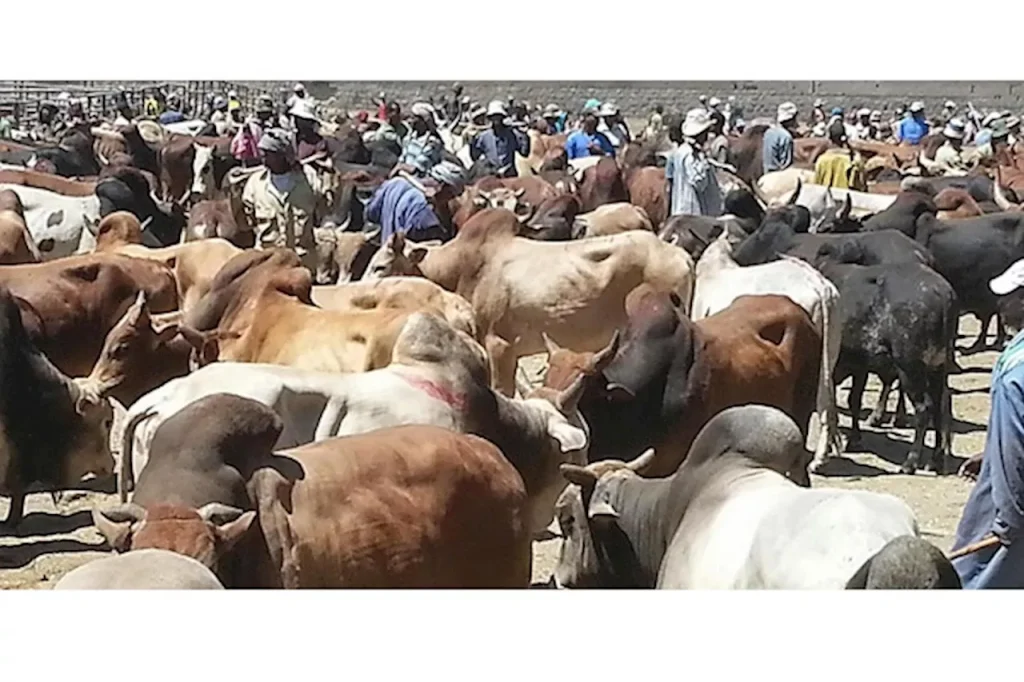
News Investigators/ The Federal Government says 33,000 hectares of land have been reserved within the Abuja Master Plan for livestock settlements.
The Minister of Livestock Development, Idi Maiha, disclosed this on Friday in Abuja at a ministerial news conference on Federal-State-Private Sector Partnerships for transforming Nigeria’s livestock sector.
Mr Maiha said the initiative was part of measures to end the movement of cattle and other livestock within the FCT and promote settled animal production.
He said the framework would establish species-specific livestock development centres to improve food security, rural development and sustainable peace.
According to him, the transformation of the sector requires partnerships among the Federal Government, states and private investors.
Mr Maiha said the settlement policy would separate livestock production from densely populated urban areas while providing animals with better conditions for improved productivity.
He identified the Federal Government’s strategy as genetic improvement, modern husbandry practices, dedicated livestock settlements and livestock development centres nationwide.
“The 33,000 hectares reserved for livestock settlement are located outside the Abuja metropolis.
“The city is not designed to co-mingle livestock with people. Livestock owners will be able to come into the city while their animals remain in designated production areas.
“Government is working with the FCT Administration to rehabilitate existing livestock facilities, including Kawu Grazing Reserve, Karshi and Paiko-Kore.
“Kawu Grazing Reserve has recorded improvements, with three boreholes provided alongside a digital weather station to support livestock production and management,” he said.
Mr Maiha said discussions were ongoing with the FCT authorities to rehabilitate other livestock facilities and integrate them into the settled livestock production system.
He said the framework assigned clear responsibilities to the Federal Government, states and private investors.
According to him, the ministry would provide policy direction, technical standards, animal health protocols, traceability requirements, data systems and regulatory coordination.
He said states would provide suitable land, local infrastructure, community engagement, security coordination and producer mobilisation.
“Private investors and producer organisations will finance and operate commercial components of the value chain,” he said.
Mr Maiha said the livestock development centre model was designed to move production from fragmented, low-productivity operations into commercially oriented clusters capable of attracting private investment.
He said states would select livestock value chains based on their agro-ecology, feed and water resources, producer base, market demand and investment potential.
“The centres can accommodate investments in breeding, feed and fodder production, cattle finishing, dairy chilling, sheep and goat fattening, poultry production, pig breeding and feedlots.
“They can also support modern abattoirs, meat processing, cold-chain storage, logistics, biogas, organic fertiliser, hides and skins and leather,” he said.
Mr Maiha said the centres would operate as regulated commercial clusters, with government providing an enabling environment while private operators manage revenue-generating facilities.
He said the initiative would improve food and nutrition security, create jobs, strengthen rural economies and reduce conflicts and inefficiencies associated with the current livestock production system.
The minister said the framework recognised differences in livestock production across Nigeria’s dry savanna, wet savanna, rainforest and coastal zones.
He said imposing a single national production model would therefore be impractical.
Mr Maiha said investment opportunities in cattle and dairy included irrigated fodder, hay and silage, feedlots, breeding, artificial insemination, milk collection and chilling, hygienic abattoirs, meat packaging, hides and skins and biogas.
He said poultry opportunities included hatcheries, breeder operations, feed mills, broiler and layer clusters, vaccination and laboratory services, egg grading and packaging, slaughtering and cold-chain facilities.
Mr Maiha criticised the extensive livestock production system, which subjects animals to long-distance trekking across the country in search of pasture.
According to him, the energy expended during such movements reduces the energy available for meat and milk production.
He said a combination of settled production, improved genetics, better feed and water systems, animal health services, processing facilities and private investment would make the sector more productive and competitive
NAN