
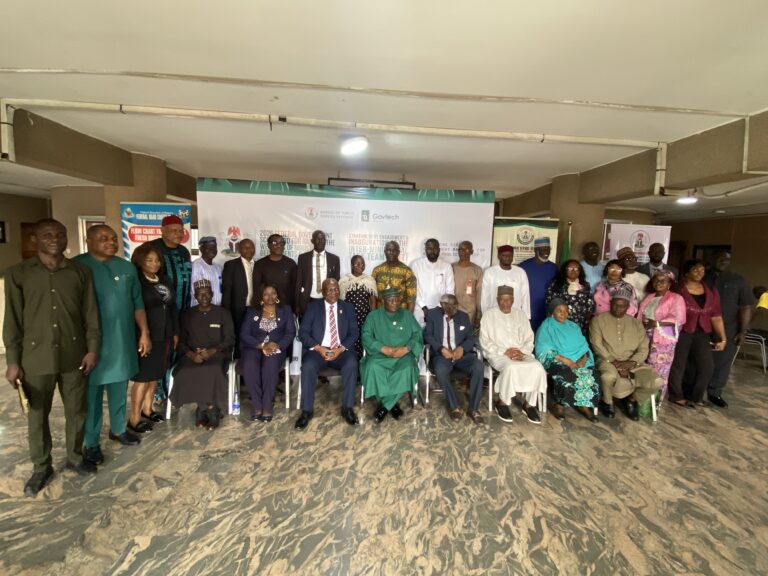
News Investigators/ The Federal Government has inaugurated Inter-Ministerial Task Teams to review public service reforms and strengthen governance, accountability and service delivery across the country.
Dasuki Arabi, Director-General, Bureau of Public Service Reforms (BPSR), inaugurated the teams on Monday in Abuja.
Mr Arabi said their assignments were central to promoting transparency, institutional development and continuous reforms in the public service.
He said the teams would review and produce the National Strategy for Public Service Reforms 2026–2030 and the Compendium on Public Service Reforms, among others.
The teams, he said, would also develop tools and guidelines for creating government agencies, parastatals and commissions.
Mr Arabi said they would equally develop an oversight framework for governance, board evaluation and compliance monitoring across Ministries, Departments and Agencies (MDAs).
According to him, the assignments were complementary and formed part of efforts to strengthen the architecture for an effective, accountable and results-oriented public service.
“The four assignments or strategic teams that we are going to constitute will undertake activities that will lead us to where we hope to be.
“We hope to be among the first 20 public services in the world,” he said.
Mr Arabi expressed confidence that the new reforms would address gaps identified in previous strategies and incorporate current realities.
He said the strategy would focus on institutional and governance reforms, human capital development, professionalisation, digital transformation and innovation.
The director-general added that the compendium would document reform initiatives, achievements, challenges, lessons learnt and proposed next steps across government institutions.
“MDAs must provide accurate and timely information to facilitate the production of the document.
“The new strategy and compendium are expected to be produced within six working weeks,” he said.
Mr Arabi said BPSR would provide the necessary technical and coordinating support to enable the teams to discharge their responsibilities effectively.
Muhammad Ahmad, a retiree, called for adequate funding, resources and institutional support for BPSR to enable it to effectively perform its functions.
“The institution must be empowered, repositioned, well resourced, not just given responsibility, but also provided the capacity to attract, retain and perform functions,” he said.
Mr Ahmad said reform was different from institutionalising reforms and building a culture capable of sustaining them.
He also stressed the need for professionalism and adherence to established rules and regulations in the public service.
He said civil servants had a responsibility to preserve institutional continuity and ensure effective functioning of government institutions.
Steve Ogidan, Chief Executive Officer, Successory Nigeria Ltd., urged task team members to devote adequate time to the assignments.
Mr Ogidan said the guidelines and frameworks being developed would ultimately make public servants’ work easier through clearer structures and procedures.
“I plead with all members, especially those coming from different agencies, to please devote time to this assignment,” he said.
He urged members to contribute their institutional knowledge to ensure that the guidelines and frameworks were practical and responsive to public service needs.
Ogidan said effective reform required collective commitment and cooperation among government institutions.
NAN