
News Investigators/ The Federal Government says it has fully digitalised operations in 38 Ministries, Departments and Agencies (MDAs) and extra-ministerial departments.
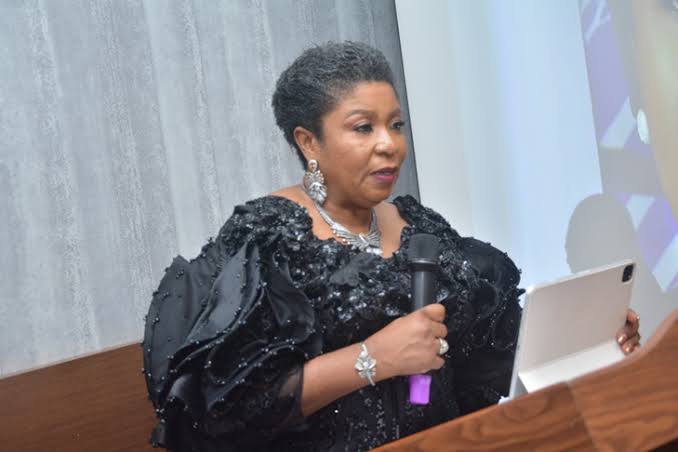
The Head of the Civil Service of the Federation, Didi Walson-Jack, said this on Wednesday in Abuja at the Digital Transformation Summit 2026 organised by Galaxy Backbone (GBB) as part of activities marking its 20th anniversary.
The News Agency of Nigeria (NAN) reports that the theme of the summit was: “Connecting Government for National Growth: Driving Digitalisation Across MDAs for a More Efficient and Connected Nigeria,”
She said that no fewer than 115,000 active GovMail accounts were currently in use across the public service, describing the platform as vital for secure, professional and traceable official communication.
She said that digitisation remained central to the ongoing transformation of the Federal Civil Service.
According to her, government can no longer rely on analogue systems and fragmented processes if it hopes to deliver efficient, transparent and citizen-centred services.
“In the old order, when a file was said to be moving, that statement could mean many things.
“Today, however, in a digital civil service, movement must mean traceability, accountability, timely action and measurable progress. That is the change we are driving,” he said.
She described the digitisation as a practical reform aimed at improving government operations, reducing bureaucratic delays, strengthening institutional memory and enhancing service delivery.
She said a connected government would be better positioned to plan effectively, share information responsibly, reduce duplication and respond more quickly to citizens’ needs.
Mrs Walson-Jack said that digital transformation had become a global imperative, with governments embracing digital public infrastructure, cloud services, secure connectivity and data-driven decision-making.
She said Nigeria’s size and complexity made digital integration even more critical.
“If these institutions are not connected, government will be slow. If systems cannot speak to one another, citizens will suffer delays.
“If records are poorly managed, institutional memory will remain weak,” she said.
Mrs Walson-Jack said the Office of the Head of the Civil Service of the Federation had placed digitalisation at the heart of the Civil Service Transformation Agenda, with a vision to building an efficient, productive, incorruptible and citizen-centred public service.
She said that the federal civil service had moved beyond discussions on digital transformation to implementation, resulting in the successful digitisation of work processes across all ministries and extra-ministerial departments.
“This was a bold target but we are glad it was achieved. The civil service must lead by example in the modernisation of government.
“We gave a clear directive, engaged permanent secretaries, monitored progress, provided guidance and insisted that the Federal Civil Service must move at the speed required by the times.
“The paperless civil service initiative is not merely about eliminating paper but about removing delays, reducing bureaucracy, strengthening transparency and improving accountability,” she said.
She said the benefits were already evident through faster movement of correspondence, easier retrieval of records, improved supervision and stronger institutional continuity.
She commended the GBB for providing services such as the iGovernment Cloud, GovMail, high-speed internet and secure connectivity that support government operations.
The Managing Director of GBB, Ibrahim Adeyanju, said that the world had experienced an unprecedented digital revolution over the past two decades.
Prof. Adeyanju said that digital revolution was with emerging technologies such as Artificial Intelligence, cloud computing and data analytics transforming economies and public service delivery.
He said countries around the world were investing heavily in digital infrastructure because they recognised that digital leadership was increasingly linked to economic leadership.
“For Nigeria, the opportunity is immense.
” With one of Africa’s largest populations, a vibrant entrepreneurial ecosystem and a young innovative population, our digital future is not merely an aspiration; it is a necessity,” he said.
He urged participants to challenge existing assumptions, share ideas, explore partnerships and identify innovative solutions capable of driving sustainable growth.
He called for collective efforts to build stronger digital institutions, create smarter economies and empower more citizens through technology.
He expressed optimism that Nigeria could emerge as a leading force in Africa’s digital future through sustained investment, innovation and collaboration.
The summit had brought together policymakers, investors, innovators, technology experts and development partners to chart practical pathways for accelerating digital transformation.
NAN