
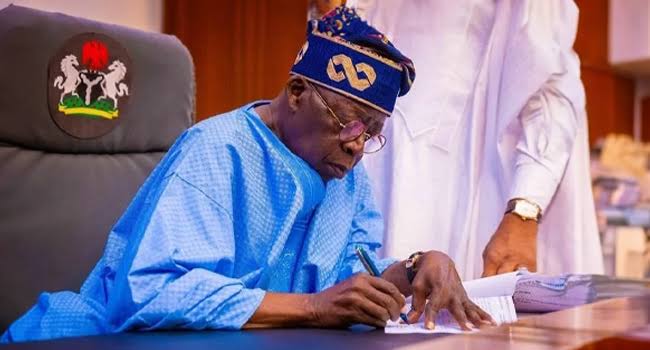
News Investigators/ A Defence and Security Expert, Sani Abubakar, has commended President Bola Tinubu for approving the expansion of the Nigerian Army from eight to 12 divisions.
Mr Abubakar described the approval as a bold strategic step towards strengthening Nigeria’s security architecture.
President Tinubu had approved the expansion alongside the recruitment of 28,000 additional personnel to boost the Army’s operational capacity against insurgency, banditry, kidnapping and other emerging threats.
The new structure creates divisions in Makurdi, Ilorin, Jalingo and Benin City, while reorganising existing formations to improve command and control, strengthen border security, decentralise decision-making and enhance rapid response to security threats.
The implementation will be carried out in two phases, with the first phase expected to be completed by September 2026 and the second by December 2026.
Reacting to the development, Mr Abubakar, described the expansion as timely, saying Nigeria’s growing population, vast landmass and multiple security threats demanded a larger and better-equipped force.
He, however, cautioned that the initiative would only achieve its objectives if matched with adequate funding, modern equipment, improved troop welfare, advanced technology and reforms across other security agencies.
He also expressed confidence in the leadership of the Chief of Army Staff, Lt.-Gen. Waidi Shaibu, citing his operational experience from Operation LAFIYA DOLE to Operation HADIN KAI.
“For too long our numerical strength has not matched our operational requirements.
“Nigeria has one of the largest land masses in Africa, with porous borders and multiple overlapping threats. You cannot secure that space with a thin, overstretched force,” he said.
Abubakar, however, stressed that expanding troop strength without improving capability would merely spread existing challenges across more formations.
He called for better troop welfare, including decent accommodation, healthcare, insurance and competitive incentives, describing welfare as a critical combat multiplier rather than a social benefit.
According to him, the Army must also accelerate force modernisation through investment in drones, night-vision devices, secure communications, ballistic protection and other technologies needed for contemporary warfare.
Drawing lessons from Ukraine’s extensive use of drones, he urged the military to establish dedicated drone schools and partner indigenous technology firms to manufacture unmanned systems locally.
He also advocated stronger coordination between the military, Police, Nigeria Security and Civil Defence Corps and local authorities to consolidate gains after military operations.
Abubakar further emphasised the need for faster intelligence exploitation, saying shortening the military’s Observe-Orient-Decide-Act (OODA) loop would significantly improve operational outcomes.
According to him, the expansion represents one of the most significant structural reforms of the Nigerian Army in recent years and could become a turning point in Nigeria’s security campaign if supported with sustained investment, institutional reforms and a whole-of-government approach.
NAN