
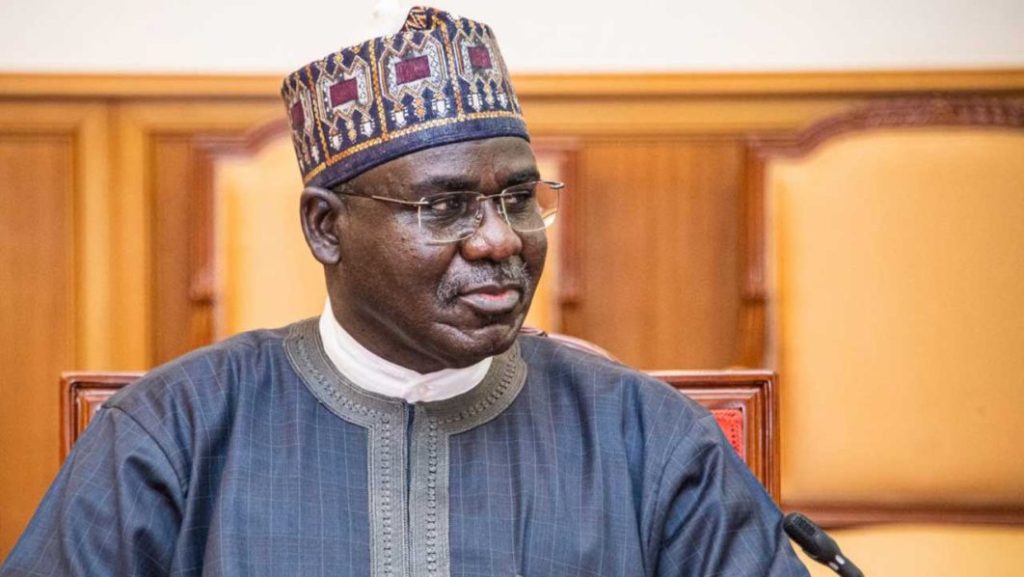
News Investigators/ Former Chief of Army Staff, Tukur Buratai, has advocated stronger collaboration between the media and security agencies.
Mr Buratai made the call while delivering a keynote lecture at the Defence Correspondents Association of Nigeria (DECAN) Conference and Awards Ceremony on Monday in Abuja.
The theme of the conference is “Beyond Kinetic Warfare: Harnessing Technology and Intelligence-Led Operations for Nigeria’s National Security”.
He described professional defence reporting as vital to public trust and countering terrorist propaganda.
He noted that embedded journalism during military operations in the North-East helped bridge the information gap between the military and the public.
According to him, embedded journalism ensured that journalists lived with the troops and shared the danger.
“Journalists who accompanied troops gained first-hand insight into the challenges faced by military personnel and the realities of operations.
“Such reporting also helped challenge insurgents’ claims of invincibility by documenting liberated communities, recovered weapons, surrenders and efforts to rebuild affected areas.”
He added that independent reporting from conflict zones also exposed the brutality of armed groups and brought the experiences of victims to wider public attention.
The former chief of army staff however, said that the relationship between the military and journalists should not be limited to communicating positive developments.
“The embedded model is not a one-way street,” he said, adding that journalists had also reported operational deficiencies, logistical challenges and allegations of misconduct.
He emphasised that scrutiny was necessary for credibility and accountability.
“Some reports were uncomfortable. Some were contested. But they were part of the deal. We had invited scrutiny, and scrutiny is the price of credibility,” he said.
He urged DECAN to work with Defence Headquarters and the Office of the National Security Adviser to organise regular training programmes for defence correspondents.
He emphasised that the programmes should help journalists verify information, identify disinformation and report responsibly in an era of artificial intelligence and rapidly spreading online content.
Buratai also urged security agencies to improve media liaison and provide timely, accurate and verifiable information during security incidents.
“The goal is not to control information, but to ensure timely, accurate, verifiable information that is faster than false information,” he said.
He stressed that professional media-security relations should be built on trust, openness, mutual respect and commitment to the public interest.
He noted that a credible partnership between journalists and security agencies could strengthen public understanding of security operations while preserving the media’s responsibility to scrutinise those in authority.
The conference also featured the inauguration of DECAN’s maiden magazine, “The Defence Correspondent” aimed at strengthening professional defence reporting and public understanding of national security issues.
NAN