
By Okeoghene Akubuike, News Agency of Nigeria (NAN)
The Bureau of Public Procurement (BPP), in 2025, deepened its reform drive through strategic partnerships and collaborations with key national and international institutions.
This reinforced transparency, efficiency, professionalism, local content development and value for money in Nigeria’s public procurement system.
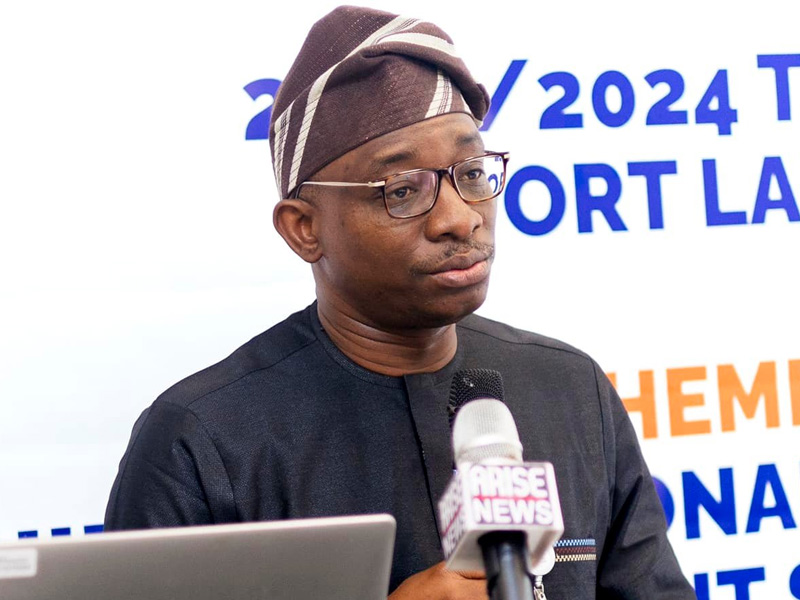
The bureau, under the leadership of its Director-General, Dr Adebowale Adedokun, entered into several Memoranda of Understanding (MoUs) and cooperation frameworks aimed at aligning procurement with President Bola Tinubu’s “Renewed Hope Agenda” and the “Nigeria First Policy”.
President Bola Tinubu, while presenting the 2026 Appropriation Bill to the National Assembly, validated the public procurement reforms and the Nigeria First Policy.
According to Tinubu starting in November 2024, the government embarked on a comprehensive framework of procurement reforms.
“These reforms have enhanced efficiency and generated significant cost savings for the government.
This has resulted in reduced processing times for Government contracts and better enforcement procedures directed against erring contractors and government officials.
“Our Nigeria First Policy has been established to encourage self-sufficiency and sustainable growth within Nigeria by promoting domestic products and businesses, ” he said.
Tinubu said that by mandating that all Ministries, Departments, and Agencies (MDAs) consider Nigerian-made goods and local companies as their primary option, the policy aimed to support local industries.
He said that it also aimed to create job opportunities and reduce dependency on imported items.
One of the major milestones under Adedokun’s leadership was the signing of an MoU with Standards Organisation of Nigeria (SON) to strengthen the application of Nigerian Industrial Standards (NIS) in Federal Government procurement processes.
The partnership was designed to ensure that goods, works and services procured by MDAs complied with approved quality benchmarks while encouraging the use of made-in-Nigeria products.
In a similar push to professionalise procurement and enhance fiscal discipline, the BPP intensified engagement with the Institute of Chartered Accountants of Nigeria (ICAN).
Adedokun called for a robust partnership to bridge gaps between procurement and accounting practices, noting that synergy between both professions was critical to accountability and prudent management of public funds.
He said that the bureau had helped the Federal Government save about N350 billion as of 2025, adding that collaboration with ICAN would further deepen fiscal discipline.
Adedokun urged ICAN to establish a unit that would equip accountants with procurement knowledge, noting that such capacity would help Nigeria save money and ensure value for its resources.
The bureau also signed an MoU with the Equipment Leasing Regulatory Agency (ELRA)
The partnership with ELRA was aimed at improving procurement and equipment leasing practices to reduce wastage, improve efficiency and stimulate economic growth.
According to the D-G, the collaboration would support regulatory reforms beneficial to both local and international investors.
At the international level, the BPP advanced capacity development through partnerships with the United Nations Institute for Training and Research (UNITAR) and renewed collaboration with the United Nations Development Programme (UNDP).
These partnerships focused on strengthening skills across the procurement cycle, promoting digitalisation, inclusivity, transparency, service delivery and institutional reforms, with special attention to women, youth and Persons With Disabilities (PWDs).
In the health sector, the bureau reached an agreement with the National Health Insurance Authority (NHIA) to strengthen collaboration to promote transparency, accountability and improved healthcare service delivery through sound procurement practices.
Another significant step in 2025 was the signing of an MoU between the BPP and the Nigerian Bar Association (NBA) to combat corruption in procurement.
The partnership underscored the legal foundation of procurement processes and aimed to strengthen ethical standards, contract enforcement and accountability, with plans to train lawyers as procurement professionals.
The BPP also strengthened its long-standing partnership with the United Nations Development Programme (UNDP), reaffirming commitment to digital innovation and institutional reforms in the procurement sector.
Adedokun said the partnership would focus on modernising procurement processes to improve efficiency, transparency and service delivery. The need for inclusivity in the partnership was highlighted to drive meaningful change in Nigeria.
Local content development featured prominently with the signing of an MoU between the BPP and the National Agency for Science and Engineering Infrastructure (NASENI) on the implementation of the Nigeria First Policy.
The agreement created a structured link between Nigerian innovation and public procurement, prioritising locally manufactured products and integrating NASENI’s catalogue into the Nigeria Open Contracting Portal (NOCOPO).
Adedokun disclosed that NOCOPO’s enhanced price intelligence helped Nigeria save over N173 billion between January and June 2025.
According to the D-G these are not just savings on paper. They are savings that free up resources for more schools, hospitals, and support for small and medium-sized enterprises.
In the area of data governance, the BPP reaffirmed its commitment to data protection through collaboration with the National Data Protection Commission (NDPC), focusing on capacity building, compliance and privacy awareness within the procurement system.
The defence and security sector also benefited from BPP’s partnerships, as the bureau collaborated with the Nigerian Navy Logistics College to train and certify officers in public procurement, with the aim of improving quality, accountability and value in defence procurement.
Adedokun said proper defence procurement would enhance professionalism, value for money, and national security by ensuring high-quality, well-managed equipment.
“Training procurement officers helps them identify inferior products and negotiate better quality, leading to improved security outcomes, reduced security challenges, and potential reductions in poverty,”he said.
Professional capacity development was further strengthened through an MoU with the Chartered Institute of Procurement and Supply (CIPS), UK.
The partnership targeted the training and certification of no fewer than 8,000 procurement officers, positioning Nigeria to align with global best practices and ethical procurement standards.
In support of Nigeria’s energy transition, the BPP pledged collaboration with the Presidential Compressed Natural Gas Initiative (PCNGI), focusing on cost efficiency, poverty reduction and the adoption of cleaner energy solutions across public institutions.
The bureau also deepened engagement with the National Information Technology Development Agency (NITDA) to promote digitalisation of procurement processes and IT-related projects.
Adedokun said this would help reduce turnaround time, curb corruption, and prevent the duplication of IT-related projects.
Dr Nzekwe Obiorah, public procurement consultant, said the ongoing reforms and “Nigeria First’ policy would help Nigeria save over N100 billion by 2027.
“Look at this beautiful Nigeria First policy designed by the BPP just under a year of Dr Adedokun’s appointment.
“From whichever angle you view it, it is one of the most beautiful policies designed by any government agency since the return of democracy in 1999.
“I see the Federal Government saving over N100 billion through this policy in the next couple of years. Look at all the other reforms the BPP boss is driving in under a year of his appointment.
“These sweeping reforms have admittedly hurt many contractors who would rather it was business as usual,” he said.
He said that that the reforms had helped to strengthen public procurement process, added value to the Tinubu administration, and pioneered a new era of transparency.
Francis Meshioye, President, the Manufacturers Association of Nigeria (MAN) said that the Nigeria First policy was about building national resilience, creating jobs at home.
Meshioye said that the policy was also about saving foreign exchange, driving technological innovation, and giving Nigeria the productive foundation it needs to be competitive globally.
“Every industrialised country began its journey by nurturing local content and leveraging public and private procurement as an avenue for galvanising scale production and economic development. Nigeria must not go the opposite direction,”
In 2025, the BPP made it a point of duty to reaffirm its commitment to delivering a procurement system that aligns with the Nigeria First ethos.
The bureau 3xpressed commitment to ensuring that the benefits of national reforms reach every household and community across the country.
Expanding its network of partnerships reflects a deliberate strategy by the BPP to reposition public procurement as a driver of good governance, economic growth, local industrial development and public trust in government institutions.