
News Investigators/ Instant payment systems(IPS) across Africa processed 71.4 billion transactions valued at 1.8 trillion dollars in 2025, reflecting growing adoption of digital payments for everyday economic activities, according to a new report.
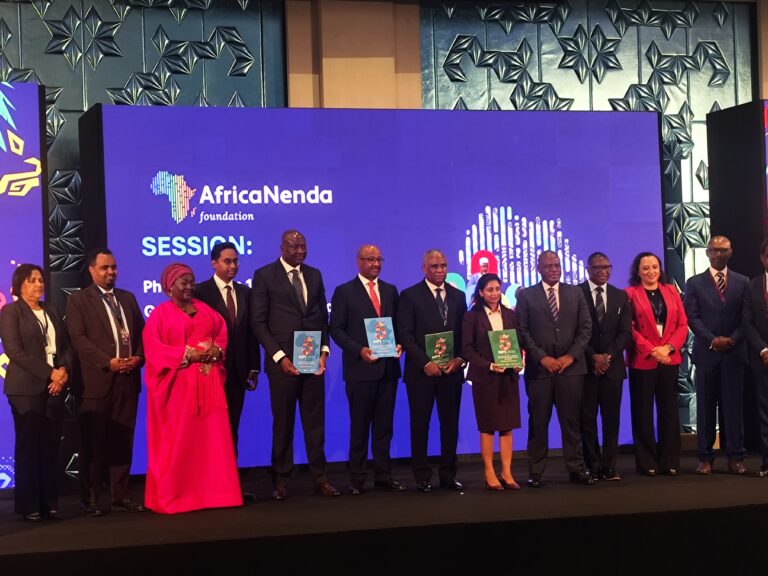
The News Agency of Nigeria (NAN) reports that the 2026 State of Inclusive Instant Payment Systems (SIIPS) in Africa Report by AfricaNenda Foundation, with the support of the World Bank Group and the United Nations Economic Commission for Africa (UNECA) was launched on Thursday in Balaclava, Mauritius.
The report revealed that transaction volumes increased by an average of 28 per cent annually between 2021 and 2025.
Transaction values, according to the document, grew by an average of 11 per cent annually over the same period, reaching 1.8 trillion dollars in 2025.
The report said the divergence between transaction volumes and values indicated that users were increasingly making smaller, everyday payments digitally rather than relying on IPS primarily for occasional large transfers.
It said the average transaction value declined from 43 dollars in 2022 to 26 dollars in 2025, with mobile money transactions averaging nine dollars.
The report said mobile money systems accounted for 73 per cent of transaction volumes, while cross-domain instant payment systems, which connected banks, mobile money operators and other payment providers, accounted for 67 per cent of transaction values.
Bank-based instant payment systems recorded the fastest growth in 2025, with transaction volumes increasing by 42 per cent and values by 21 per cent, driven by a relatively small number of large systems.
Mobile money systems recorded seven per cent growth in volumes, while transaction values declined by 10 per cent in dollar terms.
The report attributed the decline in the continent’s total transaction value from 1.99 trillion dollars in 2024 to 1.83 trillion dollars in 2025 partly to exchange-rate fluctuations.
It said transaction values increased by seven per cent in local currencies during the period.
Beyond payment activity, the report’s first econometric analysis of IPS found that their adoption was associated with approximately seven percentage points higher active usage of financial accounts compared with countries without such systems.
The analysis also found that countries with IPS recorded Gross Domestic Product (GDP) per capita levels approximately 17 per cent higher, alongside government expenditure equivalent to 0.8 percentage points more of GDP.
The report cautioned that the findings represented early and directional evidence, with the estimated GDP effect reflecting a sustained increase in income levels rather than a permanent acceleration in economic growth.
It said instant payment systems could support economic activity by replacing cash-based transactions, helping merchants formalise businesses and building transaction histories that could facilitate access to credit.
The report cited Nigeria’s Inter-Bank Settlement System IPS as an example of how digital payments could reduce costs for micro, small and medium enterprises by eliminating float and reconciliation costs.
It also highlighted the Tanzania IPS’s role in encouraging business-account activation, while Egypt’s InstaPay was helping move a largely cash-based economy towards digital transactions.
In spite of the growth, the report however, noted that trust remained a major determinant of sustained digital payment adoption.
“Research involving 1,403 individual and micro, small and medium enterprise digital payment users across 15 African markets found that 55 per cent still used cash for about half of their transactions, while only 33 per cent relied on digital payments most of the time,” the report noted.
The study identified instant transaction execution, clear confirmation messages and the ability to verify recipients before sending money as the three features users considered most important in building trust.
It said failed transactions, fraud and poor dispute-resolution mechanisms could discourage adoption, particularly when users lost money and could not recover it.
AfricaNenda recommended that payment operators embed recipient verification, real-time confirmation and structured dispute-resolution mechanisms into payment systems.
It also urged operators to strengthen fraud detection through artificial intelligence, improve pricing and expand value-added services to sustain affordable payment systems.
The report recommended that regulators establish consumer-protection standards, improve access for licensed non-bank payment providers and introduce appropriate identification requirements for basic merchant accounts.
It further called for transaction data to support expanded access to credit, savings and insurance for micro, small and medium enterprises.
The report said IPS had increasingly become digital public infrastructure capable of supporting financial and economic inclusion, but their long-term impact would depend on affordability, trust and wider usage.
NAN