
News Investigators/ UN-Habitat on Monday said up to 3.4 billion people around the world lacked access to secure, safe and adequate housing.
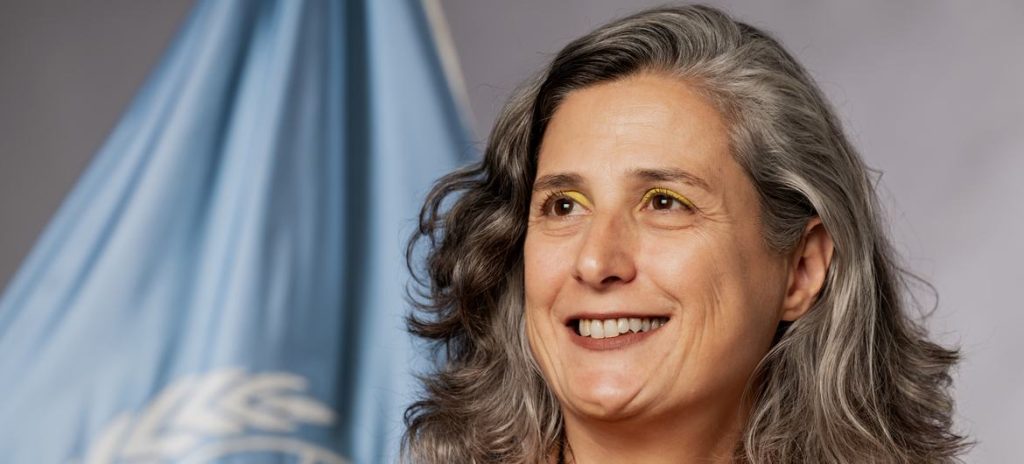
The Executive Director of UN-Habitat, Anna-Claudia Rosbach, gave the figure during the high-level opening of World Habitat Day 2026 in Muscat, Oman.
The event was monitored by the News Agency of Nigeria (NAN) in Lagos via webinar.
According to Rosbach, under the UN Human Rights Framework, housing is considered adequate when it meets seven criteria.
The criteria, she said, included security of tenure, availability of services, habitability, affordability and location.
She listed the others as accessibility and cultural adequacy.
“Adequate housing means much more than a physical structure with four walls and a roof.
“It gives people the opportunity to live with dignity.”
She said the 3.4 billion people affected by housing inadequacy represented more than 600 times the population of Oman currently standing at 4.5 million.
Ms Rosbach said a family could have a roof over its head and still spent much on rent, leaving little income for food, education or healthcare.
She added that a home could be affordable but located far from workplaces, schools or transport means.
“A home can disappear overnight because of conflict, flooding, storms or other crises.
“In 2024 alone, 45 million internal displacements were triggered by weather-related disasters.
“This is why building more houses, as important as that is, will not by itself solve the housing crisis,” Rosbach said.
She called on governments to provide housing that people could afford which would be connected to transport, jobs and essential services.
Rosbach said that particular attention should be paid to places where the scale of the challenge was most visible, informal settlements.
She stressed that more than one billion people still lived in informal settlements and slums, and over 300 million people experienced homelessness.
The executive director said transforming informal settlements should not mean simply replacing what existed or evicting communities.
According to her, it means working with residents to improve housing, basic services, tenure policies, public space and economic opportunity.
“As the global review of SDG 11 and a mid-term review of the new urban agenda at the UN General Assembly earlier this year showed, housing has become a global concern, affecting countries both in the Global North and South.
“Recognising this, UN-HABITAT’s strategic plan for 2026-2029 places housing, land and basic services at the centre of our work,” she said.
She urged participants to use World Habitat Day not only to describe the scale of the problem but also to examine what was working, what was not, and what could be done differently.
“ The 3.4 billion is an enormous number, but it is also not an abstract number. It represents people, families and communities, and is the number of lives our collective action can change.”
NAN reports that the 2026 UN-Habitat Scroll of Honour Award Ceremony was held during the observance, with five outstanding recipients from over 100 nominations.
The awardees included Housing NOW, Abdelmalek Ghannem, Aldeia do Espraiado – Tekoa Ara Hovy, Punjab Housing and Town Planning Agency, and Mayor Sadiq Khan from Myanmar, Tunisia, Brazil, Pakistan and the United Kingdom, respectively.
The award, launched in 1989, recognises individuals and institutions that have made outstanding contributions to urban development, including improving the quality of urban life for all and ensuring adequate, affordable, and accessible housing.
NAN