
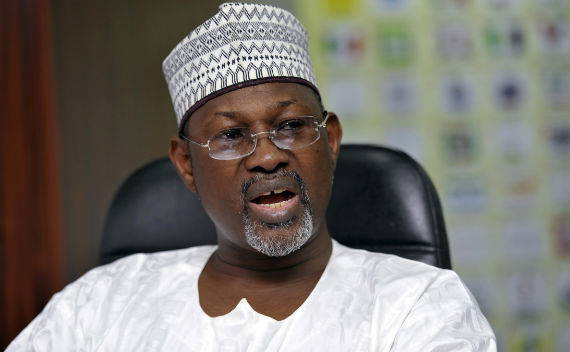
News Investigators/ A former Chairman of Independent National Electoral Commission (INEC), Attahiru Jega, has called for proactive and robust safeguards to protect information integrity, as Nigeria moves closer to the 2027 general elections.
Prof. Jega made the call in Abuja at a National Summit on Artificial Intelligence (AI), Foreign Information Manipulation and Interference (FIMI) and Electoral Information Integrity.
Speaking as the chairman of the event, with the theme: “Beyond the Ballot: Safeguarding Electoral Information Integrity in the Age of AI”, Jega noted that safeguarding electoral information against digital manipulation and malicious threats had become a critical task for all stakeholders.
While acknowledging that AI holds tremendous potential to improve efficiency and effectiveness in governance and electoral processes, he warned that it also carried severe negative uses that could undermine the integrity of elections.
“What is most important, of course, is how we prepare, anticipate these challenges and take appropriate measures, including setting up a framework of rapid response to address these,” he said.
Drawing from his participation in the 2024 Cambridge Conference on Electoral Democracy, Prof. Jega recommended that Election Management Bodies (EMBs) in Africa should consider deploying AI-driven tools, such as chatbots powered by officially-verified data.
He noted that such would allow citizens to quickly access accurate information and verify the authenticity of data being circulated.
“I understand that some African EMBs have seen the utility of this in checkmating or reducing the negative effects and the impact of misinformation and disinformation during elections.
“And I would like to recommend that if INEC has not done so so far, it might be a useful issue to add to our discussions and to see as to how best to know it before the 2027 general elections,” he said.
The former INEC chairman noted that building trust and public confidence in the electoral process was important.
“The integrity of an election is so important and the building trust and ensuring that there is public confidence in what participants in the electoral process do, and other key stakeholders do, is very important,” Jega said.
He urged participants to leverage the summit’s platform to move beyond dialogue and develop actionable strategies, rapid-response frameworks and tactical solutions to secure the integrity of future elections.
Declaring the workshop open, the Minister of Information and National Orientation, Mohammed Idris, said that the integrity of 2027 elections remained a shared responsibility, noting that every institution and every citizen had a role to play.
Mr Idris, who was represented by the Executive Secretary, Nigerian Press Council (NPC), Dr Dili Ezughah, said that the President Bola Tinubu led-administration recognised the importance of credible information environment to democratic stability.
While citing Nigeria’s National Artificial Intelligence Strategy, published in 2024, which provides a framework for responsible, critical and inclusive AI development and deployment, he stated the Tinubu administration also recognised the importance of credible information in strengthening Nigeria’s democracy.
“A significant demonstration of this commitment is the establishment of the UNESCO Category 2 International Media and Information Literacy Institute in Nigeria,” he said.
The minister said that Tinubu had demonstrated the commitment by signing the amended Electoral Act 2026 into law on Feb. 18, which provided for mandatory electronic transmission of polling unit results and recognised the time-tested results viewing portal.
He, however, said that technology alone could not guarantee public confidence in the electoral process, saying it should involve all stakeholders playing their expected roles.
“Electoral institutions must communicate clearly. Journalists must verify information and citizens must know where to obtain authentic electoral updates.
“I wish to emphasise that responsible journalism must not be mistaken for favourable journalism. The media must remain free to question government, political parties, candidates and public institutions, ensuring fairness and fair distinction between facts, allegations and opinions.
“We must also protect freedom of expression and the right to information. Responses to misinformation must be lawful, proportionate and respectful of fundamental rights.
“Technology platforms, political parties, security agencies, civil society and fact-checkers must each recognise their responsibilities,” he said
Mr Idris urged the summit participants to move beyond discussions and produce practical commitments, such as stronger verification systems, rapid channels for correcting false information, coordinated responses to information threats and sustained public education ahead of the elections.
NAN